


Jaffa’s Uneasy Calm Shattered by M16: A Microcosm of Deeper Fault Lines
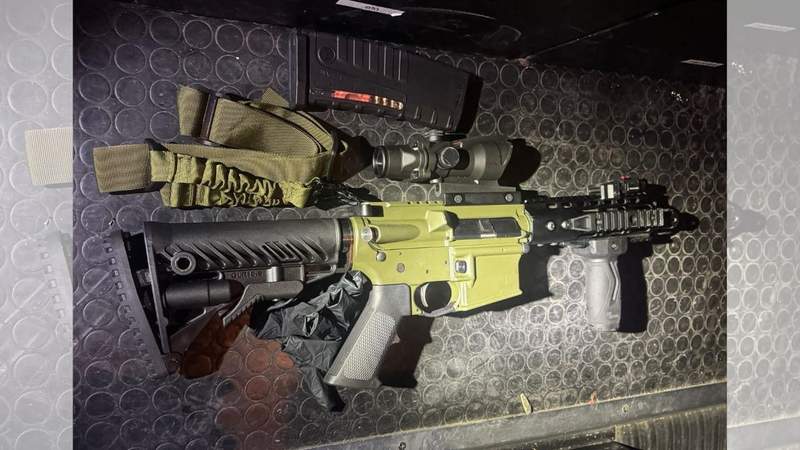
POLICY WIRE — TEL AVIV, Israel — The distinct, chilling echo of an M16 rifle, a weapon more commonly associated with military patrols than urban street corners, ripped through the ancient port city...

POLICY WIRE — TEL AVIV, Israel — The distinct, chilling echo of an M16 rifle, a weapon more commonly associated with military patrols than urban street corners, ripped through the ancient port city of Jaffa this week, triggering a police investigation that transcends the usual confines of criminal inquiry. It wasn’t merely a shooting; it’s a stark, violent punctuation mark in the ongoing, often silent, dialogue between communities, power, and illicit arms – a dialogue that reverberates far beyond Israel’s sun-baked shores.
At its core, this incident in Jaffa — a mixed city historically significant to both Israelis and Palestinians — underscores the persistent fragility of coexistence. While the official police statement, characteristically sparse, confirmed an ongoing investigation into the discharge of a military-grade weapon, the broader implications couldn’t be clearer. Someone, or some group, felt emboldened enough to wield a weapon designed for battle in a residential area, scattering the veneer of urban normalcy and plunging locals into a fresh cycle of anxiety.
And so, the Israeli National Police, predictably, launched their probe. They’re sifting through ballistics, canvassing witnesses, and, no doubt, attempting to trace the M16’s provenance. But tracing such weapons is an arduous, often futile, exercise. They don’t just materialize; they’re symptoms of a sprawling, shadowy network. Police spokesperson Superintendent Shai Golan, addressing the gravity of the situation, shot back, “This isn’t merely an isolated crime; it’s an affront to the fabric of our society, and we will pursue every lead to dismantle these networks of illicit arms.” His words, while resolute, couldn’t quite mask the underlying challenge.
Still, for many Jaffa residents, particularly those in the Arab community, the incident isn’t an anomaly but another distressing chapter in a familiar, disheartening saga. It’s a reminder of deep-seated grievances — and a perceived disparity in law enforcement’s approach. Dr. Amani Sa’ad, a prominent community activist — and scholar specializing in urban sociology, didn’t mince words. “Our community’s pleas for holistic solutions — for economic opportunity, for equitable policing — seem to fall on deaf ears, leaving a vacuum where desperation sometimes takes root,” she observed, her voice weary with years of advocacy. She’s not wrong; the data speaks for itself.
The proliferation of illegal firearms within Arab society in Israel is a well-documented, tragic reality. A 2022 report by the Abraham Initiatives indicated that Arab society in Israel accounted for 70% of murder victims, despite comprising only 21% of the population, with illicit weapons a primary driver. That’s a stark, undeniable asymmetry, laying bare systemic issues that a single police investigation, however thorough, can’t hope to resolve.
Behind the headlines, this Jaffa episode serves as a micro-study of a macro-problem: the global seepage of military hardware into civilian hands. Such incidents, while geographically confined, inevitably ripple across the broader Muslim world, feeding narratives of disenfranchisement and calling into question the efficacy of state security apparatuses — a narrative not unfamiliar to policymakers grappling with internal unrest from Pakistan to the Levant. The casual ease with which an M16 can find its way onto a residential street corner here raises uncomfortable parallels with the challenges of disrupting arms flow in other volatile regions. It’s a universal problem, really (a truly depressing thought, isn’t it?).
📄 POLICY WIRE WHITEPAPER PUBLISHED: PAKISTAN'S NATIONAL SECURITY POLICY PRIORITIES
👉 READ BY CLICKING HEREAnd what of the regional backdrop? These localized tremors invariably add to the already heightened Middle East tensions. Every act of violence, every perceived injustice, becomes fodder for broader narratives, complicating already intricate diplomatic and social equations. It’s a cruel feedback loop, where local struggles inform regional discord, — and vice versa. You’d think, wouldn’t you, that lessons might be learned?
What This Means
This Jaffa shooting, featuring a military-grade weapon, isn’t just a police matter; it’s a consequential political and social flashpoint. Economically, it perpetuates a climate of insecurity that stifles investment and development in already marginalized communities, deepening disparities. The psychological toll on residents, living under the implicit threat of such violence, is immense — fraying community bonds and trust in institutions. Politically, it presents a fresh challenge for Prime Minister Netanyahu’s government, already navigating immense internal and external pressures. It’s a pointed reminder that addressing urban crime in mixed cities isn’t merely about law enforcement; it demands a comprehensive approach tackling socioeconomic inequalities, racial profiling accusations, and the systemic factors that permit, or even foster, the illicit arms trade. Failure to do so means these ‘isolated incidents’ will continue to bleed into the larger, more explosive narrative of Israeli-Palestinian relations, undermining any semblance of stable governance.
Ultimately, the M16 discharged in Jaffa isn’t just a piece of metal; it’s a potent symbol. It epitomizes the failure of security apparatuses to fully control their environment, the frustration bubbling within marginalized communities, and the ever-present danger that deeply entrenched political conflicts can erupt in the most unexpected — and devastating — of places. It’s a chilling reminder that peace is fragile, and the tools of war, once unleashed, rarely respect municipal boundaries.