

Albuquerque’s ‘Clean Streets’ Push: Whose Streets Are They Anyway?
POLICY WIRE — Albuquerque, N.M. — It’s a classic urban ballet, if you could call it that: city officials striving for order, and the city’s most vulnerable populations, well, just trying to exist....

POLICY WIRE — Albuquerque, N.M. — It’s a classic urban ballet, if you could call it that: city officials striving for order, and the city’s most vulnerable populations, well, just trying to exist. Albuquerque, a place often celebrated for its vibrant cultural patchwork and sweeping desert views, just sharpened that contrast significantly. They’ve enacted a new ordinance, an ‘enhanced service and safety zones’ bill, which for many sounds less like safety and more like a cruel game of musical chairs.
No, this isn’t about rogue street performers or boisterous tourists blocking pedestrian paths. This policy, cloaked in bureaucratic jargon, pretty much makes it illegal to sit, sleep, or lay down on public sidewalks, roads, bike paths, or alleys if you’re deemed to be ‘blocking’ them. And guess who often ends up blocking these spaces? People without a roof over their heads, people without anywhere else to go. It’s a clean-up campaign, really, just not for litter; it’s for human beings the city wishes were invisible.
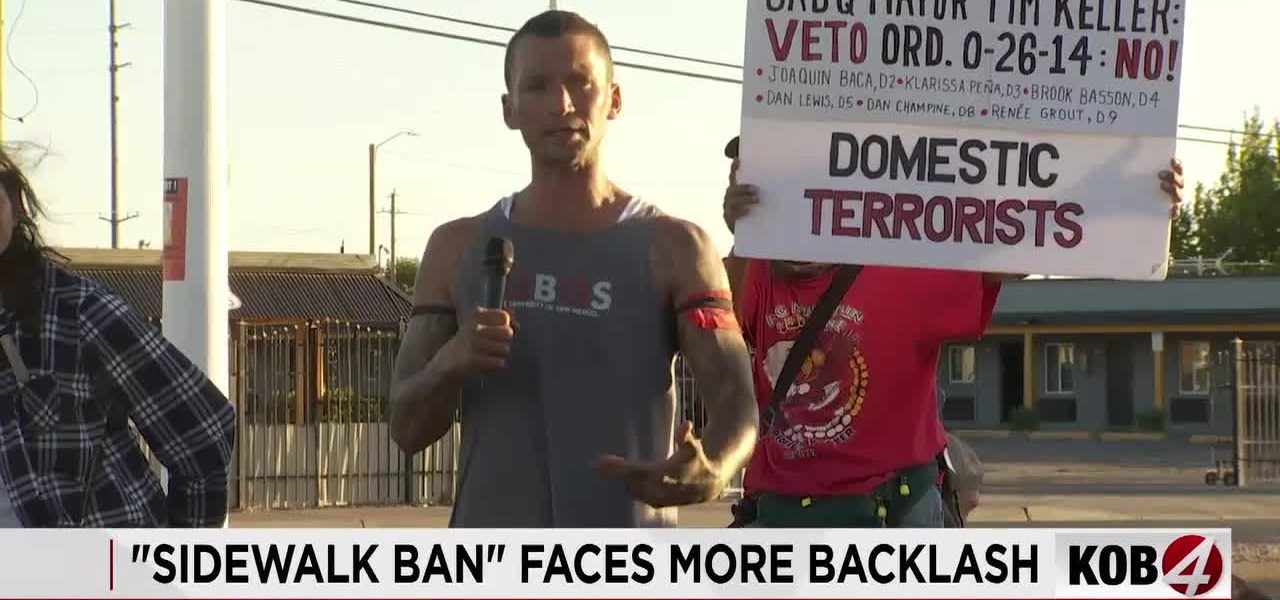
Advocates are, predictably, incandescent. Dare to Struggle, a local group, isn’t pulling any punches, claiming this bill disproportionately targets those experiencing homelessness. They’re calling it what it’s: displacement, plain — and simple. Gabriel Salas, a spokesperson for the group, articulated the frustration, a raw wound in the community, with unvarnished clarity: “APD wrongfully harasses us, and the city displaces us, throws away our stuff, harasses us, gives us citations that are unlawful, unjust, and we get displaced and have to start over and over and over again.” That’s not just a statement; it’s a cry of exhaustion.
But the city—the decision-makers, anyway—insists this isn’t about cruelty. It’s about “order.” Mayor Tim Keller, whose office still has to designate the specific ‘safety zones,’ tried to walk a fine line, telling Policy Wire, “We’re not insensitive to the challenges these individuals face. But we simply must ensure public spaces remain safe and accessible for *everyone*—residents, businesses, tourists. This ordinance provides necessary tools for our public safety teams to maintain that balance.” He frames it as a measure for general public good, a tool to manage congestion and — as is often left unsaid — perception.
Because, really, who wants to see poverty on their morning commute? Councilwoman Sarah Rodriguez, a staunch supporter of the measure, didn’t mince words: “Look, residents, businesses—they’re asking for help. They deserve to walk downtown without obstructions. We’re trying to balance compassion with order, — and that’s not always pretty.” There’s that word again: order. The unspoken equation, however, feels suspiciously like ‘order at the expense of the dispossessed.’ And for a city that saw over 1,600 people experiencing homelessness on any given night in 2023, according to the New Mexico Coalition to End Homelessness, this isn’t just an abstract policy; it’s a direct intervention in literally thousands of lives.
📄 POLICY WIRE WHITEPAPER PUBLISHED: PAKISTAN'S NATIONAL SECURITY POLICY PRIORITIES
👉 READ BY CLICKING HEREThe city’s response, when you squint at it, echoes a familiar refrain heard in rapidly urbanizing landscapes across the globe, from the booming megacities of India to the sprawling metropolises of Pakistan. Think Karachi or Lahore, where municipal authorities constantly grapple with the explosion of informal settlements and street economies. They too wrestle with the optics of rapid development juxtaposed with endemic poverty, often resorting to ‘beautification drives’ that push the marginalized further into the shadows. The struggle for public space, and who legitimately belongs there, isn’t unique to Albuquerque; it’s a universal battlefront in an unequal world.
This ordinance isn’t some fresh municipal evil, Salas points out. No. He told us city — and police have been treating people on the streets this way for ages. This just gives them a fancier, legislative stamp of approval. And, with city sanitation workers, Albuquerque Community Safety personnel, and the police now poised to patrol these designated zones with heightened authority, the prospects for humane engagement seem slimmer than ever. It’s a bureaucratic tightening, sure, but for many, it’s going to feel like the choke chain just got pulled a little harder.
What This Means
Politically, this move feels like a clear response to business interests and segments of the residential community fatigued by the visible presence of homelessness. Mayor Keller and the City Council are likely calculating that the economic boon from a ‘cleaner,’ more ‘orderly’ downtown—or at least the perception of one—outweighs the social outcry from advocates. It’s a classic example of urban policymakers prioritizing commercial vitality and perceived public safety over the rights and needs of their most vulnerable citizens. Economically, this isn’t going to solve homelessness. Not by a long shot. What it *will* do is simply shift the problem, creating ‘no-go’ zones that push people into less visible, often less safe, areas. Businesses might see a temporary boost from fewer visible encampments, but the underlying issues of poverty, mental health, and addiction—the actual reasons for homelessness—remain utterly unaddressed. It could also mean increased costs for municipal services through repeated police engagements, clean-up operations, and the judicial system processing minor infractions. Instead of tackling the root causes, Albuquerque seems content to polish the surface, hoping the grim reflections disappear. It’s a grim forecast, really, for the kind of civic discourse that allows compassion to be sacrificed at the altar of ‘tidiness.’ You’ve gotta wonder: where does the ‘safety’ really lie?