


The Drone Dilemma: Kyiv’s ‘Flying Grenades’ Explode Russia’s Air Defense Doctrine
POLICY WIRE — Kyiv, Ukraine — You don’t always need a multi-million-dollar fighter jet to make a general sweat. Sometimes, a tricked-out civilian drone, buzzing through the night like some...

POLICY WIRE — Kyiv, Ukraine — You don’t always need a multi-million-dollar fighter jet to make a general sweat. Sometimes, a tricked-out civilian drone, buzzing through the night like some oversized insect, does the job just fine. Moscow’s air defense brass? They’re reportedly scratching their heads, perhaps wondering if their sprawling, expensive arrays are even built for *this* sort of annoyance. The Ukrainians, it turns out, aren’t just fighting for their land; they’re busy flipping the script on modern warfare, one explosively re-engineered drone at a time.
It’s not about sending in your typical off-the-shelf surveillance quadcopter, you understand. We’re talking about a clandestine evolution of commercially available, long-range drones—machines designed for little more than mapping or cargo delivery. But in the crucible of war, these aren’t carrying cameras or parcels. They’re packing an unholy fusion of guided munitions, converted into tiny, devastating rocket launchers. They hit, then they hit again, creating a cascade effect that’s both unnerving — and shockingly effective.
Ukrainian strategists aren’t boasting, but they’re not exactly hiding their glee, either. Their ingenuity is stark. They’ve turned basic commercial platforms—stuff you might see delivering a parcel on a Saturday—into legitimate instruments of asymmetric conflict. This isn’t just about attacking. No, it’s about forcing a behemoth, a nuclear power with decades of military doctrine ingrained, to react to something entirely novel.
Colonel Maksym Oleksenko, a liaison for Ukraine’s Ministry of Defense, didn’t mince words during a recent, rare briefing. “They thought their S-400 systems made them untouchable. And they did, against missiles, against planes,” he said, a grim smile playing on his lips. “But we’re not playing by their old rulebook. We’re creating new rules. You see, they’ve got their steel, their big rockets. We’ve got our minds. It’s cheap, it’s insidious, and it makes their highly trained operators question everything.” He’s got a point, hasn’t he? It’s the ultimate low-tech answer to high-tech problems.
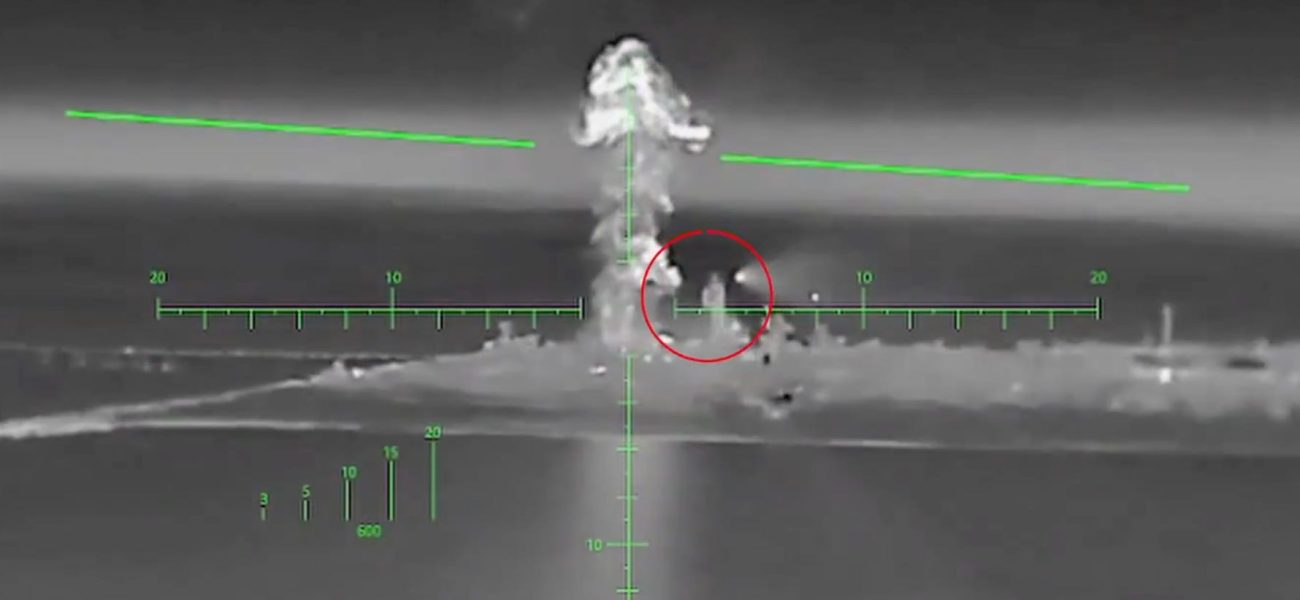
But how does it work, precisely? Imagine a drone, cruising at low altitude, difficult for radar to track because, frankly, it doesn’t look like a threat. Then, instead of just dive-bombing, it lets loose with a small volley of unguided rockets—like a miniature, flying Katyusha. This burst of fire disorients and distracts, creating openings, or simply destroying high-value static targets not expecting such an airborne annoyance. The initial reports suggest they’re designed to blind or destroy Russian surface-to-air missile radar systems, effectively poking holes in a sophisticated air defense net.
“One might classify these actions as little more than harassing attacks, politically motivated theatrics rather than military breakthroughs,” countered Dr. Ilya Volkov, a military analyst at Moscow’s Center for Strategic Research, in a state-backed media interview. “But even an irritant, if persistent enough, demands resources. We’re observing these developments with considerable attention, naturally, — and adjusting our doctrine accordingly. It’s not a defeat, but it’s… an engineering challenge, shall we say.” An ‘engineering challenge’ indeed. That’s one way to put it when your expensive kit is being bamboozled by hobby-shop electronics. It certainly illustrates when fear takes the field.
The global implications here, they’re vast. This isn’t some niche tactic for one specific conflict. And because it costs so little, relatively speaking, to manufacture or adapt these drones versus the prohibitive price tag of the systems they aim to degrade—reports from Ukraine’s defense industry indicate they can produce these ‘attack packages’ for as little as 2% of the cost of a single Pantsir-S1 system, an alarming disparity—it changes everything for smaller nations or non-state actors. It means even if you’ve got fewer resources, you’ve still got a punch. And it can be a rather nasty one.
Consider the region of South Asia, for instance. Or the wider Muslim world. Many countries there, including Pakistan, have long understood the asymmetries of conflict. They’ve also been on both the receiving — and delivering ends of drone warfare. The lessons learned by Ukraine here aren’t lost on their military planners. It’s an evolving landscape where traditional might isn’t the sole determinant of tactical advantage. It reinforces what some militaries have always known: innovation, not sheer volume, often wins the day, especially when the playing field is anything but level.
What This Means
The geopolitical reverberations of Kyiv’s ingenious drone tactics are immense. Economically, this showcases how cheaper, mass-produced technology can degrade high-cost conventional assets, potentially lowering the barrier for entry into sophisticated forms of warfare. Defense budgets worldwide might need recalibration. We’re seeing an erosion of the efficacy of conventional air defense against swarm attacks and creatively adapted platforms. Politically, it grants smaller states a greater, albeit still limited, capacity to resist or retaliate against more powerful adversaries, a fact that’s probably causing a few sleepless nights in capitals accustomed to technological supremacy. it accelerates the proliferation of accessible, offensive drone technology. It implies future conflicts won’t solely be about who has the biggest bombs, but who can best adapt the smallest, most agile, and perhaps most annoying ones.