

Red Devil’s Reckoning: Carrick’s Ultimatum to INEOS Exposes Football’s Cash Dilemma
POLICY WIRE — London, UK — Another season, another crescendo of speculation at Old Trafford. Michael Carrick’s post-match comments, following Manchester United’s utterly...

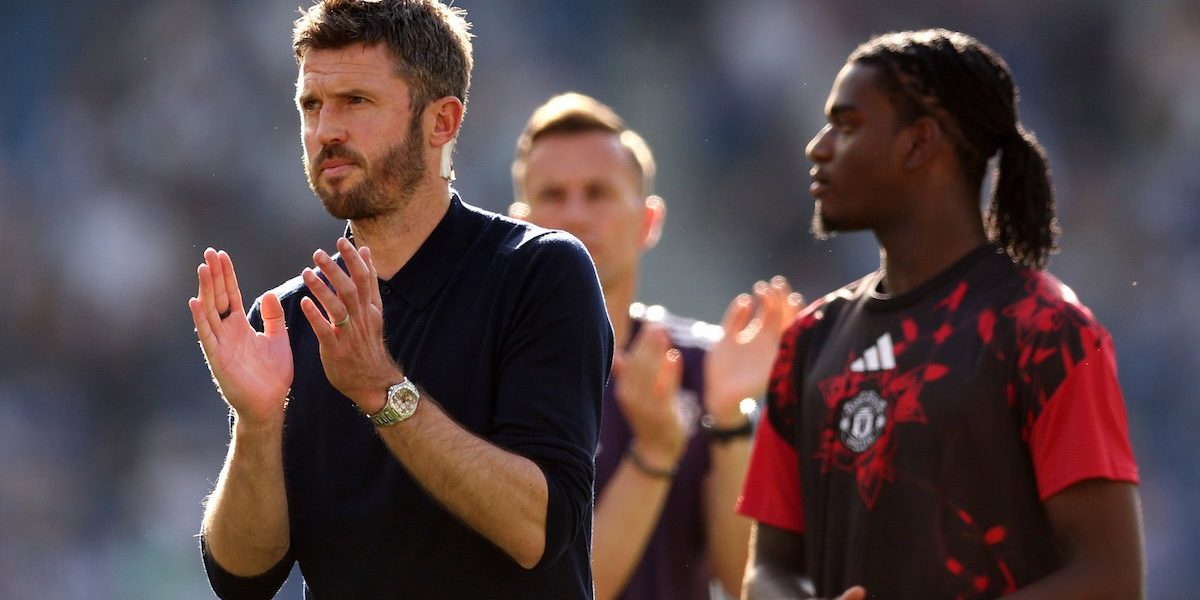
POLICY WIRE — London, UK — Another season, another crescendo of speculation at Old Trafford. Michael Carrick’s post-match comments, following Manchester United’s utterly convincing 3-0 rout of Brighton — a game that meant almost nothing — weren’t the usual saccharine platitudes you’d expect. Instead, the newly confirmed head coach laid bare a stark demand for significant summer investment, effectively putting INEOS and its figurehead, Sir Jim Ratcliffe, squarely on the clock. It wasn’t about the Brighton score; it was about the ledger, the looming summer transfer window, and the relentless machinery of top-tier football finance.
The win itself, played out under a late-season sun, was merely a backdrop, a curtain call for a campaign that started with high hopes and stumbled into a slightly more respectable finish. But Carrick wasn’t basking. Not really. He spoke to club media with a calculated sincerity, a professional calling his shot. “We want to play the football that ultimately excites them [the fans],” Carrick stated, his tone betraying a pragmatic idealism. “We need to win games, of course we do, we want to achieve things and win trophies, but you’ve got to do it a certain way.” And that ‘certain way’ apparently costs a significant chunk of change. This isn’t just about tactical formations anymore, is it? It’s about corporate strategy.
Because let’s be honest, this club, like so many global football behemoths, operates less like a sports team and more like a multinational conglomerate. The Red Devils ended their 2025/26 Premier League term with an impressive flourish, goals coming from Patrick Dorgu, Bryan Mbeumo, and Bruno Fernandes. Fernandes’ goal, an easy tap-in, capped off an exceptional season for him, bringing his assist tally to an astounding 21 for the campaign — a Premier League record that saw him eclipse legends like Kevin De Bruyne and Thierry Henry, as verified by official league statistics. Such individual brilliance, however, often masks collective systemic flaws that cash injection is meant to fix.
And so, the post-game analysis quickly pivoted from the pitch to the boardroom. Carrick pressed his case, knowing full well the weight of expectation. “I think we’ve got to make the most of the summer in all different aspects really: come back stronger as a group, stronger as a squad,” he asserted, drawing a line in the sand. He’s effectively saying: I’ve done my bit with these lads; now you, the custodians of the purse strings, must do yours. It’s a subtle but pointed challenge to the new regime.
But INEOS, with its hard-nosed chemical industry background, isn’t known for throwing money away frivolously. While fans dream of blockbuster signings — think midfielders, left-backs, maybe another attacker — the executive suites whisper of ‘strategic investment.’ “Our commitment is to sustainable excellence, not reckless expenditure,” offered a senior INEOS executive, speaking on background about the club’s financial planning. “We’re scrutinizing every target, balancing immediate impact with long-term financial health. The days of simply buying the biggest name are behind us; it’s about finding value.” They’ve got a global empire to consider, after all, not just a squad list.
📄 POLICY WIRE WHITEPAPER PUBLISHED: PAKISTAN'S NATIONAL SECURITY POLICY PRIORITIES
👉 READ BY CLICKING HEREThe truth is, this isn’t just about Manchester. It’s a common dynamic in an era where global capital increasingly chases elite sporting assets. Just look at the mega-bucks thrown around in something like the IPL playoffs. Fans in Islamabad — and Lahore, just like those in London or New York, follow the Premier League with religious fervor. They’ve invested their emotional capital, often seeing these teams as extensions of their own aspirations, a digital citizenship of sorts. And they’re not shy about demanding results from owners, regardless of where the balance sheet truly stands. For them, a Manchester United or a Real Madrid represents global aspiration; the economic pragmatism sometimes feels like a betrayal.
What This Means
Carrick’s calculated comments aren’t just about squad depth; they represent a public relations chess move and a significant early test for INEOS’s ownership strategy. Politically, it signals a new, more transparent power dynamic in the club: the manager is willing to exert influence on transfer policy and push for tangible backing. Economically, it forces INEOS to articulate its long-term financial philosophy for Manchester United under the intense scrutiny of global media and a notoriously demanding fanbase. Are they about shrewd, analytical acquisitions, or are they willing to deploy their substantial reserves to rebuild? Because if they hesitate, or miscalculate, the goodwill generated by their initial investment could evaporate faster than you can say ‘financial fair play.’ The broader implication for sports finance is also stark: the manager is no longer just a coach; he’s a corporate lobbyist for capital expenditure, knowing full well that sporting success directly correlates to brand value and, ultimately, investor returns. It’s a high-stakes poker game, — and Carrick’s just shown his hand.