

Turin’s Ugly Undercard: Italian Fan Brawl Exposes Football’s Fragile Business
POLICY WIRE — Turin, Italy — They weren’t chanting. Not for goals, not for glory. They were howling for a halt, demanding that the show be put off entirely. Because that’s what a sporting spectacle...

POLICY WIRE — Turin, Italy — They weren’t chanting. Not for goals, not for glory. They were howling for a halt, demanding that the show be put off entirely. Because that’s what a sporting spectacle sometimes becomes when the carefully constructed veneer of corporate sponsorship and broadcast rights snaps under the weight of sheer, unadulterated tribalism: a problem. It wasn’t a weather delay that postponed Sunday’s high-stakes Turin derby between Juventus and Torino; it was plain, old-fashioned human belligerence. One fan, severely rattled but thankfully not facing life-ending injuries after pre-match clashes, wound up in a hospital bed, forcing an unprecedented hour-long delay that sent tremors through Serie A’s tightly scheduled finale.
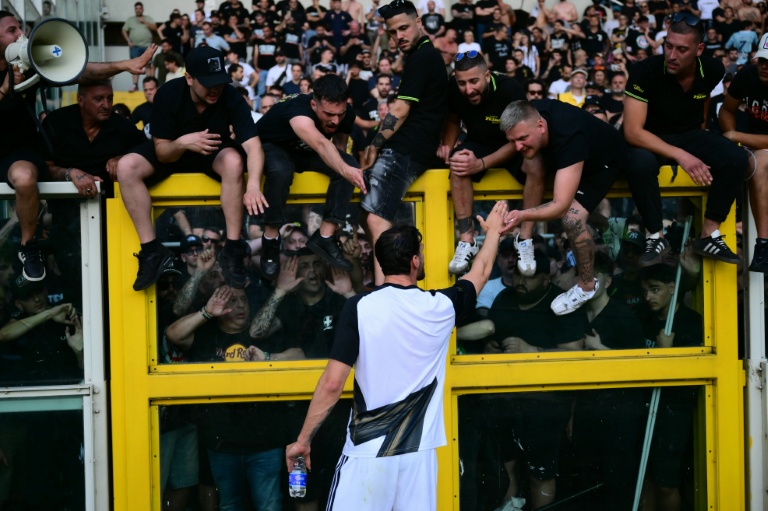
This wasn’t just a simple logistical hiccup, not some dropped ball in scheduling. This was a direct assault on the very notion of ‘public safety’—a phrase trotted out by authorities with grim regularity whenever crowd control morphs into crowd calamity. Juventus’s hardcore supporters, known locally as ‘ultras,’ got wind of their injured comrade, and their immediate response wasn’t concern for fair play or league standings, but a furious ultimatum: suspend the game. Their indignation culminated in a dramatic abandonment of the away section, leaving a conspicuous void where frenzied loyalties usually reign. But, in the end, the football machine grinds on, doesn’t it? The whistle blew, belatedly, at 9:51 PM. A paltry ten minutes after the originally announced rescheduled kick-off, which itself had been scorned by the Juve faithful.
Because every league has its flashpoints. Every nation grappling with the fine line between passionate support — and outright disorder knows the headaches. Here in Italy, these incidents often echo deeper societal fissures—a clash of identities, economic anxieties finding an outlet in collective fervor. “We consistently work with clubs to foster a safe environment, but a handful of individuals routinely compromise the integrity of the game and the safety of genuine supporters,” stated Antonio Rossi, a spokesperson for Serie A, in a rare moment of public frustration. “It’s a perpetual challenge that demands unwavering commitment from all stakeholders.” He’s not wrong, of course. The challenge is immense. It’s an arena where identity gets tangled up with loyalty, where local pride curdles into regional resentment, all playing out on a global stage where eyes from Karachi to Kufa are often glued to these very European leagues.
It’s a peculiar irony that as millions across South Asia—Pakistan especially—tune in religiously to these European football powerhouses, dreaming of a Ronaldo or a Messi, they’re often far removed from the grittier realities that occasionally erupt within the stands. The universal appeal of the beautiful game transcends geography, yet the ugliness of tribalism, so prevalent in localized socio-political landscapes, mirrors itself uncannily in football’s own fervent fanbases. Whether it’s political rallies on the subcontinent or stadium melees in Turin, the undercurrent of ‘us vs. them’ remains disturbingly similar, only the canvas changes. This incident, while locally contained, sent a small but clear message across borders: the passions that fuel adoration can, with a slight tilt, ignite outright animosity. This isn’t just about a ball; it’s about belonging, — and what people will do to defend it.
Such delays aren’t just an annoyance; they’re an economic drain. Broadcasting slots are meticulously negotiated, advertising revenue linked to precise timings. Any deviation causes a domino effect across schedules — and commercial agreements. And think about it—two points separated Juve from a Champions League spot heading into that final round. Every single minute of play mattered, both on the pitch — and in concurrent matches for their rivals. Those other crucial games, involving AC Milan, Roma, and Como (who were level on points with Juve for sixth), got off relatively on time, after a token five-minute stutter. Imagine the player jitters, the psychological torment of waiting an extra hour, locked away in the changing room while your direct competitors are out there already sealing their fate. It’s enough to make a manager pull their hair out. And if they’ve no hair, well, they’d certainly wish they did, just so they could.
📄 POLICY WIRE WHITEPAPER PUBLISHED: PAKISTAN'S NATIONAL SECURITY POLICY PRIORITIES
👉 READ BY CLICKING HERE“We spend upwards of 250 million euros annually on public order policing related to sporting events across Italy alone,” revealed Colonel Massimo Conti, a carabinieri officer intimately familiar with stadium security. This stark statistic, reported by a national police federation, hammers home the perpetual burden that fan behavior imposes on public resources. The financial costs are staggering. The reputational costs? Potentially even higher. After all, nobody wants their marquee sporting event defined by a hospital admission rather than a magnificent goal. Not if they want to keep selling those lucrative broadcast rights to a global audience—audiences in places like Pakistan who’d frankly prefer watching the game to watching footage of a street brawl.
What This Means
The protracted delay of the Turin derby over fan violence isn’t just a blot on Italian football’s ledger; it’s a stark reminder of the fragile underpinnings beneath big-money sports. Economically, even minor schedule disruptions have ripple effects, potentially eroding broadcaster confidence and, by extension, sponsorship deals that often hinge on predictable viewership figures. Clubs are increasingly on the hook for security costs, stretching budgets already strained by competitive demands. And this creates a political quandary: how much public resource should be diverted to police events that are, fundamentally, private enterprises? Local authorities, faced with mounting policing expenditures, frequently find themselves in an awkward political bind, pressured by both citizens who expect safety and powerful clubs demanding subsidized protection. There’s an argument to be made that repeated incidents could compel stricter, even draconian, regulatory responses—think points deductions, closed stadiums—which would alienate core fan bases but might be deemed necessary to restore order. The perception of endemic violence certainly doesn’t help Italy’s national image, especially in an era when tourism and soft power are so aggressively cultivated. This isn’t just a sport anymore; it’s a national statement about order, or the distinct lack thereof. It all comes back to a messy equation, doesn’t it, of profit, passion, — and public peril.
But make no mistake; despite the sporadic eruptions of chaos, the game itself continues its relentless march. The global business of football is simply too vast, too intertwined with cultural identity and economic interest, to be derailed by a few skirmishes. The stakes, both on — and off the field, are perpetually climbing. And so, the world watches, sometimes wincing, but always watching, as the drama, both planned and tragically spontaneous, unfolds.