


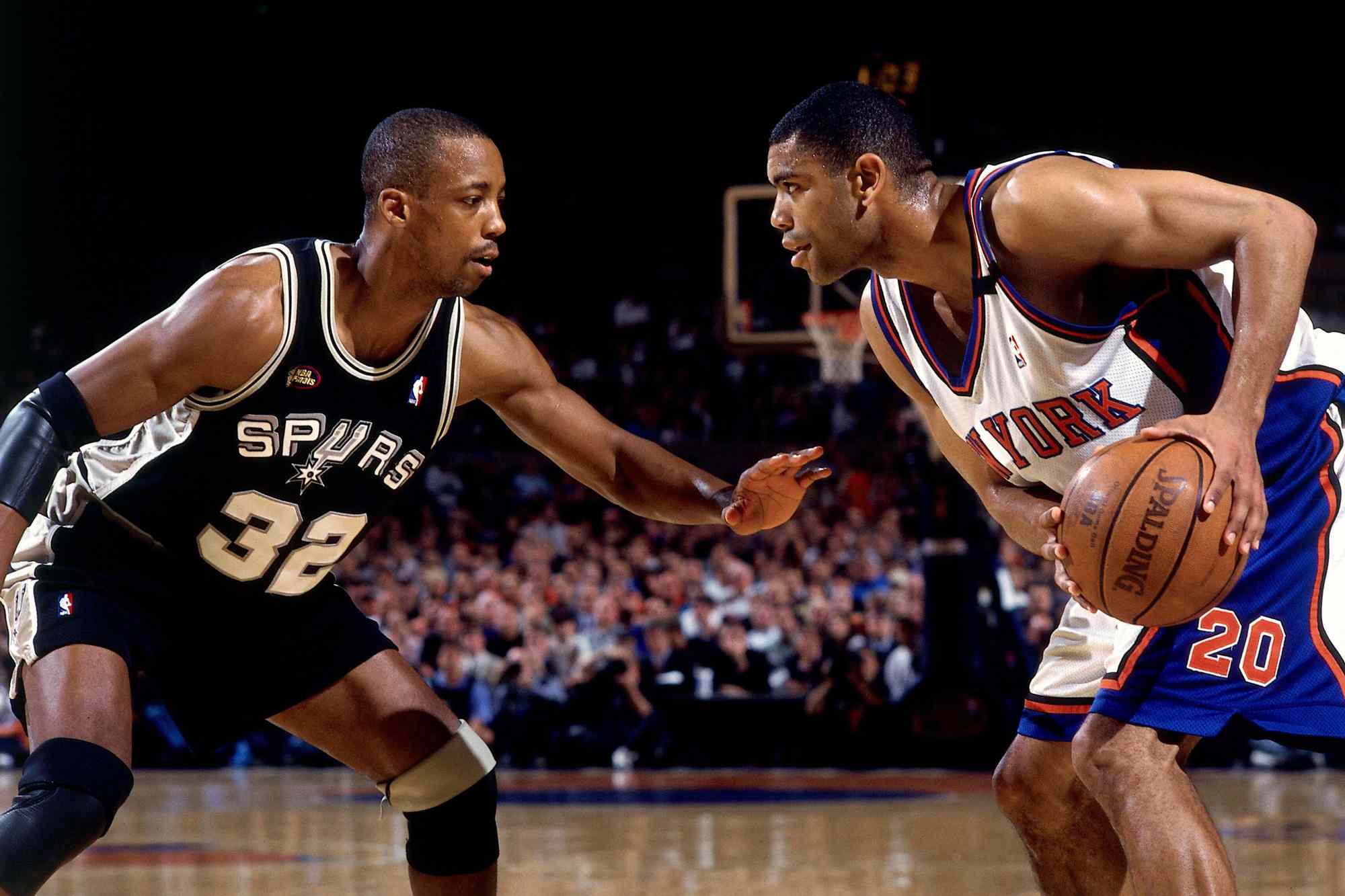
Hoops Mythology and the Long Game: When Court Legends Don Political Stripes
POLICY WIRE — New York, United States — For some, the enduring echo of a championship doesn’t come from etched gold trophies or MVP accolades, but from the relentless, bureaucratic grind of a...

POLICY WIRE — New York, United States — For some, the enduring echo of a championship doesn’t come from etched gold trophies or MVP accolades, but from the relentless, bureaucratic grind of a nine-to-five. It’s a subtle metamorphosis, isn’t it? The roar of 20,000 fans replaced by the low hum of an air-conditioned office; the adrenaline of a last-second shot exchanged for the methodical rhythm of player development meetings. It’s almost mundane, really—except when those doing the nine-to-five once bent steel on the biggest stage basketball offered. Because, as it turns out, the heroes of the 1999 NBA Finals, two squads forever etched into the league’s folklore, aren’t just reliving glory days. No, they’re knee-deep in the very machinery that makes pro sports tick, their trajectories often mirroring the complex economics of talent management and soft power diplomacy far beyond the baseline.
It’s almost thirty years since the San Antonio Spurs edged out the improbable eighth-seed New York Knicks in that lockout-shortened season—a clash many still argue over (the Knicks’ gritty run? That’s something else, folks). Now, with a supposed rematch on deck in 2026, the league’s marketing machine is dusting off those old tapes, drawing a lineage to its shiny new stars. Spurs phenom Victor Wembanyama, speaking recently, even credited the ’99 team with, “carrying us, you know? They’re guiding us in the right direction.” But what does that guidance truly mean? It’s not just about passing on a jump shot, or a defensive stance. It’s about navigating the vast, often opaque world of post-athletic professional life. That’s where things get interesting.
Take Allan Houston. A sniper on the court, a clutch shooter for those ’99 Knicks. Today? He’s not out hawking sneakers or simply signing autographs. He’s the vice president of player leadership — and development for the Knicks’ front office. It’s a proper suit-and-tie gig, focusing on mentorship, ensuring these young titans don’t just dunk, but mature. “My focus now,” Houston once observed, “is on building the human capital of this organization. It’s about more than just points — and rebounds; it’s about setting foundations for lives, both on and off the court. We can’t just develop athletes; we have to cultivate people.” That, right there, sounds less like a former superstar and more like a human resources strategist—a crucial distinction in the modern sporting economy.
Many of his contemporaries, too, followed similar arcs. Larry Johnson, he of the famously sprained MCL in that ’99 series, returned to the Knicks as a basketball and business operations representative. Charlie Ward, the dual-sport athlete (heisman winner, remember?), transitioned to coaching college hoops. Over in San Antonio, Tim Duncan, the stoic anchor, had a brief coaching stint, but generally prefers the shadows and speed shops—a different kind of empire building, I guess. Sean Elliott, post-kidney transplant (an experience that turned him into an advocate, by the way), is now a familiar voice as a Spurs analyst. David Robinson, the ‘Admiral,’ co-founded a school for low-income families and later launched a capital group; his impact goes way beyond the paint.
It’s not just American domestic business, either. The global footprint of the NBA—and the business of sport, writ large—can’t be overstated. This league, it’s a sprawling cultural export. Just look at the burgeoning basketball interest in regions like Pakistan, for instance, where cricket traditionally reigns supreme. Leagues and local academies, though nascent, are drawing inspiration, seeking models for athlete development and post-career transitions from places like the NBA. This isn’t charity; it’s about market expansion, cultural influence. According to a 2023 report by Nielsen Sports, NBA viewership outside North America accounts for over 35% of its total audience, showcasing a sustained, strategic push into diverse markets—places like the UAE, Malaysia, and even the periphery of the Muslim world—all keen to emulate elements of Western sports excellence. But it also means these regions often replicate the same pitfalls if the systems aren’t designed correctly. How do you prepare a generation for a life where only a fraction makes it big?
And then there’s Gregg Popovich, still coaching the Spurs, still the philosopher king of the league. He knows a thing or two about longevity, about staying relevant. What he’s built in San Antonio isn’t just a dynasty, it’s a culture, a whole approach to life, even. He doesn’t just manage players; he mentors leaders, citizens. Analog Ghosts in a Digital Age reminds us of the power of these sporting mythologies, how they transcend mere athletic feats. That kind of resonance? That’s what allows guys like Sprewell, after years away, to slide back into a community relations role with the Knicks. Because the mythology sticks.
What This Means
The reappearance of the 1999 NBA Finals narrative isn’t simply a trip down memory lane; it’s a window into the professional athlete’s extended shelf-life within the sporting-industrial complex. What we’re observing is a sophisticated ecosystem where raw talent evolves into institutional memory, becoming a key commodity in its own right. Former players, like Allan Houston or Latrell Sprewell, aren’t merely nostalgic figures; they’re valuable assets. Their understanding of the league’s dynamics, their connections, their very presence, lends authenticity and experience that current front office staff or marketing gurus just can’t replicate. It’s a tacit form of policy—ensuring the ‘club legend’ persona continues to generate value, bridging fan engagement across generations.
But there’s a broader economic dimension. As the NBA looks eastward, its strategy isn’t just about selling jerseys. It’s cultural diplomacy through a different lens. Cultivating basketball in nations like Pakistan—which often looks towards cricket’s dominance in India or Afghanistan for regional athletic identity—represents a long-term investment. It’s about capturing future talent pools, expanding media rights markets, — and subtly influencing global youth culture. These aren’t abstract concepts; they’re the hard calculations underpinning the league’s multi-billion dollar valuation. These men, whether they’re molding young minds or managing funds, embody the transformation of celebrity from ephemeral performance to sustainable, policy-driven influence within a global entertainment empire.