


Ice, Intrigue, and Inertia: Oshie’s Cup Call Cuts Through Analytics Noise
POLICY WIRE — Washington D.C., USA — In an age where algorithms promise to dissect every variable and predict every outcome, sometimes it’s the raw, unquantifiable human element—that tenacious...

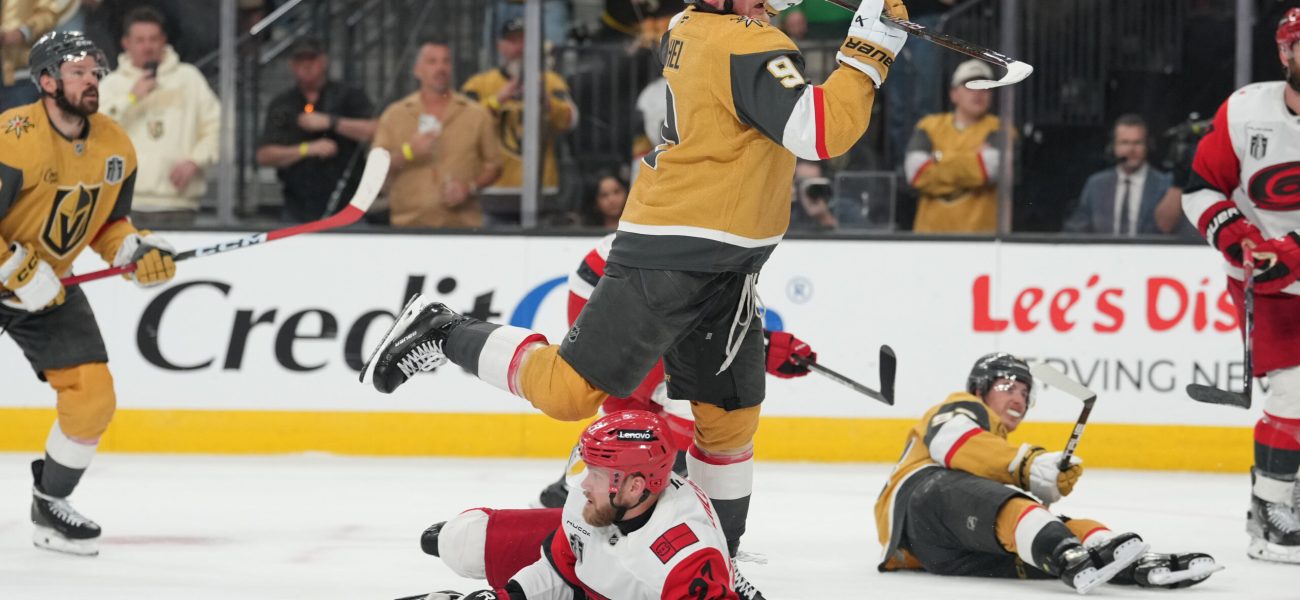
POLICY WIRE — Washington D.C., USA — In an age where algorithms promise to dissect every variable and predict every outcome, sometimes it’s the raw, unquantifiable human element—that tenacious refusal to quit—that shreds the spreadsheets. Take the ice, for instance. The 2026 Stanley Cup Final, a slugfest currently knotted at a visceral 2-2, has apparently decided to spit in the face of conventional wisdom. Predictions? They’re getting upended like pucks on a bad bounce.
It’s not just the fans, but seasoned players themselves who find their finely-tuned instincts at odds with the momentum. Former NHL star T.J. Oshie, never one to mince words, stepped into the fray on The Pat McAfee Show, offering up his read on the epic between the Carolina Hurricanes and the Vegas Golden Knights. A casual query, a loaded answer.
Initially, his gut leaned heavily towards the desert warriors. “All series, I would have said it’s Vegas,” Oshie told McAfee. That’s a fair enough assessment given Vegas’s formidable roster. But then, as it often does, the ice began to tell a different story—one etched in sheer effort and a defiance of expectations. [QUOTE_PLACEHOLDER] he admitted, a quiet acknowledgement of something almost primal in their play.
This respect doesn’t come from nowhere. Oshie knows this kind of grinding persistence. He faced the Hurricanes himself during Washington’s playoff run back in 2019, a series etched in memory for its physicality. He sees a ghost, a mirror, of that past in this current Carolina squad. “They were absolute pests out there,” he recounted of his previous encounter. And this ain’t no historical curiosity; it’s a living, breathing comparison. [QUOTE_PLACEHOLDER] he says, then, with a sharper edge, adds, “Except for this team, so much better.” That’s a stinging compliment if there ever was one.
Despite the Hurricanes’ remarkable surge, their grit hasn’t entirely swayed Oshie from his initial read. Not yet. “For now, I am going to stay Golden Knights,” he reaffirmed, sticking to his guns. But he can’t quite shake the impression Carolina has left, a mark deep enough to warrant a concession. “But I would say the Carolina Hurricanes have earned so much respect from me.” He believes the Knights can — and must — tidy things up. “I think the Golden Knights can fix up a little of the mistakes they did last game, letting that puck get to the interior of the ice. And Torts is going to make sure he gets on them for it.”
His read isn’t some outlier fantasy, though. Vegas has consistently dominated key stretches, especially during the second periods, where they’ve outscored Carolina by a staggering 9-1 margin across the four games played (Source: Series Statistics). But it’s this weird disconnect—dominant periods leading to near misses—that creates such compelling theater. Game 4 perfectly underscored this vexing tendency; Carolina, again, dug out from a hole, claiming a 5-3 victory. What’s not to love about that?
Carolina’s unyielding pressure, their refusal to let up, it’s their entire ethos. They roll four lines deep, pushing hard well into the late minutes, maintaining an energy that defies physics. Oshie, he caught that specific wavelength: [QUOTE_PLACEHOLDER] Pat McAfee, perhaps getting it even better, noted, “Brind’Amour’s got those boys in shape too, because I think he’s doing all the cardio with them still.” It makes sense, really. But not just conditioning—it’s something more.
📄 POLICY WIRE WHITEPAPER PUBLISHED: PAKISTAN'S NATIONAL SECURITY POLICY PRIORITIES
👉 READ BY CLICKING HEREWhat This Means
Beyond the ice, the dynamics of this Stanley Cup Final echo geopolitical and economic power struggles that Policy Wire frequently covers. Think about it. Vegas, representing the well-funded, technologically advanced superpower, expects to dominate. It’s got the star power, the refined systems, and the strategic depth, often starting strong and gaining early leads—much like major nations deploying sophisticated diplomatic or military initiatives. They expect a relatively predictable trajectory towards their desired outcome.
But then there’s Carolina: the smaller, nimbler, arguably less-resourced entity that relies on sheer will, collective effort, and a suffocating, persistent defense to negate the bigger opponent’s advantages. They’re a metaphorical regional player—say, like certain nations within South Asia, whose geopolitical influence might not match their GDP but whose strategic resilience and refusal to concede have historically baffled larger powers. You see countries like Pakistan, often confronting seemingly insurmountable odds, yet demonstrating a capacity for protracted struggle and unexpected endurance that shifts the narrative on the global stage. It’s a bit like fragile peace getting shattered by an unexpected turn.
The Golden Knights’ struggle to close out games, even with a statistically significant advantage in crucial moments like those second periods, represents a persistent challenge: initial success doesn’t guarantee ultimate victory if the execution falters or resolve wavers. And often, these are the moments where less conventional players can capitalize, precisely because their strength lies not in explosive starts but in an unyielding grind, that ‘never-give-up’ mentality. It’s an economic parallel too. Larger economies, despite immense resources, sometimes grapple with structural inefficiencies or complacency, allowing more agile, persistently innovative smaller markets to gain ground or disrupt established norms. The series really may boil down to that fundamental friction: overwhelming structure against relentless momentum. Vegas has the elite offensive talent — and the playoff pedigree, sure. Carolina? They just keep coming. It’s a testament to the unpredictable nature of any contest—be it sport, war, or market competition—where pure will can indeed upend carefully calculated odds. Policy makers, take note: grit — and stubborn resolve remain potent forces.