
Pharaonic Fracas: Giza Dust Settles on Dubious Scorecards and Shifting Sporting Sands
POLICY WIRE — Cairo, Egypt — Beneath the silent, millennia-old gaze of the Giza pyramids, something new — and utterly chaotic — unfolded recently. It wasn’t an archaeological discovery or...

POLICY WIRE — Cairo, Egypt — Beneath the silent, millennia-old gaze of the Giza pyramids, something new — and utterly chaotic — unfolded recently. It wasn’t an archaeological discovery or another desert fable, but a boxing match, pitting the imperious Oleksandr Usyk against kickboxing legend Rico Verhoeven. And it quickly descended into a squabble of biblical proportions, less about punches landed and more about the murky machinations that sometimes dictate modern sport. They’ve been building empires here for centuries; you’d think they’d have learned by now about foundations.
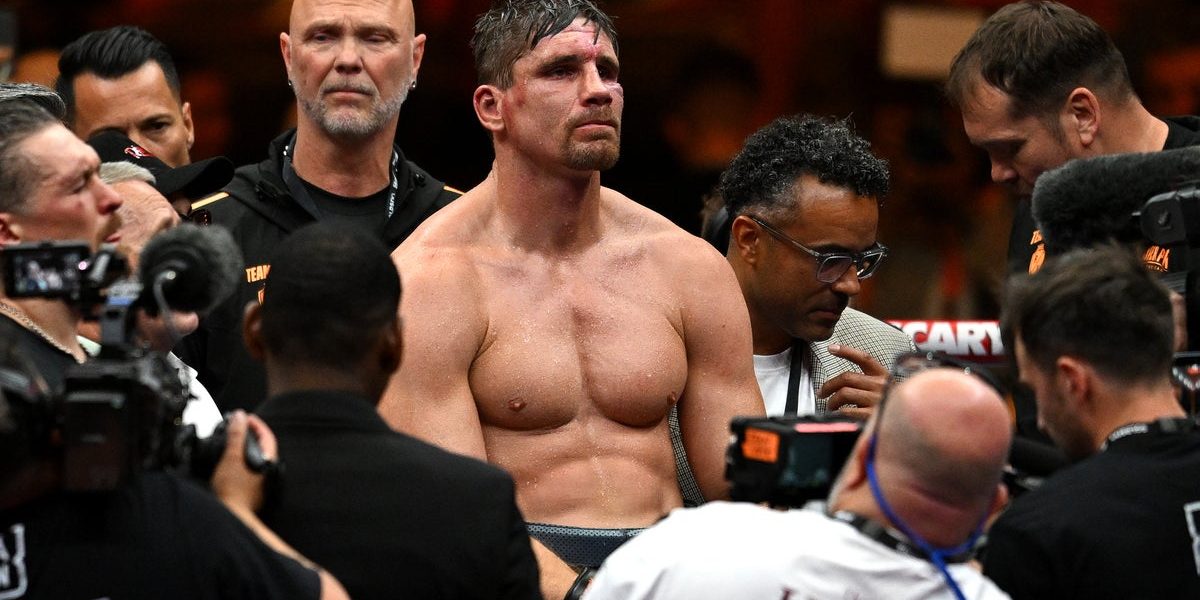
Verhoeven, making only his second foray into professional boxing, appeared on the cusp of an upset, the kind of underdog tale usually reserved for Hollywood scripts, not actual prizefighting. Yet, despite holding an imposing advantage on two out of three official scorecards heading into the penultimate round, he found his night summarily, and prematurely, cut short. What followed was a flurry of questions – mostly rhetorical – and a formal protest that peeled back the curtain on how fragile sporting integrity can seem, especially when megastar names and petrodollars are at play.
It’s always the fine print, isn’t it? As the fight spiraled towards what many thought would be a historic eleventh-round TKO by Usyk, the referee, Mark Lyson, stepped in to wave it off. But the bell, they say, had already chimed. It’s an agonizing distinction, that fraction of a second, but it means everything to a fighter trying to push into the twelfth round. But we know how that goes; sometimes, it’s not the opponent that delivers the decisive blow, but a perfectly timed official.
Verhoeven didn’t exactly mince words, post-fight, taking to Instagram with a message that spoke volumes about his frustration. “Leave emotions out of it,” he implored. “Read the cards. One second left heading into the 12th — and final round. Onwards and upwards! Respect to @usykaa, it was an honor to share the ring with you. Let’s run it back!” He filed a protest. And, frankly, who could blame him? When a lifetime of training meets a premature stoppage, well, you’re bound to feel cheated, aren’t you?
The Dutchman’s ire grew sharper with an Instagram story noting, “Official protest has been filed on our way to the airport. Rules only matter if they’re applied when it matters most.” It’s a sentiment many fans across the region and beyond, often frustrated by perceived injustices in global sports, can probably echo. Consider, for instance, the intense scrutiny and passion that surrounds a cricket match in Karachi or Dhaka, where every umpiring decision is dissected with an almost theological rigor. The fight might have been in Egypt, but the sentiment about fair play? That travels.
📄 POLICY WIRE WHITEPAPER PUBLISHED: PAKISTAN'S NATIONAL SECURITY POLICY PRIORITIES
👉 READ BY CLICKING HEREThe scorecards, which later trickled out, added a fresh layer of confusion, or maybe clarity depending on your cynicism. Judges Manuel Oliver Palomo — and Fabian Guggenheim had the bout knotted at 95-95 heading into the eleventh. Pasquale Procopio, the outlier, had Verhoeven ahead 96-94. Meaning, had that final bell sounded before the stoppage, Usyk would’ve taken the eleventh 10-8, leaving him poised for a points win. But that’s all just ‘if-then’ in the murky world of boxing, isn’t it? Usyk, the WBC champion, now stands, at least technically, with his unbeaten record intact. He didn’t seem too fussed by the noise. A champion usually doesn’t have to be.
Matchmaker Turki Alalshikh, a Saudi executive increasingly influential in the fight game, entered the ring post-bout. Instead of greenlighting a mandatory defense, he opted for an immediate rematch. This highlights the commercial realities of contemporary combat sports; it’s less about sporting trajectory and more about maximizing spectacle, even if it means revisiting a contentious bout for a second, third, or even fourth payday. They call it entertainment for a reason, you know?
What This Means
This episode, played out under ancient Egyptian skies, offers a stark commentary on the ever-blurring lines between professional sport and pure spectacle, particularly in the Middle East. With Saudi Arabia leading the charge, countries like Egypt and others across the Muslim world are investing staggering sums in staging international sporting events. This isn’t just about athletic competition; it’s a calculated exercise in soft power, brand building, and, frankly, money. They want to draw eyeballs, tourist dollars, — and reshape international perceptions. And controversial finishes, like it or not, generate buzz. The global sports tourism market, valued at over USD 500 billion annually, isn’t something to sneeze at. That’s why you see countries funneling massive capital into things like the Saudi Pro League, Formula 1, and, yes, big-money boxing bouts. When Saudi matchmaker Turki Alalshikh stepped into the ring and explicitly stated, “This is not the time [for a mandatory challenger]. I believe Rico Verhoeven deserves a rematch,” it wasn’t just a casual observation from a fight promoter. It was a clear declaration of commercial intent, demonstrating how financial leverage increasingly dictates sporting narratives. These events, staged at iconic locations like Giza, aren’t just selling tickets; they’re selling an image, a vision of regional ambition that resonates from Marrakech to Lahore. And they’re not afraid to shake up tradition to get it.