


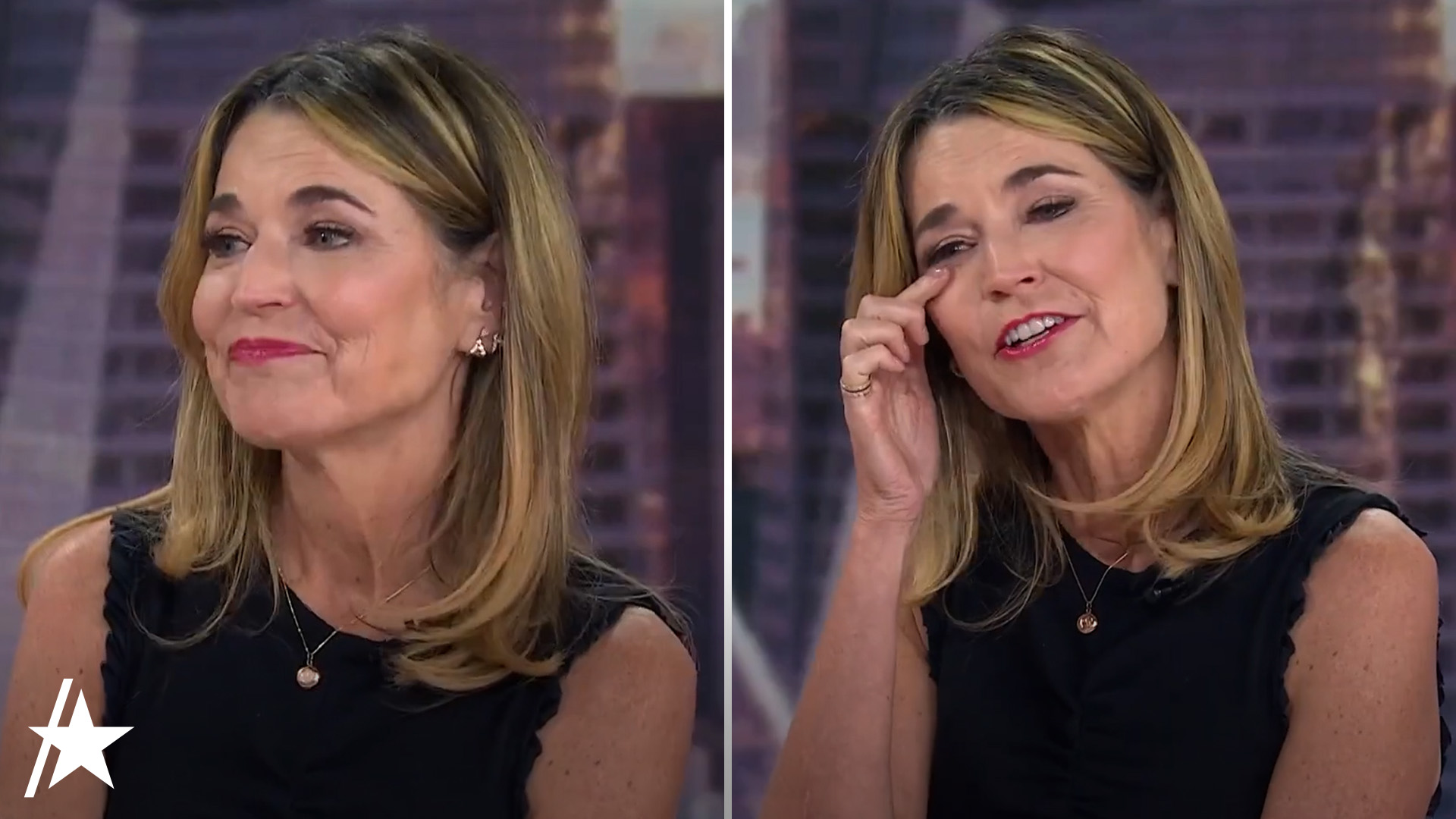
The Media’s Unrelenting Gaze: Savannah Guthrie’s Personal Moment and the Public’s Appetite
POLICY WIRE — Washington, D.C. — It’s a curious feature of modern celebrity, isn’t it? The public’s right to a spectacle often extends even into the most private corners of a person’s life....

POLICY WIRE — Washington, D.C. — It’s a curious feature of modern celebrity, isn’t it? The public’s right to a spectacle often extends even into the most private corners of a person’s life. Especially when that person is a morning news anchor—a fixture in millions of homes, a digital hearth around which much of the American conversation unfurls each day. The very act of appearing vulnerable becomes, in itself, another performance, albeit an unscripted one. It’s a tough line to walk, — and frankly, most folks don’t get it right. They either give too much or hold back just enough to feed the ravenous beast of public curiosity without actually satisfying it.
And so, we witnessed the media landscape pause, albeit briefly, for what was framed as a profoundly personal moment. A broadcast personality, Savannah Guthrie, returned to her anchor chair. This wasn’t just any return; it followed a period that, for many in the industry and the public, warranted—demanded, even—an explanation. Her absence had prompted questions. Her return offered a public catharsis, or at least a highly anticipated public accounting, which is sometimes the same thing in television news. It all comes down to narrative, doesn’t it? The tale of personal struggle — and the eventual, triumphant return. But this isn’t always just about the person on screen; it’s about what they represent.
Her reappearance, and the subsequent sharing of details, didn’t just fill airtime; it performed a peculiar civic function for many viewers. It’s a reminder of shared humanity, sure. But it also reinforces the parasocial bonds that cable news cultivates so well. These aren’t just anchors; they’re family, companions through morning coffee — and breakfast prep. When one of their own experiences a trauma, especially one described with words like [QUOTE_PLACEHOLDER], the audience feels a proprietary interest. And they’re expected to feel it, too.
The mechanics of this particular broadcast reveal something significant about contemporary media. When Savannah Guthrie [QUOTE_PLACEHOLDER] on air after her mother Nancy’s disappearance, she wasn’t just expressing a private grief; she was enacting a public role. The raw emotion, the struggle for composure—it’s all part of the unwritten contract. You give us access, you get our loyalty. It’s an unspoken give-and-take. It works, demonstrably so. For instance, data from the Pew Research Center in 2023 indicates that cable news audiences still average around 2.5 million viewers per night across major networks, heavily reliant on a stable of familiar faces and the stories they choose to share—or are compelled to share. That’s a lot of eyes on a person’s life, or at least the curated version of it.
This dynamic feels acutely American, doesn’t it? The openness, the expectation of televised sincerity, the confessional quality of public life. Other cultures approach this very differently. Think about how such personal difficulties might be handled in, say, Pakistan or other parts of the South Asian media landscape. Public figures there often maintain a far stricter boundary between their private sorrows and their professional duties. There’s less of a premium placed on transparent emotional display on camera. Personal challenges are typically navigated within the family unit, or, if they emerge publicly, it’s often through carefully crafted statements or, sometimes, silence—a dignified reticence many in the West might perceive as coldness, or even avoidance. But for them, it’s simply the established decorum, a respect for individual dignity over mass voyeurism. The whole world doesn’t always want or need to know your business, certainly not at that granular level. And often, privacy is simply more respected.
But back in the U.S., the show must, as they say, go on. And it did, with a candor that likely resonated with millions. It’s not just a narrative about an individual. It’s a recurring fable about resilience, about picking up the pieces, about the relentless march of time and the headlines it generates. We absorb these stories, not just as news, but as a kind of modern morality play—sometimes, one of the few we get anymore. What it ultimately highlights is the media’s ever-present need to translate complex human experiences into digestible, emotionally resonant snippets for mass consumption. They’re selling connection, you see, wrapped in human struggle. And people are buying it, day in, day out.
What This Means
This episode, seemingly just a blip in the vast ocean of morning television, actually illuminates several underlying currents. Politically, it showcases the commodification of the public persona—how even genuine anguish can be folded into a network’s brand identity, deepening viewer engagement. It suggests that in an increasingly fragmented media environment, authenticity, or at least the performance of it, is a potent currency. Networks bank on these emotional connections. When an anchor gets emotional on air, it’s not just human; it’s an audience retention strategy, drawing folks closer to the screen during a time of abundant choices. The implied contract is that by revealing their struggles, public figures become more relatable, fostering a loyalty that transcends mere news dissemination.
Economically, the impact is less about direct revenue — and more about indirect influence. Strong viewer loyalty translates to higher ratings, which means premium advertising rates. It also feeds into a culture where personal narratives become almost indistinguishable from the news cycle itself. There’s a subtle but powerful implication here: our news, and indeed much of our public discourse, is increasingly filtered through personal lenses. The line blurs between reporting facts — and sharing feelings. For policymakers and strategists, understanding this media environment—where emotional resonance can sometimes outweigh granular detail—is key. It’s why messages are so often framed through personal stories, hoping to evoke empathy. Because ultimately, empathy, or its convincing portrayal, keeps people tuned in.