


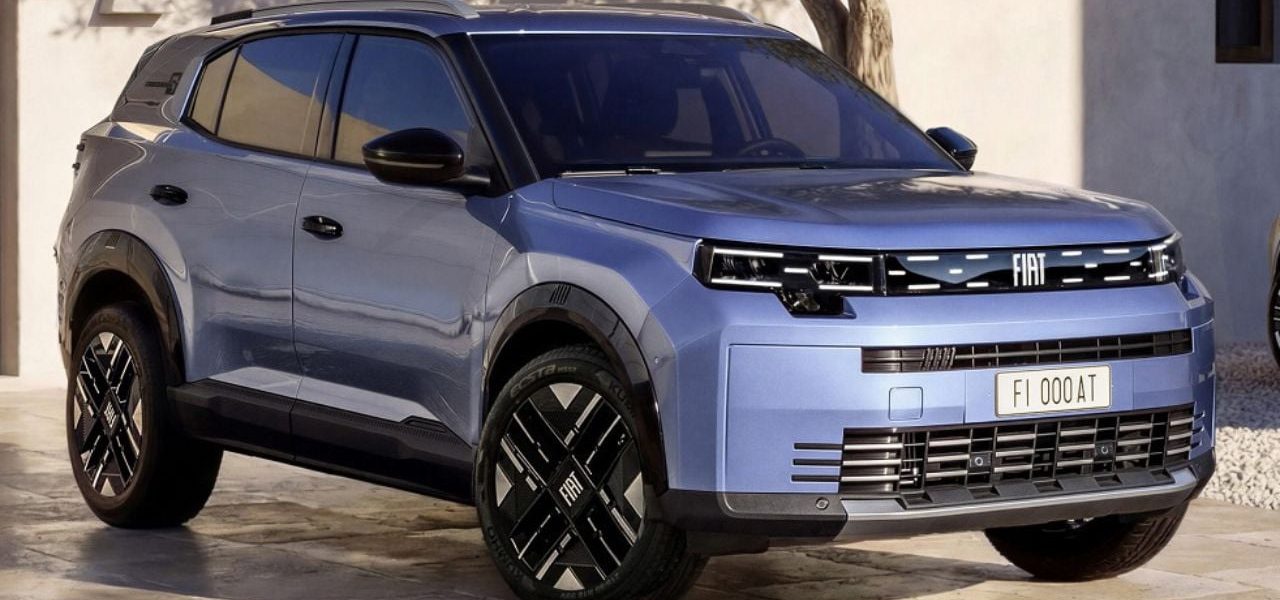
Fiat’s Grizzly Gambit: Old Marque Hunts New Markets in Crossover Battle
POLICY WIRE — Milan, Italy — Forget sleek sedans and aspirational luxury; the global automotive battlefield now looks suspiciously like an overgrown playground. Automakers aren’t just chasing...

POLICY WIRE — Milan, Italy — Forget sleek sedans and aspirational luxury; the global automotive battlefield now looks suspiciously like an overgrown playground. Automakers aren’t just chasing the latest tech anymore; they’re in a bare-knuckle brawl for a specific piece of tarmac: the compact crossover market, particularly in places where disposable income is rising faster than the road maintenance budget. It’s gritty. And Fiat, or what’s left of its singular identity within the sprawling Stellantis empire, has decided it wants a bigger slice of that pie.
Enter the Fiat Grizzly, a name suggesting a rugged, go-anywhere beast, yet firmly rooted in the utilitarian — some might say charming — practicality of the existing Panda line. It’s not about high performance or cutting-edge autonomous features; it’s about conquering the potholes of a rapidly urbanizing world. This isn’t just an extension of a family; it’s a calculated, if belated, offensive into what’s become a gold rush for mass-market manufacturers. It feels a bit like watching a grizzled prizefighter step back into the ring, counting on an old left hook to land big. They’ve missed a few rounds, sure, but the ambition, apparently, still flickers.
And because these markets don’t care much for delicate machinery, the Grizzly promises elevated ground clearance, a stiffer chassis, and, let’s be honest, the kind of simplified electronics package that stands a fighting chance against tropical downpours and erratic power grids. It’s a workhorse with pretensions, trying to look stylish without sacrificing its blue-collar ethos. For Fiat’s global brand chief, Olivier François, it’s about much more than just a car. “We aren’t just selling vehicles,” François was quoted as saying recently, though he probably meant it when addressing investors, not us cynical hacks. “We’re delivering a promise of mobility, of accessibility, to millions across the developing world. Affordability — and durability are our watchwords now; the fancy stuff? That’s for different badge plates.”
It’s a stark admission that the glamour cars, while great for headlines, aren’t paying all the bills. The real money, or at least the high-volume struggle, is in offering something tough, affordable, and just aspirational enough to entice a swelling middle class that can finally ditch the scooter or overcrowded bus. Analyst Mark Jenkins of AutoMetrics wasn’t so kind. “Look, they’ve got to claw back some ground,” Jenkins told Policy Wire in an email last week, pulling no punches. “The Grizzly’s not about pioneering new tech; it’s about sheer market muscle in a segment everyone else is already duking it out in. It’s a calculated gamble on nostalgia and perceived value, nothing more.” That’s the cold hard truth of the business, isn’t it?
The compact SUV and crossover segment, globally, accounted for an estimated over 40% of all passenger car sales last year, a statistic Stellantis’s strategists probably wallpaper their offices with. It’s no longer a niche; it’s the mainstream. But why the emphasis on developing economies? Because growth in established markets, particularly Europe, is sluggish—a predictable pattern after years of saturation. The real action is eastward, southward, anywhere ambition still outpaces established infrastructure. Because, in countries like Pakistan, for instance, where rapid urbanization outpaces civic planning, a car that can handle a rutted track one moment and navigate dense city traffic the next isn’t a luxury. It’s an absolute necessity. It’s an engine of economic participation, not just personal indulgence. In Lahore or Karachi, the sight of a sturdy, unpretentious Fiat might just be a sign of things looking up for a generation. Or, at least, getting where they need to go without bottoming out.
📄 POLICY WIRE WHITEPAPER PUBLISHED: PAKISTAN'S NATIONAL SECURITY POLICY PRIORITIES
👉 READ BY CLICKING HEREWhat This Means
This isn’t merely about Fiat’s new product launch; it’s a microcosmic look at the broader geopolitical and economic currents shaping the automotive world. Stellantis, like its counterparts, is repositioning itself to harvest the dividends of emerging market growth. The Grizzly signifies a pivot away from an exclusive focus on Western consumer tastes toward a more global, pragmatic strategy. It acknowledges the changing distribution of wealth and, critically, aspiration. Economic growth in many parts of Asia, Africa, and Latin America is creating new segments of consumers hungry for mobility solutions that balance cost, durability, and a sprinkle of brand prestige.
The implications are far-reaching. It means intensified competition, likely leading to further consolidation among smaller regional players. It also hints at a subtle shift in automotive design philosophy, where ruggedness and repairability might start to compete with seamless connectivity and touchscreens as priority features. Politically, this focus on affordability can be framed as economic enablement, but it’s also a clear recognition of consumer purchasing power shifts away from traditional economic blocs. For governments in nations with burgeoning middle classes, the influx of such vehicles means not just more taxes but also increased demands on existing—often strained—road networks and fuel infrastructure. It’s a double-edged sword, one that promises both opportunity — and new urban planning headaches. The car, in this context, is less about individual freedom and more about a nation’s collective leap towards an often-bumpy future. Echoing global aspirations isn’t always about cutting-edge tech; sometimes, it’s just about getting reliably from point A to point B, wherever that might be.