


Ravens’ Tactical Play Undercuts Undrafted Dreams, Shifting the NFL’s Brutal Calculus
POLICY WIRE — Baltimore, USA — The NFL’s brutal calculus often manifests in quiet transactions, the kind that ripple through locker rooms with far greater force than a thunderous hit on the gridiron....

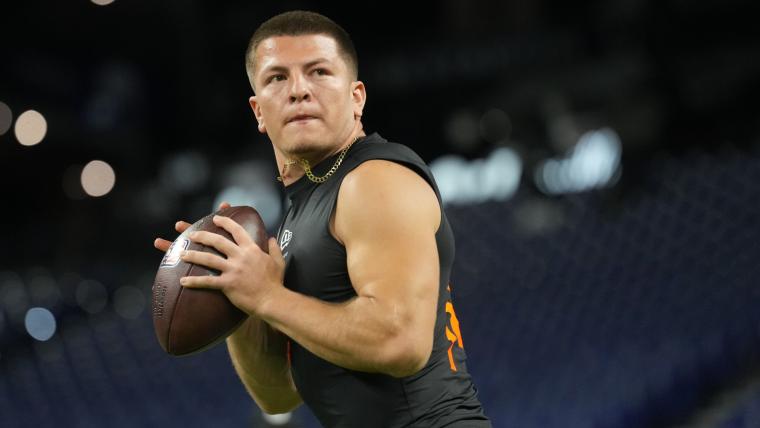
POLICY WIRE — Baltimore, USA — The NFL’s brutal calculus often manifests in quiet transactions, the kind that ripple through locker rooms with far greater force than a thunderous hit on the gridiron. For Diego Pavia, an undrafted quarterback from Vanderbilt, Monday’s news wasn’t a highlight reel; it was a sudden, seismic shift in the precarious landscape of his professional aspirations.
Pavia, an athlete whose collegiate career saw him navigate the arduous path from junior college to a Power Five program, arrived in Baltimore carrying the weight of expectation — and the stark reality of long odds. He was already locked in a gladiatorial contest with Joe Fagnano, another rookie signal-caller, for what was already a long-shot third-string quarterback (QB3) slot, or perhaps a coveted practice squad berth. Then came Skylar Thompson, a name not widely synonymous with NFL stardom, but one that instantly rendered Pavia’s uphill battle significantly steeper.
Thompson, a journeyman with a few seasons under his belt and a discernible mobility that aligns with contemporary offensive schemes, slid into the Ravens’ roster with the quiet efficiency of a veteran acquisition. He isn’t expected to unseat Lamar Jackson, the undisputed starter, nor Tyler Huntley, Jackson’s entrenched backup. But he is a known quantity, a proven professional who can execute an offense in a pinch — a quality often prioritized over raw, untested potential when the stakes are Super Bowl-level.
“We’re always evaluating talent, seeking the optimal blend of experience and raw potential,” shot back Eric DeCosta, the Ravens’ general manager, when pressed by Policy Wire on the strategic implications of the signing. “Skylar brings a proven professional demeanor and familiarity with complex offenses, which is invaluable in a backup role. It’s about ensuring we’re prepared for any contingency, however unlikely.”
And so, Pavia, whose dream had been a mere whisper on the wind, now found himself navigating a tempest. His path, already fraught with uncertainty, now demands he not only surpass Fagnano — a challenge in itself — but also demonstrate a developmental ceiling so stratospheric that the organization would deliberately choose the unknown over Thompson’s established competence. It’s a choice that NFL franchises rarely make for the QB3 position, which often functions more as an emergency break-glass option than a long-term investment.
Behind the headlines, this isn’t merely a story about one player’s dashed hopes; it’s a stark reminder of the NFL’s unforgiving gauntlet. Historically, only about 1.5% of undrafted free agents (UDFAs) manage to secure a permanent spot on an NFL 53-man roster each year, according to analyses from outlets like ESPN and NFL.com. Pavia is now among the many whose trajectory has been further complicated by the sheer pragmatism of professional sports.
Still, the reverberations of such decisions extend beyond the immediate roster shake-up. The narrative of an undrafted hopeful battling against stacked odds resonates deeply, particularly with burgeoning fan bases in regions far removed from the American gridiron. In places like Pakistan, where digital media has democratized access to American sports, the struggles of a Pavia or the tactical decisions of a DeCosta are increasingly consumed and understood, reflecting a globalized sports economy. For young athletes in Lahore dreaming of professional careers, whether in cricket or American football, these stories of perseverance – and brutal market realities – become part of their aspirational lexicon.
📄 POLICY WIRE WHITEPAPER PUBLISHED: PAKISTAN'S NATIONAL SECURITY POLICY PRIORITIES
👉 READ BY CLICKING HERE“The NFL isn’t just a sport; it’s a global entertainment conglomerate,” observed Dr. Aisha Khan, a sports economist specializing in emerging markets, speaking to Policy Wire from her office in London. “Every roster spot, every narrative of struggle and triumph, resonates far beyond American borders, influencing aspirations from Karachi to Cardiff. These stories aren’t merely about football; they’re about the universal quest for opportunity, often in the face of daunting odds.” Khan’s insights underscore how deeply intertwined the individual fates of players are with the precarious calculus of professional sports, a system that prioritizes performance and immediate utility above all else.
So, where does this leave Pavia? Likely, battling for a practice squad spot against Fagnano, with Thompson occupying the third-string role. It’s a demotion in expectations, a hard-nosed lesson in the economics of player valuation, where a few years of NFL experience can trump developmental potential when cap space and roster spots are finite commodities. It’s a cruel game, but then again, nobody ever said the path to professional glory was paved with anything but brutal competition.
What This Means
At its core, the Ravens’ decision to sign Skylar Thompson illuminates a fundamental strategic tension in NFL roster construction: the perpetual tug-of-war between immediate utility and future potential. For a team like the Ravens, a perennial contender, prioritizing a veteran who can execute a complex offense with minimal ramp-up time for the QB3 role isn’t merely sensible; it’s practically a mandate. They’re not gambling on development for a player who, realistically, might only see action in the direst of circumstances. They’re buying insurance.
This move underscores the unforgiving, zero-sum nature of the league, where every addition directly impacts someone else’s opportunity. For undrafted players like Pavia, it’s a stark reminder that the NFL is a business first, where even marginal gains in experience or proven adaptability outweigh the romantic ideal of nurturing raw talent through lengthy development cycles — especially in the highly visible, high-stakes quarterback position. Economically, a known commodity like Thompson offers a more predictable return on investment for a backup role than a developmental project, reducing risk for the franchise. This isn’t just about football; it’s about the redefining sports economics, where every decision is weighed against performance, payroll, and the potential for a catastrophic drop-off in play. Pavia’s story isn’t unique, but it’s a potent microcosm of the often-unseen ruthlessness that underpins the glitz and glamour of professional football.