


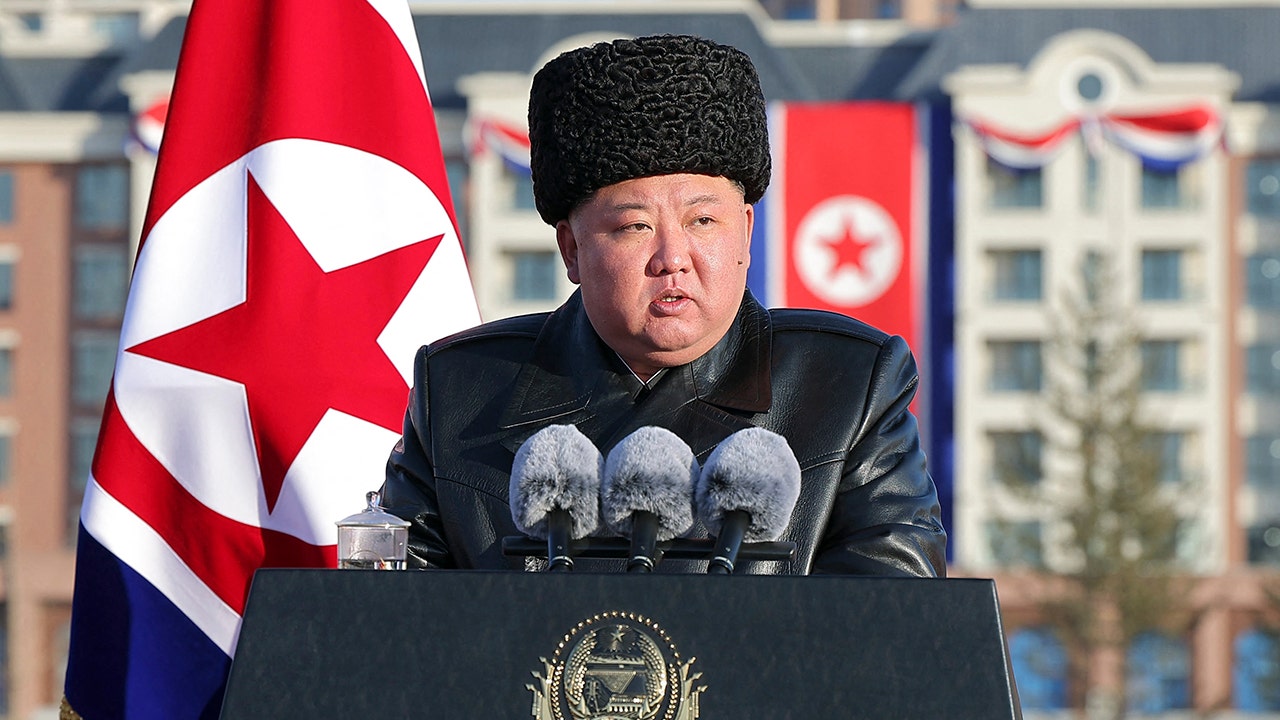
Pyongyang’s Doomsday Clause: Kim’s Assassination Now Triggers Automatic Nuclear Vengeance
POLICY WIRE — Washington, D.C. — They say an absolute monarch’s paranoia can become an empire’s foundational document. And nowhere is that truism perhaps starker than in Pyongyang, where...

POLICY WIRE — Washington, D.C. — They say an absolute monarch’s paranoia can become an empire’s foundational document. And nowhere is that truism perhaps starker than in Pyongyang, where the state isn’t just an extension of its leader, but apparently, its nuclear trigger is too. A recent, unsettling development has laid bare the chilling logic underpinning North Korea’s iron-fisted rule: its constitution has been amended, reportedly now mandating an immediate, automatic nuclear retaliation should Kim Jong Un meet an untimely demise.
It’s a breathtaking codification of doomsday, removing the agonizing pause—the proverbial ‘button on the desk’ moment—that theoretically separates brinkmanship from actual apocalypse. Forget diplomatic niceties or complex chains of command; if the Supreme Leader falls, the rockets, we’re told, will fly. This isn’t just saber-rattling; it’s cementing a policy that’s as crude as it’s terrifying: mess with our leader, and we end the world as you know it. It’s a high-stakes, morbid gamble designed, one presumes, to ensure nobody even *thinks* about attempting regime change from within or without.
For years, the world’s strategists have grappled with the peculiar conundrum of North Korea’s nuclear ambitions. We’ve watched test after test—from underground detonations to missile launches soaring over Japan—each time pushing the envelope a little further. But this move, enshrining a hair-trigger response into the nation’s highest law, feels like a qualitatively different beast. It eliminates potential political succession crises, effectively binding the fate of the nation, and perhaps the region, to the well-being of one man.
Dr. Eleanor Vance, a former National Security Council analyst, didn’t pull any punches during a recent off-the-record briefing. “This isn’t just about deterrence; it’s about eliminating any rational thought for regime change. They’ve crafted a ‘dead man’s switch’ on a national scale,” she said, her voice laced with weary disbelief. “But it drastically lowers the threshold for unthinkable escalation. One wrong move, one bad piece of intelligence, one highly regrettable accident—and we’re not just talking regional crisis; we’re talking about global catastrophe. The consequences don’t bear thinking about.”
And indeed, this escalation isn’t occurring in a vacuum. Other authoritarian regimes, particularly those facing external pressures or internal fragility, pay close attention to Pyongyang’s playbook. In places where national security and regime survival are seen as inextricably linked, such bold declarations serve as chilling precedents. They watch carefully. Pakistan, a fellow nuclear-armed state, though with entirely different geopolitical foundations, has historically dealt with the complex calculus of regional threats and its own deterrence doctrines. But Pyongyang’s ‘constitutional’ approach to immediate nuclear retaliation creates a blueprint—a dangerous one—that rogue actors or deeply insecure nations might find temptingly applicable.
The numbers aren’t helping to soothe frayed nerves, either. According to the Arms Control Association, intelligence estimates suggest North Korea already possesses between 30 and 40 nuclear warheads, with an ongoing capacity to produce more. These aren’t abstract figures; they represent potential cities annihilated, populations decimated. A country already subject to extensive international sanctions—you can’t help but think of similar economic squeezes seen in the strategic chess moves like Riyadh’s own ring diplomacy—is choosing to double down on nuclear leverage.
Professor Khalid Iqbal, a prominent Asian security analyst, highlighted the immediate implications. “Pyongyang’s calculus is stark: their regime’s survival equals a guaranteed nuclear counter-attack. The outside world really needs to internalize that,” Iqbal explained in a phone interview from Singapore. “It makes preemptive action against the regime virtually unthinkable, because you’re triggering exactly what you fear. It also shifts the burden onto states bordering the DPRK – South Korea and Japan, primarily – to reconsider their entire security architecture.”
But the practicalities? How do you ensure such a strike in the chaos following an assassination? It points to pre-delegated authority, highly automated systems, and a terrifying ‘fail-safe’ mechanism that might have no ‘fail-safe’ at all. The entire exercise is less about winning a war and more about ensuring any attack on the leader leads to a globally devastating Pyrrhic victory for the aggressor.
What This Means
This constitutional update radically changes the calculus for any nation considering direct action against North Korea. It elevates the deterrent from a political threat to a legally binding, seemingly automatic state response, effectively giving the regime an ultimate ‘get out of jail free’ card for its existence—provided they don’t mind taking everyone else down with them. Diplomatically, it closes avenues for negotiation predicated on internal changes to the regime, pushing the international community further into a corner of pure containment.
Economically, instability on the Korean peninsula always sends jitters through global markets. A policy guaranteeing nuclear retribution amplifies that instability exponentially. Because let’s be frank, even the slightest miscalculation could cascade into unthinkable scenarios across East Asia—a region already critical to global supply chains and trade. it reinforces the perception of a rogue state operating outside conventional norms, posing enduring headaches for arms control treaties and nuclear non-proliferation efforts. It’s a statement, stark and undeniable, that North Korea views its nuclear arsenal not just as a defensive measure, but as an existential insurance policy, irrevocably tied to the fate of its sole leader.