


America’s ‘Nonpartisan’ Quarter-Millennium: A Bipartisan Bridge, Or Just Wishful Thinking?
POLICY WIRE — Washington, D.C. — Two hundred and fifty years. A hefty number. A national moment, you’d think, when folks put aside the usual muckraking, the partisan mud wrestling, and actually...

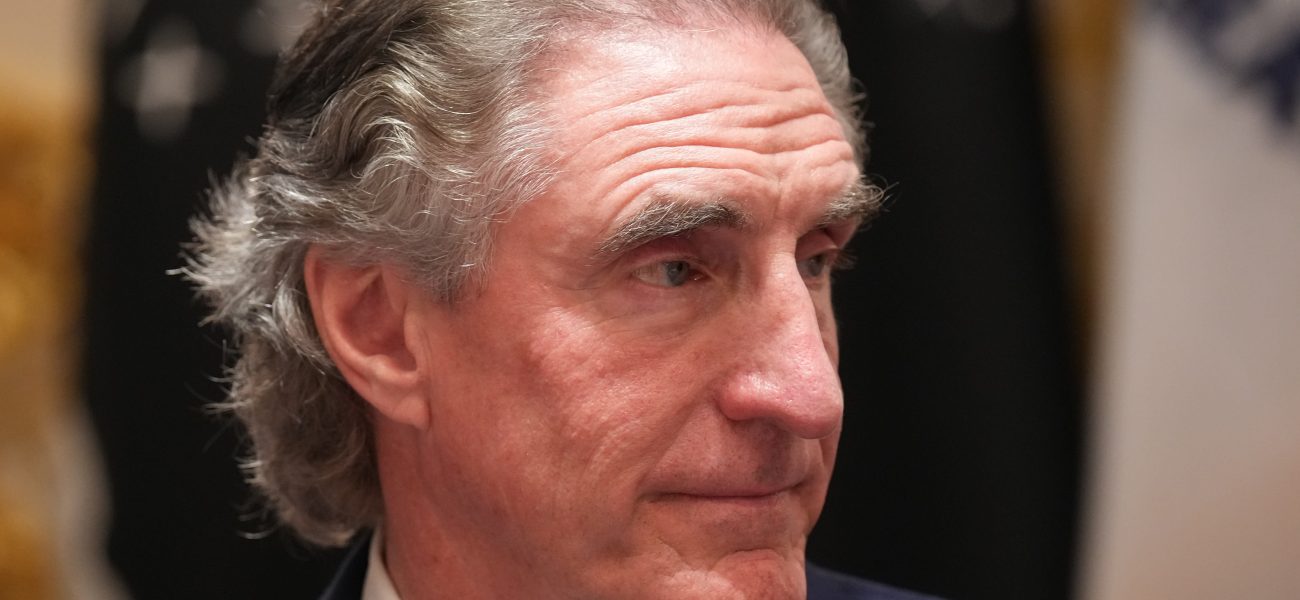
POLICY WIRE — Washington, D.C. — Two hundred and fifty years. A hefty number. A national moment, you’d think, when folks put aside the usual muckraking, the partisan mud wrestling, and actually — dare we say it? — agree on something. Yet, even the seemingly benign proposition of celebrating America’s quarter-millennium mark in 2026 has stumbled into the thorny thicket of present-day political realities, less a unifying call than a wistful whisper in a gale. Former Trump Interior Secretary Doug Burgum (yes, the one who later ran for president) insists the whole affair will be gloriously “nonpartisan.” Good luck with that.
It’s a peculiar thing, isn’t it? The notion that a nation—right now, deeply bisected, frequently snarling—can just flip a switch and stage a kumbaya moment because a calendar date dictates it. Because as anyone who’s paid a lick of attention lately will tell you, America doesn’t exactly do ‘nonpartisan’ these days. It’s a concept that feels as archaic as a rotary phone in an era of TikTok.
Burgum, who now chairs the America250 Foundation Congressional Commission, sounds a lot like he’s trying to whistle past a graveyard. Or maybe he genuinely believes it’s possible. “We believe that America’s quarter-millennium mark ought to transcend today’s fleeting political squabbles,” Burgum reportedly remarked, his tone undoubtedly reflecting a desire for unity. “It’s about a shared history, a common future; something we all, regardless of affiliation, can take immense pride in.” A lovely sentiment, sure. But how, exactly, do you cordon off ‘shared history’ when factions are still fighting over who gets to write the first paragraph?
And there’s the rub, isn’t there? You don’t get to erase a decade of entrenched division simply by decree. The fissures are deep. Many, on the other side of the aisle, view such pronouncements with a healthy dose of skepticism, if not outright cynicism. “The idea of a ‘nonpartisan’ celebration in a deeply fractured nation is either naive or disingenuous,” countered Representative Eleanor Holmes Norton (D-DC), a long-serving, vocal member of Congress. “Whose history gets celebrated? Whose struggles are overlooked? These aren’t minor details; they’re the very fabric of our national story, and that fabric is contentious right now.” Her point cuts right to the heart of it: every celebration, every national narrative, carries an implicit bias.
Because ultimately, these kinds of declarations of unity often come from a place of power, a vantage point where certain historical narratives feel self-evident. For many, though, particularly America’s diverse communities—African Americans, Indigenous peoples, immigrants from places like Pakistan and other parts of South Asia—the story of 250 years is far from monolithic. It’s a tale of both aspiration — and profound disappointment, of freedoms fought for and often denied. And you can’t simply gloss over those truths if you want true, rather than superficial, unity. It’s like trying to bake a cake without flour; you’re missing a key ingredient.
Consider the raw data: a 2022 Pew Research Center study, reflecting deep partisan divides on foundational issues, showed that a staggering 84% of Democrats and 79% of Republicans believe that members of the opposing party have political views that are bad for the country. That isn’t just disagreement; it’s perceived enmity. How do you square that circle for a “nonpartisan” party? You don’t. It’s simply not on the table. And this isn’t just an internal squabble. The way America presents its founding and its journey speaks volumes internationally, shaping perceptions of its enduring soft power. For many abroad, watching the U.S. navigate its own fractious narrative on national holidays is perhaps as intriguing as observing how cultural markets become battlegrounds for influence.
What This Means
The quest for a ‘nonpartisan’ national jubilee, while perhaps well-intentioned, is a pipe dream in a hyper-polarized America. Politically, this means any federal initiatives surrounding America250 will likely face intense scrutiny, especially concerning curriculum, commemorative art, and public messaging. Funding debates will probably be bitter. Republicans might lean into themes of American exceptionalism and a unified, triumphal past, while Democrats could push for a more inclusive, often critical, re-evaluation of history that acknowledges systemic injustices and ongoing struggles for equality. Economically, while such events often promise a boon through tourism and commerce, the pervasive ideological rifts could dampen enthusiasm. Will corporate sponsors even want to be seen aligning with an event that, no matter how framed, is destined to be picked apart along partisan lines? It’s a minefield. The goal might be to create a unifying narrative, but the likely outcome will be further highlighting—and hardening—the existing ideological trenches. A nonpartisan celebration in 2026? It sounds less like a promise — and more like a challenge to a duel.