


Red Surge in London: Arsenal’s Triumph, a City’s Frenzy, and the Unseen Geopolitics of Passion
POLICY WIRE — London, UK — You could hear the roar before you saw the scarlet tide. It wasn’t the gentle hum of an economic boom, nor the measured clap of diplomatic success, but the primal...

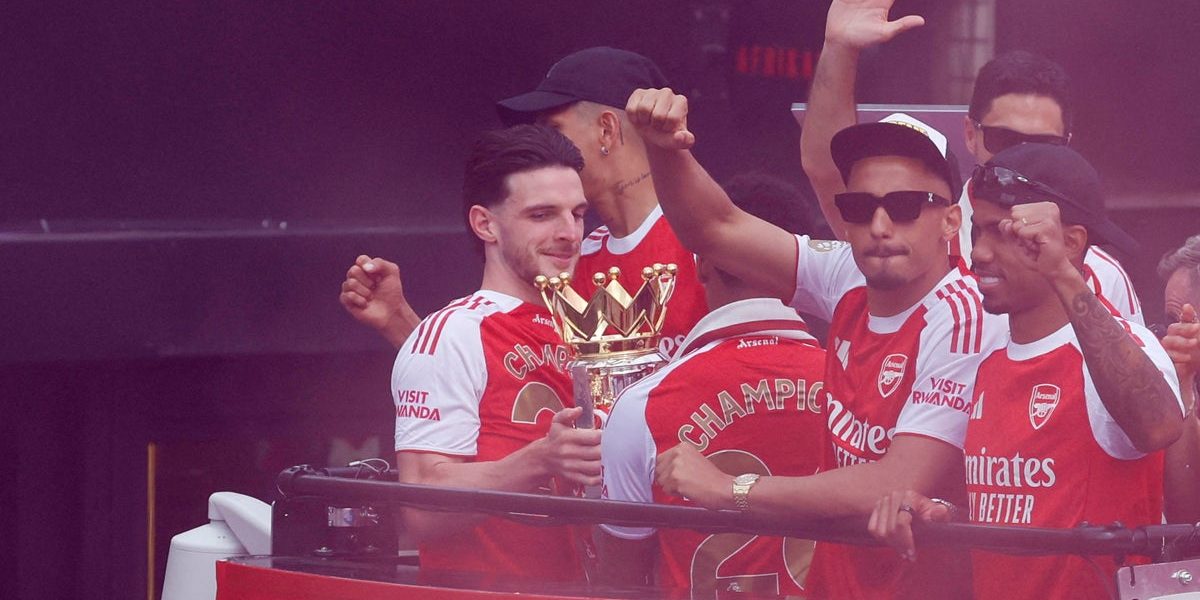
POLICY WIRE — London, UK — You could hear the roar before you saw the scarlet tide. It wasn’t the gentle hum of an economic boom, nor the measured clap of diplomatic success, but the primal bellow of hundreds of thousands, a cacophony so immense it swallowed a city whole. North London became an uncontrolled combustion engine of pure joy this past week, fueled by Arsenal Football Club’s first Premier League title in 22 years. The aftermath? A national holiday in spirit, — and for midfielder Declan Rice, a lost voice. Not from tactical shouts, mind you, but from a raucous, slightly off-key rendition of ‘Ice Ice Baby’ and some truly committed crowd chants.
It’s easy to dismiss these spectacles as mere sport, a collective dopamine hit for the masses. But the sheer scale of devotion — the dense, suffocating crowds, the plumes of crimson smoke painting the skyline, the economic tremor of tourism and merchandise sales — it hints at something far grander. It’s an expression of identity, a surrogate for tribal affiliation, and frankly, a market force politicians might only dream of mobilizing. Forget the sterile corridors of power; real power, it sometimes seems, vibrates through streets lined with fans.
The 25-year-old Rice, a player whose transfer last summer generated seismic waves across English football, admitted he was “speechless” by the raw outpouring of sentiment. “Seeing the joy we can give people is crazy,” he mused, a little gravelly in the throat. “But next year we’re coming back for more. Get locked in or get locked out.” It’s the kind of brazen declaration that reverberates beyond the sports pages, embodying a relentless ambition that’s often found in corporate boardrooms and geopolitical war rooms. His sentiments, while clearly delivered with good cheer, carry the weight of expectation that a club of Arsenal’s global stature now commands. But more than that, it highlights the club’s growing financial muscle and marketing reach, turning mere sport into a global commodity.
Just days prior, that boundless euphoria had hit a particularly sharp snag in Budapest. The Champions League final, a grand stage indeed, ended not in triumph but in the bitter taste of penalty shootout defeat to Paris Saint-Germain. French giants, PSG, snagged back-to-back European crowns after a 4-3 penalty triumph. Gabriel Magalhães’s spot-kick sailing high over the bar epitomized the cruel lottery that cup finals can be. Yet, even in that sting, there was an almost defiant resolve, a tacit understanding that progress isn’t always linear. Coach Mikel Arteta, a man known for his intense tactical philosophy and almost messianic belief in his project, put it succinctly to the club’s broadcast partners. “This squad learned lessons only adversity can teach. Our foundation’s solid, but the next level requires an even sharper edge. We’re getting there.” His assessment, measured as ever, suggests a long-term view of sporting ascendancy, not unlike national development plans or protracted trade negotiations.
And these lessons? They don’t just stay on the pitch. They translate into higher commercial revenue, bigger sponsorship deals, and an even tighter grip on a burgeoning global fanbase. Cultural markets are a subtle form of soft power, after all, and football clubs have mastered this art. Look no further than the subcontinent, where a significant chunk of the Premier League’s massive viewership resides. From the bustling alleyways of Lahore to the frenetic tea stalls of Dhaka, you’ll find dedicated fan clubs debating Arsenal’s tactics or celebrating a late goal as passionately as any Londoner. The Premier League regularly pulls in a global audience exceeding 3 billion, according to Deloitte’s sports business reports, with significant segments tuning in from South Asia and the Middle East, demonstrating how these events aren’t just local entertainment; they’re global consumer phenomena. These remote allegiances translate into tangible economic value — and influence.
But winning requires more than passion. It takes immense capital. Arsenal’s ascent is, at its heart, a triumph of strategic investment – both on the field — and off. They’ve spent big, but spent smart, building a cohesive unit — and a formidable global brand. The challenge now is to maintain that momentum, because every elite club, like every nation on the global stage, faces constant pressure from rivals eager to knock them off their perch. As Arsenal looks towards another demanding season, they’ll need that ‘locked in’ mentality Rice spoke of. Flickers of hope often lead to bracing realities; a lesson well-known in both competitive sport and diplomatic circles.
What This Means
Beyond the celebratory confetti and the disappointment of a continental near-miss, Arsenal’s season offers a clear look into the intertwined political and economic forces at play in modern sports. This isn’t just about 11 men kicking a ball; it’s big business, cultural diplomacy, — and a civic unifier. The economic impact of Arsenal’s success—from local businesses benefiting from increased tourism and match-day spending, to the soaring brand value and commercial opportunities for a truly global club—is considerable. the passion exhibited by the club’s worldwide fanbase, particularly in emerging markets like those across Pakistan and the wider Muslim world, signifies a growing market for European sports, creating connections and soft power avenues that can occasionally bypass traditional diplomatic channels. These fan allegiances, nurtured by global broadcasts and merchandise, represent powerful, unquantified assets that can be leveraged for greater influence and continued economic expansion. For London, Arsenal’s title win provides a boost not just in morale, but in the intangible asset of international reputation and vibrancy. But don’t mistake euphoria for economic equilibrium; the pressure to perform, to justify monumental investments, to capture ever-larger slices of the global fan pie, it just ratchets up from here.