


Balochistan’s Bloodied Tracks: An Unrelenting Cycle of Violence Haunts Pakistan’s Frontier
POLICY WIRE — Islamabad, Pakistan — The metallic tang of high explosives still lingered in Balochistan’s air Sunday, yet the real shock waves from an assault on a moving train—military...

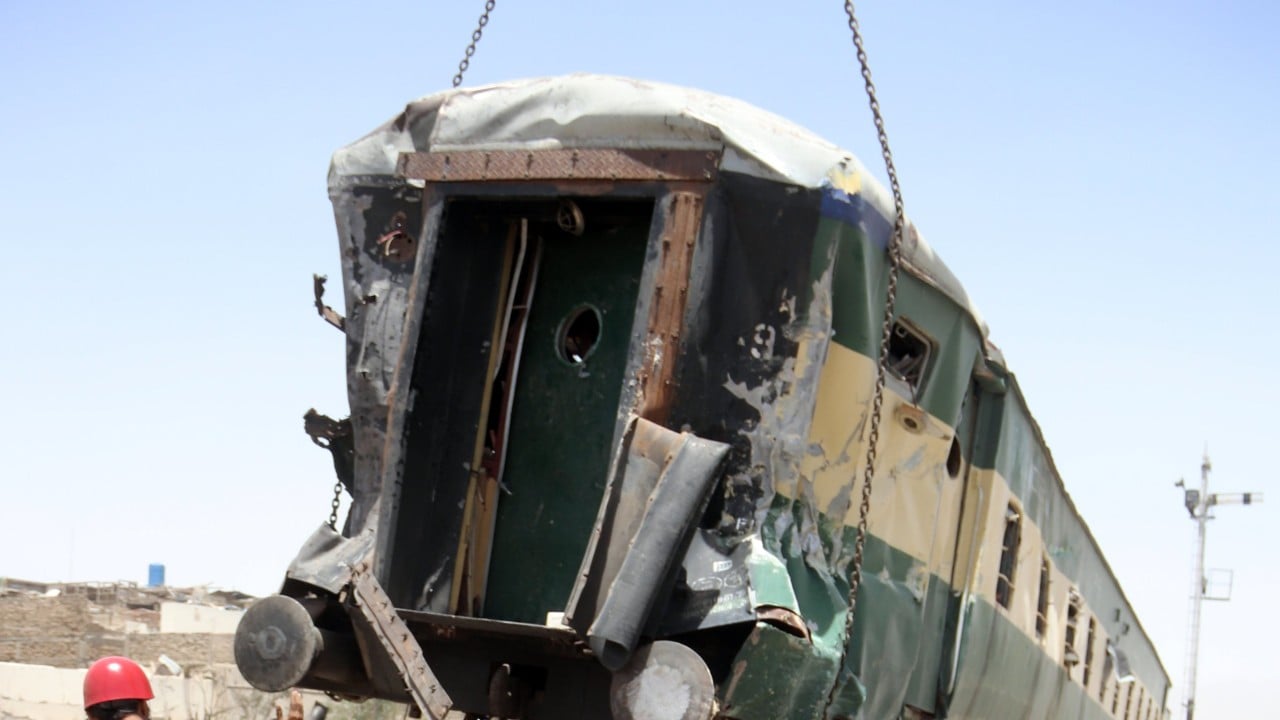
POLICY WIRE — Islamabad, Pakistan — The metallic tang of high explosives still lingered in Balochistan’s air Sunday, yet the real shock waves from an assault on a moving train—military personnel aboard, naturally—ripple far beyond its desolate valleys. It isn’t just about the grim body count, though that’s plenty unsettling; it’s the unnerving frequency, the chilling predictability of it all, that truly grabs you by the gut. The province, a dusty, resource-rich frontier, often feels like Pakistan’s forgotten child—neglected until the explosions, then hastily mourned.
It was a day, really, like far too many others here, etched with fresh tragedy. A train, reportedly laden with soldiers — and their families, became the target. The event in Pakistan’s turbulent southwestern province of Balochistan claimed too many lives, setting off alarms again, if anyone in power was truly listening. Casualties mount. We’re told that [QUOTE_PLACEHOLDER] A chilling detail, isn’t it, that the families are often just collateral damage in this endless fight?
And yes, the blame game was as swift — and predictable as the attack itself. The Baloch Liberation Army (BLA) militant group wasted no time in claiming credit for the carnage, another grim entry in their long list of grievances against Islamabad. For their part, officials were quick to respond, with Pakistan Prime Minister Shehbaz Sharif branding the attack a “cowardly” act of terrorism. It’s a descriptor we’ve heard so many times, it’s worn thin, but the bodies on the ground weren’t. These pronouncements, you know, they barely scrape the surface of the simmering anger that fuels these insurgencies.
But what does all this mean for a region already teetering? Balochistan, an enormous stretch of land bordering Afghanistan and Iran, holds colossal untapped mineral wealth and a crucial spot in Beijing’s ambitious Belt and Road Initiative, specifically the China-Pakistan Economic Corridor (CPEC). The local population, mainly ethnic Baloch, frequently feels marginalized, excluded from the benefits of these projects, and subjected to heavy-handed state control. That sentiment, I’d say, forms the fertile ground for outfits like the BLA to thrive, turning resentment into rocket-propelled grenades. Their struggle is often portrayed by Islamabad as pure terrorism, but it’s really a layered, messy stew of nationalism, resource control, and state overreach.
The scale of this chronic insecurity is stark. According to data compiled by the Global Terrorism Database, Pakistan has consistently ranked among the top countries worldwide impacted by terrorism, with thousands of incidents reported over the past two decades. This isn’t just a number; it’s a constant drain on human potential, on economic stability, on the very psyche of a nation trying to find its footing. It paralyzes investment — and pushes already struggling communities further into despair.
Because every explosion in Balochistan echoes across the border, unsettling Pakistan’s neighbors, particularly Iran and Afghanistan. Imagine, a region struggling with its own militant groups, cross-border tensions, and now, this persistent internal conflict that offers a haven or a training ground to various factions. It’s never just a domestic issue, not here. Islamabad’s relationships with Tehran and Kabul are always delicate, navigating an ever-shifting mosaic of security challenges. They’ve gotta wonder how much spillover is next.
It’s not just the immediate loss of life that cuts deep; it’s the perpetual erosion of trust. Trust between the state — and its citizens, between ethnic groups, between regions. These attacks don’t just kill people; they butcher hope, they sabotage the slow, painstaking work of building a unified, stable Pakistan. They feed cynicism, make reconciliation seem like a fool’s errand. And they certainly don’t encourage investors, foreign or domestic, to pour capital into a place where the next explosion could be just around the corner. Pakistan’s stability hinges, quite precariously, on quelling this violent dissent while addressing the legitimate grievances that give it oxygen.
What This Means
This isn’t merely another news item, folks; it’s a critical tremor in Pakistan’s geopolitical bedrock. Economically, repeated incidents of this nature, especially targeting strategic infrastructure like CPEC-related sites or even transit routes, scare off vital foreign investment. It’s tough to build a high-speed rail when insurgents are blowing up your trains. The province’s enormous copper and gold reserves, alongside its critical role in energy corridors, remain woefully underdeveloped—a direct consequence of this persistent instability. Who’s gonna put billions into a perpetually war-torn region? Politically, the BLA’s continued capacity for large-scale attacks—even after significant military operations—reveals profound failures in intelligence and security apparatus. It exposes the government’s enduring struggle to articulate a compelling narrative for Baloch inclusion, let alone implement effective outreach. For the broader Muslim world, and particularly South Asia, Balochistan serves as a microcosm of complex nation-building challenges. Ethnic self-determination clashing with national sovereignty, the shadow of proxy warfare, and resource exploitation fueling internal conflicts—it’s all there, playing out in a desolate, forgotten corner of Pakistan, but with implications stretching from the Arabian Sea to the Khyber Pass. It keeps reminding everyone, again — and again, that regional stability is an awfully fragile thing, isn’t it?