


Everest’s Gilded Cage: Ambition, Avarice, and Two Indian Lives Claimed
POLICY WIRE — Kathmandu, Nepal — It’s high-stakes season again on Mount Everest, but this year the usual triumphs and stunning views come etched with a darker hue. Instead of merely celebrating a...

POLICY WIRE — Kathmandu, Nepal — It’s high-stakes season again on Mount Everest, but this year the usual triumphs and stunning views come etched with a darker hue. Instead of merely celebrating a record surge in successful summits, the world now turns its gaze toward the grim reaper’s ledger—a cold calculation of ambition versus a mountain’s unyielding will. Two Indian climbers recently lost their lives on the famed peak, quiet tragedies in what’s been heralded as a triumph for Nepal’s burgeoning tourism industry.
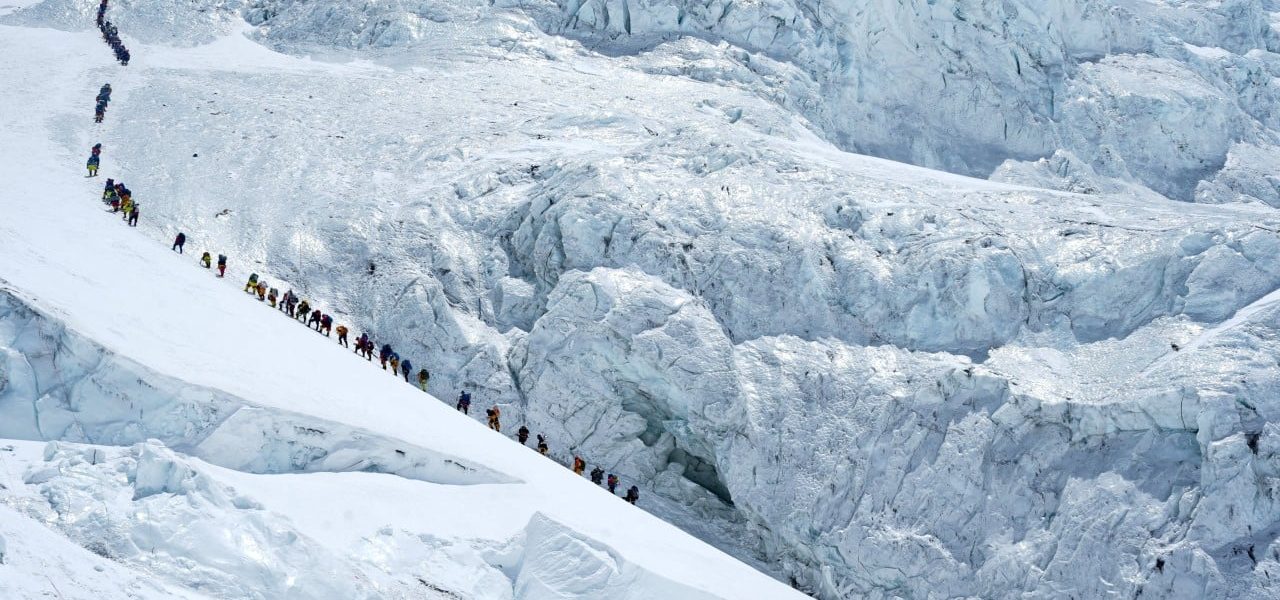
Nobody wants to dwell on the failures when there’s so much glory to go around, right? But the recent deaths serve as an uncomfortable counterpoint to what’s been a record-breaking period of ascents via Nepal’s southern route. For every celebratory selfie snapped atop the world, there’s an undercurrent of peril that only intensifies with each additional permit issued. This isn’t just about bad weather or unforeseen challenges; it’s about a human traffic jam at 29,032 feet, something experts have been flagging for ages, warning of overcrowding on the world’s highest peak. [QUOTE_PLACEHOLDER]
And let’s be blunt: when a director at a major expedition company states his focus is purely on how to retrieve bodies, it’s a stark reminder that we’ve crossed some kind of line. Nivesh Karki, director at Pioneer Adventures, confirmed the chilling details: Sandeep Are, who reached the peak on Wednesday, and Arun Kumar Tiwari, who summited on Thursday, both perished. They fell ill while descending at high altitude. We’re working out how to retrieve the bodies,
Karki said, painting a picture not of mountaineering grandeur but of logistical despair.
It’s the brutal cost of a dream bought dearly. Nepal, which, for better or worse, houses eight of the world’s ten highest mountains, is heavily invested in this particular brand of adventure tourism. Thousands throng Kathmandu each season, drawn by the mythos of Everest, each aspiring to carve their name into mountaineering lore. Many hail from South Asia; countries like India and Pakistan, with their vast, aspirational middle classes, provide a continuous stream of enthusiasts. For these climbers, often making considerable financial sacrifices, the mountain isn’t just a physical challenge but a powerful symbol—of national pride, personal triumph, or a simple, profound desire to stand taller than anyone else. But what happens when that symbol becomes a bottleneck?
Because ultimately, the dreamers become mere numbers. The Nepal Ministry of Culture, Tourism, and Civil Aviation reported a staggering increase in Everest climbing permits over the past decade, with over 1,000 permits issued to foreign climbers alone in the last two pre-pandemic peak seasons (source: Nepal Tourism Board statistical reports). That’s not including support staff, sherpas, or other personnel. Imagine a queue on the roof of the world—a single file line where a slip-up, or even just a slowdown, can prove fatal for someone struggling with oxygen deprivation and exhaustion. It’s less an expedition, more an endurance test in a precarious line.
📄 POLICY WIRE WHITEPAPER PUBLISHED: PAKISTAN'S NATIONAL SECURITY POLICY PRIORITIES
👉 READ BY CLICKING HEREThese aren’t unique tragedies. They’re symptoms of a systemic pressure, one that asks: at what point does human endeavor morph into reckless indulgence? We can’t just point fingers at the climbers; it’s a whole ecosystem at play, from the government eager for foreign currency to the operators vying for clients, all feeding the illusion that Everest is increasingly accessible. Yet, it’s not just a mountain; it’s a commercial enterprise—and the human price continues to climb alongside the permit fees. It’s a somber note for a region grappling with its own complex geopolitical dance, where national narratives often clash with individual aspirations, much like mounting intelligence often rattles international truces.
What This Means
The recent deaths, while tragically common in the context of Everest, send a sharper signal about the political economy of high-altitude tourism in Nepal. The Nepalese government, a developing nation, depends heavily on tourism revenue. Climbing permits alone generate millions of dollars annually, not to mention the wider economic impact on hotels, airlines, and local support industries. There’s a financial incentive to keep the permits flowing, even if the mountain’s capacity, environmentally and logistically, is reaching its limit.
But there’s a delicate balance here. Overselling permits boosts short-term revenue but degrades the climbing experience, potentially tarnishing Everest’s allure and—more importantly—increasing fatalities. Each death chips away at the mystique, fueling a narrative of commercialized peril rather than heroic adventure. This could, eventually, lead to a decline in international interest or more stringent external regulations from mountaineering bodies, thereby hurting the very industry Nepal seeks to cultivate. It’s a Catch-22: monetise the mountain or protect its sanctity — and the lives of those who attempt its summit? The answer, at present, seems to heavily favor the former, turning Everest into an almost-literal gilded cage for those pursuing its golden ambition. For now, they’ll keep clearing bodies, issuing permits, and watching the numbers climb, knowing full well the risks they’re tacitly endorsing.