
President Pauses Persia Push: Gulf Allies ‘Ask’ Trump to Cool Iran Jets, Claims President
POLICY WIRE — WASHINGTON D.C. — It’s a classic move from the playbook of President Trump: ratchet up the tension, stare down your adversaries, and then, at what he frames as the eleventh hour,...

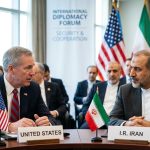
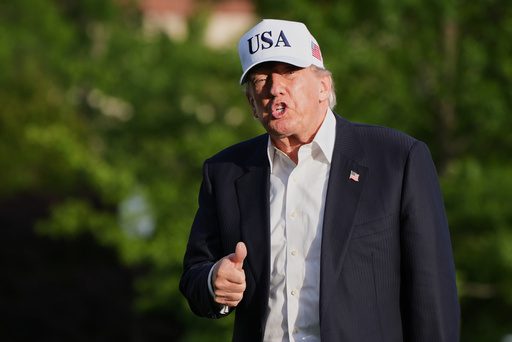
POLICY WIRE — WASHINGTON D.C. — It’s a classic move from the playbook of President Trump: ratchet up the tension, stare down your adversaries, and then, at what he frames as the eleventh hour, declare victory through de-escalation. But when a military strike against Iran, reportedly slated for Tuesday, vanished into the ether not with a grand diplomatic flourish but a terse social media post, even the seasoned Beltway crowd collectively raised an eyebrow—or perhaps both. The Commander-in-Chief declared on Monday that a ‘full, large scale assault’ had been abruptly put on ice, not due to sudden moral clarity, but because ‘serious negotiations’ were apparently underway, spurred on by appeals from Riyadh, Doha, and Abu Dhabi.
It’s all part of the theatre, isn’t it? The unnamed strike, the ticking clock, the breathless pronouncements. President Trump’s latest eleventh-hour reprieve comes after weeks of thinly veiled threats to Tehran, demanding they ‘get moving, FAST, or there won’t be anything left of them.’ It sounds like something straight out of a mob movie, and sometimes, you just can’t make this stuff up. This particular planned strike, he’d contend, was held off because his Gulf allies – specifically Qatar, Saudi Arabia, and the United Arab Emirates – asked him nicely. A peculiar deferral for a leader who’s built his brand on unilateral bravado.
Because let’s be real, the notion of these wealthy nations, who benefit immensely from America’s strategic muscle, gently dissuading a presidential impulse after he’d already threatened to flatten an ancient nation, well, it strains credulity. And yet, here we’re. This wasn’t some quiet backdoor negotiation, but a declaration broadcast to the world. It’s a very public dance, and Tehran is certainly watching, trying to figure out if it’s a threat, a bluff, or some weird, twisted invitation.
“Look, everyone talks tough, but when it’s time to actually pull the trigger, our friends in the Gulf—they get it. Diplomacy, my way, works,” President Trump reportedly remarked, according to sources privy to his recent thoughts. “We had a plan, a good plan, but serious people came to the table. That’s how you make deals, folks.” The President’s famous impulse control (or lack thereof) continues to keep the world guessing, shifting from hawk to dove in a tweet’s breath.
The geopolitical dominoes from any actual kinetic action against Iran wouldn’t just fall in the immediate vicinity. Any significant disruption to Iran’s oil exports or, worse, to the Strait of Hormuz—through which approximately one-third of the world’s seaborne crude oil and petroleum liquids passes, according to the U.S. Energy Information Administration’s (EIA) 2021 data—would send economic shockwaves far beyond the Persian Gulf. Consider Pakistan, for instance, a nation with deeply entrenched energy concerns and a significant expatriate population in Gulf states. Instability means more than just oil price hikes; it means potential refugee crises, choked trade routes, and a further erosion of the already shaky regional economic landscape.
For nations like Saudi Arabia, who possess a healthy disdain for Iran’s regional aspirations, an outright U.S. strike, no matter how surgical, carries tremendous risks. It could provoke asymmetrical retaliation that targets their own economic lifelines, their oil fields, their infrastructure. “While we recognize the President’s resolve to counter Iranian aggression, a kinetic solution, at this juncture, would create a new paradigm of uncertainty that neither benefits regional stability nor the global economy,” Saudi Foreign Minister Prince Faisal bin Farhan Al Saud is understood to have conveyed recently, emphasizing that diplomatic channels, no matter how fraught, should be exhausted. That’s the real calculus at play here, you see. It’s not just about a missile here or there; it’s about what happens next. You can check out more on the nuances of such proposals in our deep dive into What the US–Iran Five-Point Plan Signals.
What This Means
The latest postponement isn’t just another blip on the foreign policy radar; it’s a revealing insight into the chaotic, transactional nature of contemporary international relations. First off, it demonstrates Tehran’s (and perhaps Beijing’s and Moscow’s) growing belief that Trump’s bluster often outpaces his resolve. This constant shifting of red lines, deadlines, and strategic postures dilutes the deterrent effect of American power—it makes adversaries less fearful and allies more nervous. But it also reveals a peculiar dynamic where regional players, like the Gulf states, find themselves simultaneously dependent on and frustrated by Washington’s unpredictable impulses. They want America’s muscle, yes, but not necessarily its unchecked belligerence when it risks their own skin.
Economically, this is good news for jittery oil markets, at least in the very short term. But the underlying tension hasn’t evaporated; it’s merely been re-packaged. The Iranian regime likely sees this as proof that continued resistance and tactical obfuscation can pay off, keeping the international community, and Washington specifically, guessing. It certainly complicates matters for anyone attempting to discern long-term U.S. policy. From Islamabad to Kabul, and across the breadth of the Muslim world, leaders are scrambling to understand if Washington means what it says, or simply says whatever suits the moment. There are broader lessons about proxy conflicts too, if you care to examine Blood on the Border: New Delhi’s Proxy War Through Kabul.