


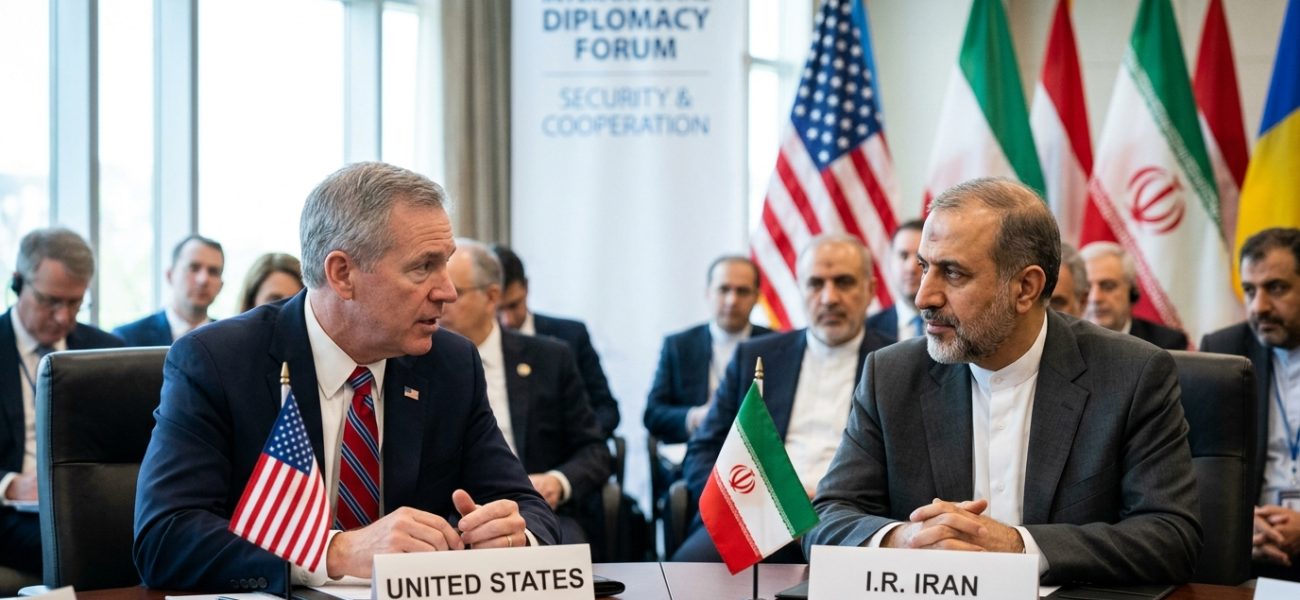
What the US–Iran Five-Point Plan Signals
The history of failed diplomatic initiatives in the Middle East region is not new, but the existing rift between Washington and Tehran has turned into a chasm presented under the guise of a...

The history of failed diplomatic initiatives in the Middle East region is not new, but the existing rift between Washington and Tehran has turned into a chasm presented under the guise of a negotiated peace settlement.
According to reports released by Iran’s semi-official Fars news agency on May 17, Washington has set five major preconditions for a potential compromise between both countries. The demands put forward by America include shutting down all of Tehran’s nuclear installations except one, transferring 400 kilograms of Iranian uranium to the US, no compensation claims for damage caused during the war, refusal to unfreeze the assets which is 6 billion, and linking the end of hostilities on all fronts with a conclusion of negotiations. The conditions proposed by Iran, on their part, include ceasing hostilities on all fronts, including Lebanon, removing all sanctions, unfreezing assets, paying reparations for war damages, and recognising Iran’s sovereignty over the Strait of Hormuz.
Proposals on offer, no common ground and a fragile ceasefire at best.
This is not the first time the two parties engaged in talks and failed to reach an agreement. In the year 2015, the JCPOA nuclear deal was signed; it was the last time the international community witnessed functional diplomacy between the United States and Iran. In 2018, President Trump scrapped the deal, despite the country’s adherence to all requirements set forth by the agreement. It paved the way for many sanctions, economic turmoil in Iran, and an increase in nuclear threats, where Tehran resumed its enrichment program.
In June 2025, nuclear talks between Iran and the United States collapsed, and people feared that Iran was approaching weapons-grade capability. In June 2025, Israel attacked Iran’s nuclear installations on the same day, and on June 22, the United States did the same. Iran retaliated, leading to the assassination of the Iranian supreme leader. In February 2026, the United States and Israel launched a new wave of attacks targeting Iran’s nuclear capabilities and ballistic missiles. The attack led to the death of Iran’s supreme leader. Iran closed the Strait of Hormuz, the route through which almost one-fifth of the global oil trade occurs.
By that point, numerous American proposals were turned down. Iran rejected a plan offering civilian nuclear investment in exchange for dismantling its program. The US position throughout 2025 and 2026 demanded “zero enrichment”, a demand Iran rejected on each occasion. Iran also rejected a 45-day ceasefire framework and pushed back with its own 10-point plan. The pattern was clear: every time Washington asked Iran to surrender its nuclear identity, Tehran said no.
Here is where the story takes a turn that deserves far more attention than it gets in media headlines.
On April 8, 2026, the United States and Iran agreed to a two-week ceasefire, mediated by Pakistan. This was not a small achievement. These were two parties who had been exchanging strikes for weeks, with a closed strait, dead officials, and economies under stress. Pakistan sat in the middle and got them to stop shooting. Prime Minister Shehbaz Sharif confirmed that the ceasefire covered all fronts of the war, including Lebanon. Pakistan and China also delivered a joint five-point peace initiative on March 31, calling for an immediate end to all hostilities and allowance of humanitarian aid into the region.
Pakistan’s role here matters enormously. It is a nuclear state. It has diplomatic relationships with both the Muslim world and the West. It shares a long, complicated, and deeply human history with Iran, one built on culture, faith, trade, and geography. When Islamabad stepped in, it did not take sides. It chose peace. That is not a small thing in a region where almost every outside actor has an agenda.
Yes, the Islamabad talks did not produce a lasting agreement. But the ceasefire they brokered still holds. Trump extended it indefinitely. That extension exists because Pakistan gave both sides a ladder to climb down from. The failure to close a final deal is not Pakistan’s failure, it is the failure of the parties to close their own gaps.
Iran’s demand for sovereignty recognition over the Strait of Hormuz is new, and it changes everything. For decades, Tehran used the threat of closing the strait as leverage it never actually pulled. But the actual closure in early 2026 surprised even Tehran itself. Iranian officials quickly realised the strait was their most powerful card, with one deputy speaker of parliament calling it “Iran’s nuclear weapon.”
Washington will not formally hand Iran that card. But Iran will not put it down either. This is the core deadlock beneath all the nuclear language.
The five-point US proposal, as reported, is not a peace offer. It is a maximalist list that asks Iran to dismantle its deterrence, receive nothing in return, and wait for a war to end only if talks go Washington’s way. Iran’s own conditions are equally non-negotiable in their current form. Trump dismissed Iran’s response as “totally unacceptable” and warned the ceasefire was “on life support.”
What this moment actually needs is a mediator that both sides trust, a country with credibility in Tehran, with working relationships in Washington, and with no military skin in the game. Pakistan fits that description better than any other country in the region. Islamabad has done so before. The real challenge now is if Washington and Tehran will afford it another chance before someone else pulls the trigger. Diplomacy is not always about offering an impeccable solution but about allowing flawed statesmen to choose conversation over conflict. This is something Pakistan had already understood back in April.
Author