


Premier League Spurns City’s Schedule Plea, Intensifying Title Race Scrutiny
POLICY WIRE — London, England — In the cutthroat calculus of elite football, where every bounce, every call, and increasingly, every scheduled minute holds existential weight, Manchester City finds...

POLICY WIRE — London, England — In the cutthroat calculus of elite football, where every bounce, every call, and increasingly, every scheduled minute holds existential weight, Manchester City finds itself at the sharp end of a bureaucratic ledger. It’s not just about goals and glory anymore; it’s about the relentless, often unforgiving, machinery that governs the sport’s commercial behemoth. And that machinery, it seems, isn’t inclined to bend for even its most lavishly funded titans.
Behind the headlines of a thrilling title race, a quieter, yet equally consequential, battle has been unfolding in the Premier League’s backrooms. Manchester City, a club accustomed to orchestrating its destiny on the pitch, recently lobbied for a less arduous conclusion to its campaign—a rearrangement of two outstanding fixtures to mitigate an impending, brutal seven-day gauntlet. Their entreaty, sources confirm, is destined for the proverbial dustbin, effectively cementing a schedule that could well define the destination of the coveted Premier League trophy.
City’s predicament stems from a pair of postponed matches: an away trip to Bournemouth, shunted due to their FA Cup final obligations, and a home clash against Crystal Palace, left adrift in the calendar amidst both clubs’ jam-packed commitments. The club had presented an alternative sequence, one that promised reduced travel mileage and, crucially, more recovery time for a squad already stretched thin across multiple competitions. But the league, ever the stoic gatekeeper of its established rhythm, appears poised to prioritize its original calendar, meaning the Palace fixture will precede the Bournemouth journey.
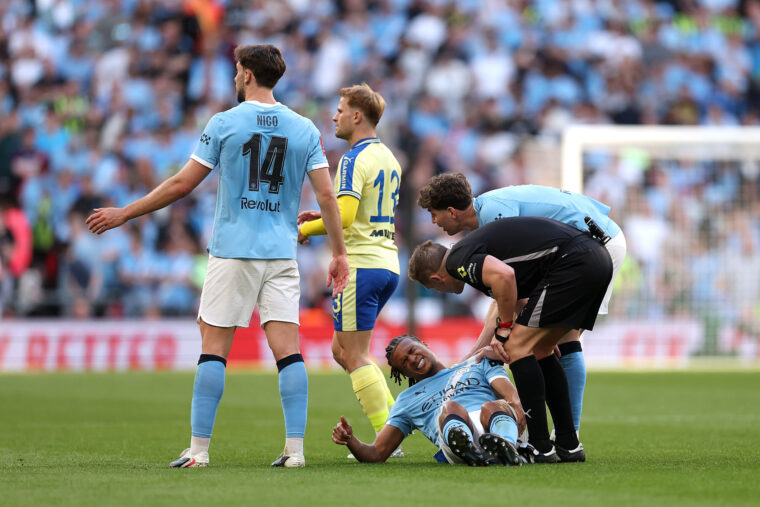
So, what does this translate to for Pep Guardiola’s squad? An almost absurdly tight window: Crystal Palace on May 13, the FA Cup final against Chelsea at Wembley on May 16, and then a trek to Bournemouth on May 19. That’s three high-stakes encounters in a mere seven days, all before their final league match against Aston Villa. It’s a schedule that would test the mettle of any team, let alone one chasing a domestic double against a resurgent rival.
This isn’t just about athletic endurance; it’s a profound statement on the perceived impartiality of the league’s governance. "The integrity of the competition demands a uniform application of rules. To grant special concessions, even for a club of Manchester City’s stature, would fundamentally undermine the principle of fair play for all 20 teams," asserted a spokesperson for the Premier League, speaking on condition of anonymity given the sensitivity of the internal discussions. "We’re committed to a transparent — and equitable system."
But transparency, like beauty, often resides in the eye of the beholder. Manchester City, understandably, views the situation through a different lens. "We’re not asking for an advantage, merely a consideration for player welfare and the logistical realities of competing at the highest level across multiple fronts," contended Ferran Soriano, Manchester City’s Chief Executive Officer. "Our athletes are pushed to their physical limits; a more balanced schedule isn’t preferential treatment, it’s prudent management. It’s frankly disappointing."
📄 POLICY WIRE WHITEPAPER PUBLISHED: PAKISTAN'S NATIONAL SECURITY POLICY PRIORITIES
👉 READ BY CLICKING HEREThe league’s decision, whilst seemingly routine, reverberates far beyond the confines of England’s stadiums. For instance, the fervent football fan bases stretching from Cairo to Karachi, and throughout the broader Muslim world—regions where Premier League matches often garner audiences rivaling local events—will be keenly observing. The narrative of fairness, or its perceived absence, in European football’s power centers shapes global perceptions of the sport’s ethics. The economic implications are clear: a title race decided by exhaustion, rather than pure skill, risks diluting the global product. The Premier League, after all, boasts an estimated global cumulative audience of 3.2 billion, underscoring the immense pressure on the league to maintain competitive integrity and a compelling narrative, as even minor scheduling decisions can have far-reaching commercial and reputational consequences across continents.
Arsenal, currently setting the pace, will, of course, be monitoring this outcome with hawk-like intensity. Any added strain on City’s already formidable squad represents a potential tactical advantage, a physiological chink in the armor of a team known for its relentless pursuit of silverware. This decision underscores just how deeply interwoven the sporting, economic, and political threads of modern football have become. It’s not simply a game; it’s a global spectacle, where even scheduling becomes a strategic weapon.
What This Means
At its core, the Premier League’s refusal to accommodate Manchester City is a delicate balancing act of commercial interests versus competitive parity. On one hand, the league is tasked with upholding an image of unwavering impartiality, ensuring no single club, regardless of its financial might or on-field success, receives preferential treatment. This stance is vital for maintaining the credibility that attracts billions in broadcast revenue and global sponsorship. Giving City an easier run-in, even if justified by player welfare concerns, would undoubtedly ignite accusations of favoritism from rival clubs and their vast fan bases, particularly given City’s ownership structure and the broader geopolitical undertones often associated with top-tier football and talent acquisition.
But there’s another dimension: player welfare. The escalating demands on elite athletes, who routinely juggle domestic leagues, cup competitions, and international duties, are reaching unsustainable levels. While the league champions competitive integrity, it simultaneously pushes its most valuable assets—the players—to their physical and mental limits. This decision could be seen as the league prioritizing administrative convenience and its reputation for strict adherence to rules over the long-term health and performance capabilities of its stars. The outcome of this specific title race may very well be decided not by a moment of individual brilliance, but by the cumulative toll exacted by a schedule that steadfastly refuses to bend.