


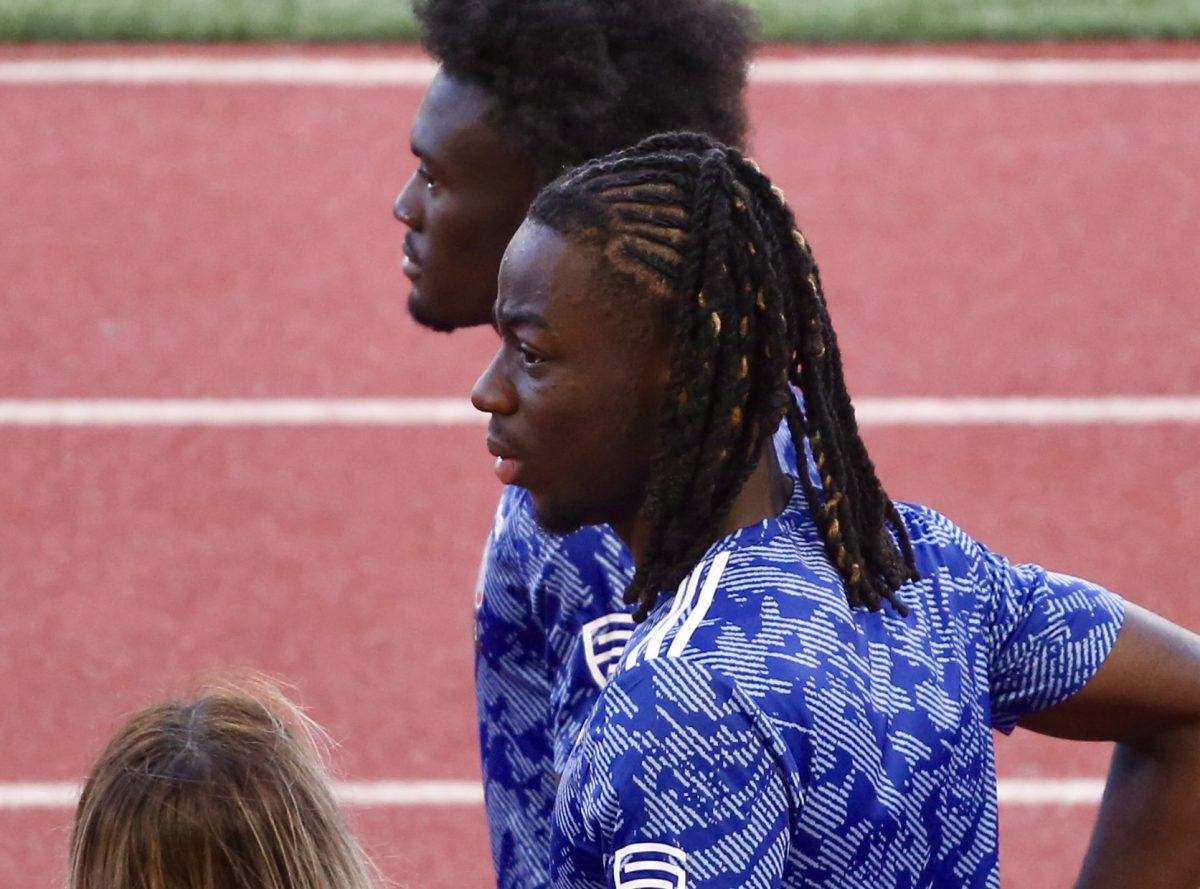
The Shifting Allegiances: Doukouré’s Choice and the Geopolitics of Global Football Talent
POLICY WIRE — Paris, France — The crimson hues of national pride, once thought indelible, are proving increasingly fluid in the cutthroat, globalized theater of professional sports. Ismael Doukouré,...

POLICY WIRE — Paris, France — The crimson hues of national pride, once thought indelible, are proving increasingly fluid in the cutthroat, globalized theater of professional sports. Ismael Doukouré, a formidable defender and captain for RC Strasbourg Alsace, has commenced the bureaucratic ballet necessary to switch his sporting allegiance from France, where he’s worn the blue of the U21 squad and even garnered an Olympic silver, to Ivory Coast. This isn’t merely a personal preference; it’s a stark, public declaration of where loyalty truly lies in a landscape governed by both ancestral ties and brutal economic realities.
At its core, Doukouré’s move — captured in a fleeting social media video showing him at the Ivorian consulate in Paris — encapsulates a broader, systemic trend. Young athletes, often born — and nurtured in European football powerhouses, frequently find themselves at a crossroads. France, with its deep talent pool, consistently produces more world-class players than it can possibly deploy at the senior level. For Doukouré, 22, despite his pivotal role at Strasbourg and his past with Les Bleuets, a senior call-up to Didier Deschamps’ star-studded squad remained an elusive phantom.
His club mate, Guéla Doué, chose the same path to represent Ivory Coast, following in the footsteps of his brother, Désiré. And so, the pattern persists. This isn’t just about playing time, mind you; it’s about the profound aspiration to compete on football’s grandest stages. The upcoming FIFA World Cup, for instance, looms large in such decisions. For players like Doukouré, representing a nation like Ivory Coast offers a more tangible, immediate pathway to that global spotlight — a career accelerant, if you will.
Still, the departure of prodigious talent like Doukouré stings in France. Luc Blanchard, a spokesperson for the French Ministry of Sport, shot back, albeit diplomatically, on the matter. “We invest heavily in the development of these young athletes, providing world-class infrastructure and coaching from their formative years. It’s disappointing, certainly, when a player of Ismael’s caliber opts for another nation, but we respect the individual’s right to choose,” Blanchard contended, perhaps hinting at a quiet introspection within French football’s corridors of power.
But the calculus is different on the receiving end. For nations like Ivory Coast, securing a player of Doukouré’s pedigree isn’t just about strengthening the squad; it’s a symbolic coup. It’s a declaration that they, too, can attract and integrate top-tier talent, often reclaiming those who might otherwise be lost to the larger footballing empires. “Ismael’s decision is a source of immense pride for our nation,” remarked Jean-Pierre Kouassi, head of international relations for the Ivorian Football Federation, beaming. “It strengthens our team and, crucially, sends a powerful message to our youth: your roots matter, and there’s a place for you to shine on the global stage with us.” Kouassi understands the subtle art of nation-building through sport, doesn’t he?
This phenomenon isn’t confined to European-African dynamics. Across the globe, nations with significant diasporas grapple with similar choices. Consider the vast Muslim populations in Europe — French Algerians, German Turks, or British Pakistanis. For many, the choice between their country of birth and their ancestral homeland is a poignant, often complex, decision that touches upon identity, family, and opportunity. Pakistan, for instance, has long sought to integrate British-born players into its national football and cricket teams, facing both success and resistance.
Behind the headlines of individual player transfers lies a deeper economic undercurrent. The brutal economics of European football’s elite often dictate these moves. For a player on the cusp, a guaranteed spot in a World Cup squad, even for a less-heralded nation, can significantly boost market value, endorsement opportunities, and overall career trajectory. It’s a pragmatic, albeit emotionally charged, calculation. According to FIFA data, between 2008 and 2020, over 1,500 players globally formally switched national association affiliation, underscoring the ubiquity of this talent migration.
What This Means
Doukouré’s switch isn’t an anomaly; it’s symptomatic of a structural shift in international football, one profoundly influenced by globalization, migration patterns, and the ever-escalating global sports economics. For established footballing powers like France, it highlights the increasing difficulty of retaining all their homegrown talent when faced with fierce competition from nations eager to reclaim their diaspora. It prompts questions about how to foster a stronger sense of national belonging among players who often grow up in multicultural environments.
For nations like Ivory Coast, this represents a crucial avenue for development. It’s a low-cost, high-impact strategy to bolster national teams with experienced, European-trained players, potentially elevating their competitive standing and, by extension, their international profile. But it also raises questions about genuine grassroots development versus relying on talent cultivated abroad. For the players themselves, these choices reflect a pragmatic understanding of career longevity and the ultimate dream of participating in major international tournaments, sometimes prioritizing opportunity over the nation that first nurtured their talent. It’s a complex, often heart-wrenching calculus for all involved.