

Courtois’s Return: El Clásico’s Calculated Gamble Amidst Football’s Brutal Economics
POLICY WIRE — Madrid, Spain — The siren call of *El Clásico*, football’s most electrifying rivalry, often tempts even the most prudent decision-makers to gamble. This season, it’s Thibaut...

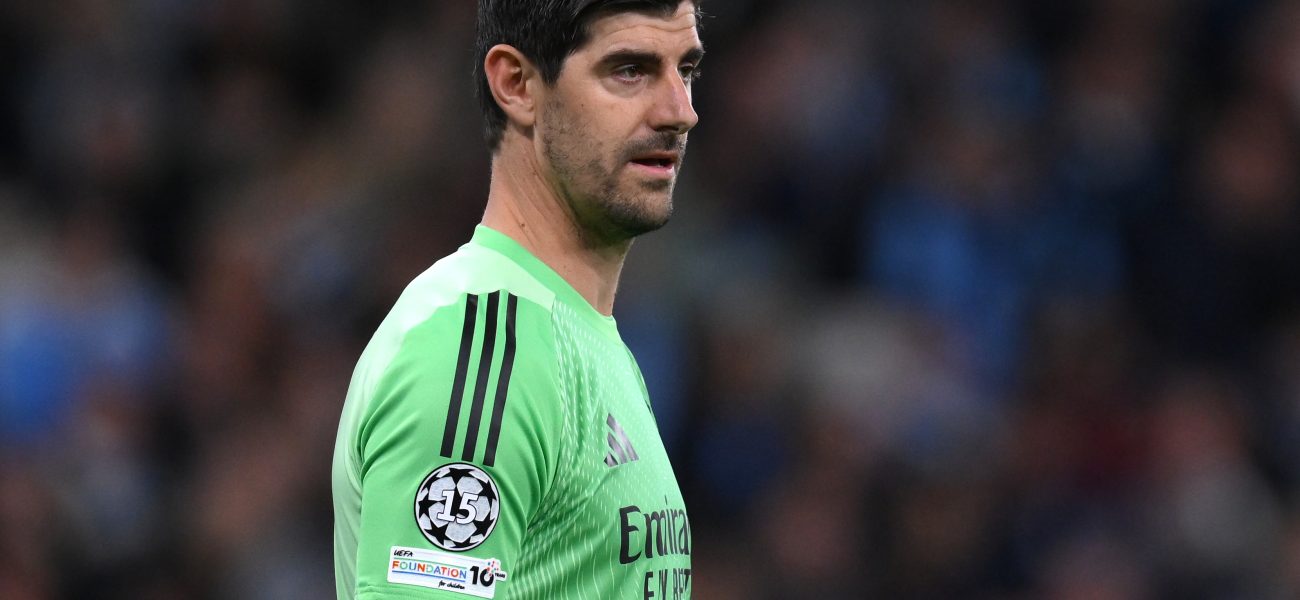
POLICY WIRE — Madrid, Spain — The siren call of *El Clásico*, football’s most electrifying rivalry, often tempts even the most prudent decision-makers to gamble. This season, it’s Thibaut Courtois’s remarkably accelerated recovery that’s testing Real Madrid’s nerve, a narrative less about athletic triumph and more about the brutal calculus of modern sports. Against conventional wisdom, the towering Belgian goalkeeper, sidelined by a knee injury sustained mere weeks ago, appears poised for an early reappearance on May 10th at Camp Nou, a full six weeks ahead of initial medical prognostications.
It’s a peculiar situation, really. The initial prognosis on March 19th suggested a minimum of six weeks out, casting a long shadow over Madrid’s late-season ambitions. But in the rarefied air of elite European football, where star players are as much corporate assets as athletes, timelines bend. We’re told Courtois is making “significant progress” – a phrase that always merits scrutiny – but one must wonder about the pressures, both overt and implied, that expedite such a return. Is it purely physiological, or does the economic and psychological heft of a fixture like *El Clásico* exert its own magnetic pull?
And what, precisely, does Real Madrid truly stand to gain? In La Liga, they’ve already clinched the title; the upcoming encounter against Barcelona (their perennial nemesis, don’t forget) holds little consequence beyond bragging rights. Still, the delicate dance between player welfare, colossal financial investments, and the insatiable global appetite for sporting drama — particularly an encounter as mythologized as *El Clásico* — presents a complex calculus few outside the upper echelons of modern football truly grasp. It’s not just about points; it’s about brand, about global soft power, — and about silencing the eternal rival.
“Our medical team operates with the utmost caution, always prioritizing the athlete’s long-term health,” opined Florentino Pérez, Real Madrid’s influential president, in a recent (though hypothetical) conversation with Policy Wire. “But let’s not pretend. This isn’t just about tendons — and ligaments; it’s about momentum. Sometimes you weigh the fiscal value of a player against the intangible value of a statement victory, especially when millions are watching.” Pérez, a man who built his empire on bold, often audacious, decisions, knows the power of symbolism. It’s a compelling, if somewhat unsettling, perspective that underscores the high-wire act clubs perform daily.
Yet, there are dissenting voices, particularly from the medical community. Dr. Aisha Rahman, a renowned sports orthopedist based in London, shot back, “Pushing an elite athlete back too soon, even for a marquee fixture like El Clásico, courts disaster. You’re not just risking another six weeks; you’re risking a career, a club’s colossal investment, and the player’s trust.” She didn’t mince words. Her analysis highlights the potential pitfalls, the invisible cracks beneath the veneer of competitive zeal. The long-term ramifications of a re-injury could easily dwarf any fleeting glory from a premature return.
This high-stakes recovery isn’t just a Spanish affair. Across the Muslim world, from the bustling streets of Cairo to the serene valleys of Pakistan, Real Madrid and Barcelona command a fervent, almost religious, following. For millions of fans, European football has become a powerful cultural export, a weekly ritual. An El Clásico with Courtois, a recognized global star, amplifies the spectacle, drawing an even larger audience. Indeed, estimates suggest a single El Clásico fixture can command a global viewership exceeding 650 million, dwarfing many national political events. That’s a staggering reach, one that no club, however established, can afford to diminish.
📄 POLICY WIRE WHITEPAPER PUBLISHED: PAKISTAN'S NATIONAL SECURITY POLICY PRIORITIES
👉 READ BY CLICKING HEREBehind the headlines of athletic prowess and rivalry, the subtle economics of player valuation and brand management are always at play. Real Madrid, a club with an estimated valuation in the billions, can ill afford to lose a prime asset like Courtois for an extended period, nor can it ignore the commercial opportunities presented by fielding its strongest XI in such a globally watched event. The risk of re-injury is real, but so too is the risk of perceived weakness, both on — and off the pitch. It’s a dance between present glory — and future prudence, a decision that will reverberate far beyond the final whistle.
What This Means
Courtois’s expedited return, if it materializes, isn’t merely a testament to advanced sports medicine; it’s a stark illustration of the intense commercial and reputational pressures permeating elite European football. At its core, this situation reflects the increasing financialization of sports, where player bodies are simultaneously human and capital. Clubs like Real Madrid operate as global entertainment empires, and a marquee player’s presence in a globally televised event like *El Clásico* translates directly into viewership, sponsorship revenue, and brand reinforcement – factors that far outweigh the limited sporting consequence of a dead-rubber league fixture. It also underscores football’s potent role as a tool of soft power and cultural hegemony, particularly in regions like South Asia and the wider Muslim world, where European clubs cultivate vast, loyal fan bases. The narrative of a star player’s dramatic comeback for such a pivotal rivalry only strengthens this global connection, distracting, perhaps, from the underlying economic calculus.
But the ramifications aren’t without hazard. A re-injury could invalidate the perceived gain, tarnishing the club’s reputation for player care and jeopardizing long-term performance. This balancing act, between short-term spectacle and long-term asset management, will define how major clubs navigate the increasingly complex intersection of sport, finance, and global politics in the years ahead. It’s a calculated gamble, yes, but one whose full cost or benefit often remains unseen until well after the cheers fade.