

Palgham to Partition: How India’s Violence Reaffirms the Two-Nation Theory
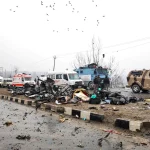
The tragic attack in Pahalgam, where 26 tourists were gunned down in the heart of Indian-occupied Kashmir, did more than just claim innocent lives. It reminded the world of an uncomfortable truth, a...

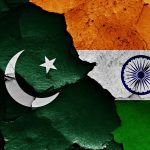
The tragic attack in Pahalgam, where 26 tourists were gunned down in the heart of Indian-occupied Kashmir, did more than just claim innocent lives. It reminded the world of an uncomfortable truth, a truth that South Asia’s post-colonial liberal elite has long tried to bury under the slogans of secularism and unity. The attack, and India’s predictable and knee-jerk blame towards Pakistan, reaffirmed the enduring relevance of the Two-Nation Theory. This is the very idea that led to the creation of Pakistan in 1947. Today, nearly eight decades later, that theory is not only vindicated by history but reinforced by current events.
Muhammad Ali Jinnah’s vision was simple yet profound. He believed that Hindus and Muslims were two distinct nations, not merely religious communities. They had different values, customs, histories, and ambitions. Therefore, forcing them into one state would not ensure unity but guarantee perpetual conflict. His fears were mocked then. The theory was dismissed as divisive by those who dreamt of a united, secular India. But what has unfolded since, and more crucially, what is unfolding now, proves Jinnah was right.
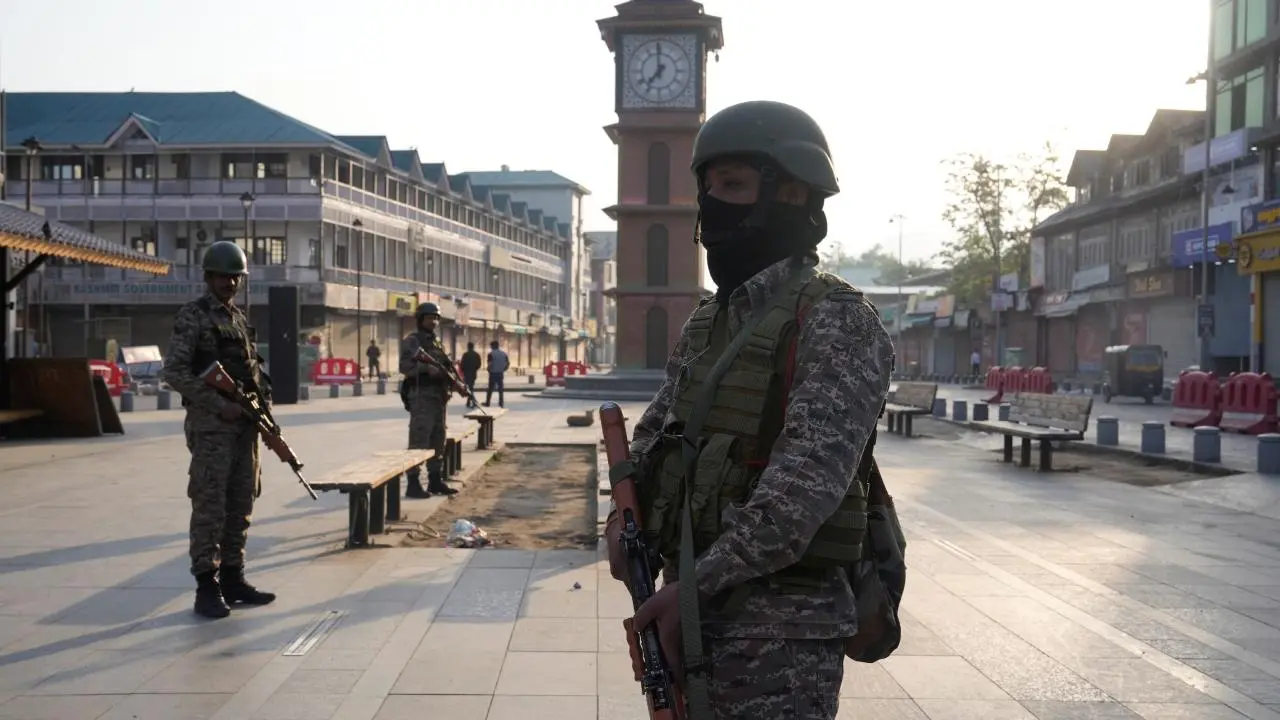
The Kashmir Valley is perhaps the most glaring and tragic evidence of this. Decades of brutal military occupation have turned this scenic land into a war zone where the Indian state operates with unchecked power. The people of Kashmir, overwhelmingly Muslim, have faced rape, torture, mass graves, illegal detentions, and pellet guns that have blinded thousands. The Indian Army, tasked with ‘maintaining order’, acts instead as a colonial force. Every time a militant incident occurs, such as the one in Pahalgam, it is used not to reflect on failure but to justify more militarization, more crackdowns, and more collective punishment.
Yet the violence is not confined to Kashmir. Indian Muslims in cities from Delhi to Bangalore live a life of anxiety and alienation. The 2002 Gujarat pogrom saw over 1,000 Muslims massacred with the alleged complicity, or at the very least, negligence, of state officials. Prime Minister Narendra Modi, who was Chief Minister of Gujarat at the time, has never fully escaped that shadow. In 2020, riots in Delhi once again targeted Muslims. Their homes were burned, shops looted, and mosques desecrated, all under the watch of a silent, complicit state.
Laws passed in recent years further institutionalize this discrimination. The Citizenship Amendment Act (CAA) grants fast-track Indian citizenship to migrants of every major South Asian religion except Muslims. This is not mere oversight; it is legal apartheid. The National Register of Citizens (NRC) threatens to render millions stateless, disproportionately affecting Muslims in states like Assam. These are not policies of a secular republic. They are the blueprints of an ethnonationalist project.
Even in cultural and economic spaces, the marginalization is glaring. Indian Muslims, who make up roughly 14 percent of the population, are woefully underrepresented in government jobs, media, bureaucracy, and business leadership. Bollywood, once a space of secular charm, now punishes Muslim actors for speaking out or expressing identity. Shah Rukh Khan, one of India’s biggest global icons, was recently vilified for his silence during political protests. His son was arrested and paraded for weeks in a case that eventually fell apart. But the message had already been sent.
What ties all these threads together is a chilling realization. India has become a hostile place for Muslims. Whether it is the Kashmiri resisting occupation, the student protesting injustice, the housewife fearing demolition of her home in a Muslim-majority colony, or the daily wage worker accused of ‘love jihad’, all are viewed through the same lens of suspicion and hatred. The Indian mainstream, led by the Bharatiya Janata Party (BJP) and cheered on by a compliant media, has normalized this prejudice to the point where lynchings, mosque demolitions, and hate speeches are no longer shocking. They are expected.
So, in the face of this reality, the question resurfaces. Can Muslims truly coexist with dignity and equality in India? The answer, brutally evident, is no. And this is exactly what the Two-Nation Theory predicted. It was not a theory born out of arrogance or isolationism. It was born out of the fear of majoritarian tyranny. It foresaw a future where Muslims, if left without a homeland, would be crushed under the weight of numerical and political domination. That future is now the present.
Pakistan was carved out as a haven for Muslims, not to dominate others, but to escape domination. While Pakistan faces its own internal challenges, like any state, the difference is stark. A Muslim in Pakistan does not have to apologize for existing. He does not have to fear being profiled for growing a beard, or for saying a prayer, or for marrying the person of his choice. He is not asked to sing a nationalist song to prove his loyalty. Nor is his name a cause for suspicion in the eyes of the state.
The attack in Pahalgam, therefore, is not just another news headline. It is a symbol of a failed coexistence. It is proof that India’s democracy, when stripped of its rhetoric, cannot accommodate the Muslim identity without violence, coercion, and erasure. Every bullet fired, every curfew imposed, and every arrest made without trial in Kashmir is a line written in the book of history. A book that continues to validate the decision made in 1947.
To those still clinging to the fantasy of unity, one must ask, at what cost? Should Muslims be forced to live as prisoners of conscience in a country that sees them as the ‘other’? Should they be sacrificed at the altar of false secularism, while their mosques are razed and their voices silenced? The answer must be a firm no.
The Two-Nation Theory is not just a matter of the past. It is the lens through which we must understand today’s realities. It was not merely about borders. It was about dignity, identity, and the right to live without fear. In today’s India, that right no longer exists for Muslims.
And so, from Pahalgam to Partition, the journey comes full circle. Jinnah was not wrong. He was right, devastatingly right. The blood of Kashmiris, the cries of Indian Muslims, and the silence of the Indian state all speak the same truth. The Two-Nation Theory was not a mistake. It was a warning. And it has come true.
Author