


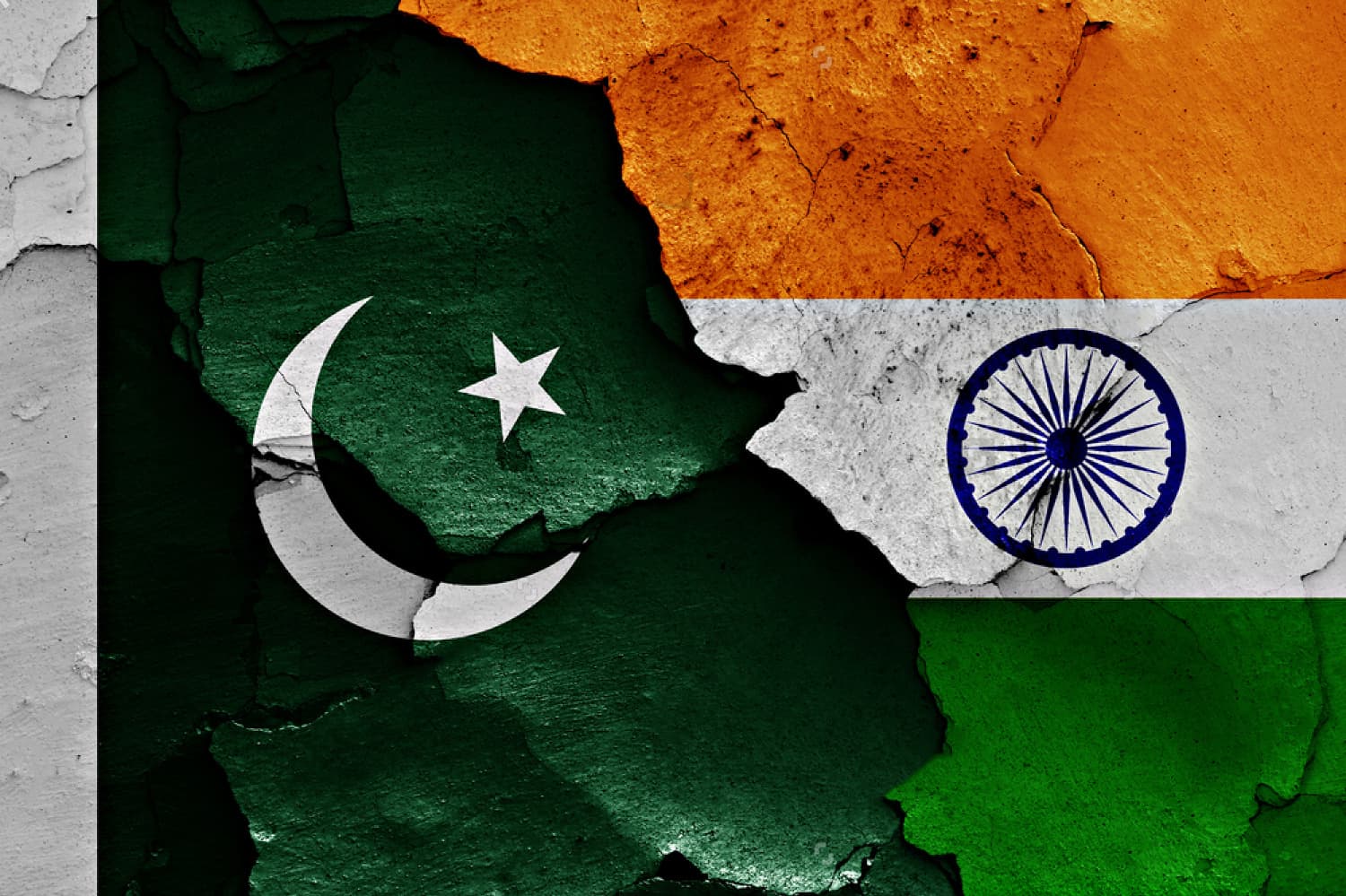
Water, Borders, and Betrayals: Why India’s Actions Reaffirm the Two-Nation Theory
In the aftermath of the tragic attack in Pahalgam, India has once again resorted to the same script of blame, deflection, and unilateral action. Among the most alarming of these steps is the reported...

In the aftermath of the tragic attack in Pahalgam, India has once again resorted to the same script of blame, deflection, and unilateral action. Among the most alarming of these steps is the reported move by the Indian government to reconsider or suspend the Indus Waters Treaty-a landmark agreement brokered in 1960 by the World Bank, aimed at ensuring peaceful cooperation over the shared rivers of the Indus Basin. While such impulsive decisions may seem like reactive measures to domestic pressure, in reality, they expose a deeper, more enduring problem that underlines the very foundations of South Asian politics: the irreconcilable differences between Hindus and Muslims, as envisioned in the Two-Nation Theory.
The Indus Waters Treaty (IWT) has long been cited as a rare example of successful conflict resolution in the region. Despite wars in 1965, 1971, and the Kargil conflict of 1999, the treaty remained intact and was hailed as a model for water diplomacy worldwide. The agreement allocated the three eastern rivers-Ravi, Sutlej, and Beas-to India, and the three western rivers-Indus, Jhelum, and Chenab-to Pakistan, with India allowed limited usage. However, India’s repeated threats to suspend or reinterpret the treaty, especially after incidents in Kashmir, reveal not only a disregard for international norms but also an embedded hostility that runs deeper than political posturing.
When Indian Prime Minister Narendra Modi chaired a high-level security meeting shortly after the Pahalgam attack, the immediate outcome was not introspection about internal security lapses, but rather a calculated targeting of Pakistan-both through verbal rhetoric and actionable measures like the threat to halt water flow. This is not the first time such threats have surfaced. After the Pulwama attack in 2019, Modi claimed that “blood and water cannot flow together,” vowing to stop water from flowing to Pakistan. Although such statements may rally nationalist sentiments within India, they dangerously politicize a humanitarian resource and breach the spirit of international cooperation.
What makes such reactions especially telling is how quickly India defaults to targeting Pakistan, without evidence or investigation, portraying it as an adversary regardless of context. This instinctive othering is not just political-it is ideological. It is rooted in the belief that Muslims, even after nearly eight decades of independence, remain outsiders in a Hindu-majority India. This outlook is not a modern political strategy; it is a civilizational mindset. And that mindset continues to validate the Two-Nation Theory which held that Muslims and Hindus are two distinct nations, with different religions, values, cultures, and histories, and thus cannot coexist peacefully within a single state.
The treatment of Muslims in India further strengthens this argument. Whether it is the discriminatory Citizenship Amendment Act, the revocation of Article 370 in Jammu and Kashmir, or the open hostility faced by Muslims in places like Uttar Pradesh, Gujarat, and Assam, the pattern is consistent. India has institutionalized exclusion. In Kashmir, for instance, Article 370, which provided special status and autonomy to the region, was unilaterally revoked by the Modi government in 2019. This decision was made without the consent of the local population or its political representatives. Since then, thousands have been detained, internet access has been cut repeatedly, and dissent has been crushed. The very Kashmir that Modi once claimed belonged to every Indian now suffers under what many human rights groups call an occupation.
International bodies like the United Nations and organizations such as Amnesty International have repeatedly expressed concern over India’s human rights record in the region. A 2022 report by the UN High Commissioner for Human Rights detailed the excessive use of force by Indian security forces in Kashmir, including arbitrary detentions, enforced disappearances, and use of pellet guns against civilians. These violations go beyond politics. They reflect a state apparatus that views its Muslim-majority region as a problem to be controlled, not a population to be served.
When viewed in this broader context, India’s growing hostility-manifested in moves like suspending the Indus Waters Treaty-appears less about policy and more about ideology. It becomes evident that India does not see Pakistan as just a neighboring state but as the continuation of the Muslim identity that it has failed to reconcile with since Partition. This makes it easier for India to frame Pakistan as an enemy, fabricate allegations, and take aggressive steps without accountability.
Moreover, India’s media plays a critical role in reinforcing this narrative. Within hours of any unrest or attack, television channels begin broadcasting inflammatory content, often without verified facts, feeding public outrage and justifying government action. The same cycle has repeated itself after the Pahalgam attack. Before any formal investigation, fingers were pointed at Pakistan, paving the way for retaliatory measures like water threats or airspace restrictions.
Such policies and practices are not the actions of a state committed to democratic values or regional peace. Rather, they are the manifestations of a nation still unable to accept coexistence with Muslims as equals. In this light, the decision to threaten the Indus Waters Treaty is not just a diplomatic maneuver-it is a symbolic assertion of dominance rooted in religious and ethnic exclusion. It sends a message that agreements, cooperation, and peace can all be sacrificed at the altar of ideology.
Therefore, the notion that Hindus and Muslims could ever truly form a united, harmonious nation is increasingly difficult to defend. Every unilateral action, every human rights violation in Kashmir, every false flag narrative, and every suspension of diplomacy serves as a painful reminder of why the Two-Nation Theory was necessary-and why it remains relevant today. It is not Pakistan that is reaffirming this theory. It is India, through its actions and policies, that continues to demonstrate that the idea of a shared homeland was always a myth, and that separation was not just inevitable-it was essential.
In a region already fragile with nuclear stakes and water scarcity, India’s reckless behavior threatens not just bilateral relations but also regional stability. The world must not ignore these signs. Peace, after all, is not built on threats and coercion. It is built on trust, respect, and justice-principles that India, time and again, seems willing to abandon.
Author