
Kremlin’s Iron Dice: Putin Opts for Escalation Amid Standoff and Internal Malaise
POLICY WIRE — MOSCOW, RUSSIA — The quiet rustle of disillusionment is getting harder to ignore, even in the Kremlin’s antechambers. Months of grinding conflict, territorial attrition...

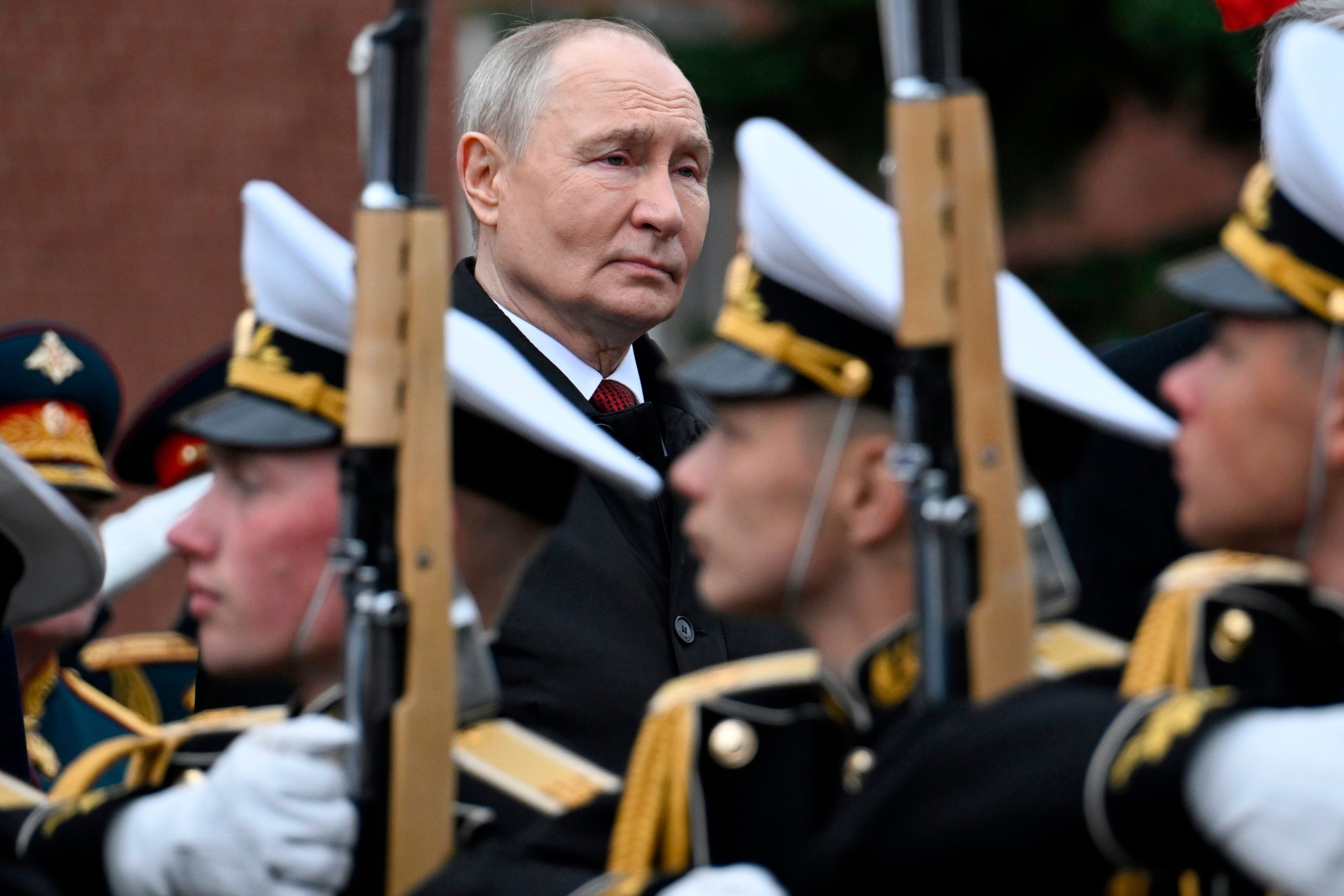
POLICY WIRE — MOSCOW, RUSSIA — The quiet rustle of disillusionment is getting harder to ignore, even in the Kremlin’s antechambers. Months of grinding conflict, territorial attrition that’s scarcely offset by propaganda, and a domestic mood that’s more weary than buoyant: this isn’t the grand strategic triumph President Vladimir Putin once envisioned. And yet, instead of a strategic retreat or a fresh diplomatic offensive, the signals suggest a grim resolve to press harder, to gamble for a win he hasn’t yet secured. He’s seemingly bent on turning up the heat, consequences be damned.
Because that’s what leaders in a tight spot often do—they double down. Across the vast Russian landscape, families cope with the tangible loss of young men dispatched to the front, while state media dutifully paints a picture of unwavering national purpose. But the fissures are there, subtle cracks in the facade of unity. A war that was meant to be a swift demonstration of strength has instead exposed an enduring Ukrainian resistance and a collective Western resolve that, while occasionally fractured, has held together surprisingly well. It’s a costly stalemate, one that Russia, by some estimates, has absorbed nearly 300,000 casualties since the full-scale invasion began, according to a recent assessment from the UK Ministry of Defence.
This persistent grind necessitates a change in posture, or so the thinking appears to be. For Moscow, a definitive victory isn’t merely about land or resources; it’s about the very narrative of Putin’s long reign, his unshakeable control, and Russia’s reclaimed status on the global stage. Losing—or even appearing to lose—isn’t an option. “Our special military operation continues according to plan,” Dmitry Peskov, the Kremlin’s spokesman, recently stated with a characteristic stoicism, even as intelligence points to a renewed drive for mobilization or an intensification of strategic bombardments. “Any suggestion of weakness is a deliberate Western fabrication designed to undermine our resolve. It won’t work.”
But the pressure builds, globally — and domestically. The West views this potential escalation with deepening alarm. “The Kremlin believes it can simply outlast us, out-suffer us,” observed Celeste Wallander, the Assistant Secretary of Defense for International Security Affairs, speaking last month at a Washington think tank. “They think our democracies are too fragile for prolonged confrontation. We must disabuse them of that notion.” The stakes, as ever, remain astronomically high, reaching beyond Eastern Europe’s frozen plains.
Consider the ripple effect across the Global South. Nations like Pakistan, already navigating their own domestic complexities—economic woes, political infighting, and the constant dance of regional security—watch with a wary eye. The enduring conflict keeps energy — and food prices volatile, hitting developing economies particularly hard. A surge in wheat prices, directly attributable to the disruption of Ukrainian exports and Russian manipulation of supply, can send tremors through a nation that imported nearly $3 billion worth of food grains in the last fiscal year. They’re reliant on stable global markets, you see, — and this war guarantees anything but. And these are nations already grappling with the precarious balance of choosing sides, often needing friendly relations with both East and West.
For Beijing, too, this protracted conflict presents a quandary, one that complicates its carefully calibrated global strategy. As the world witnesses Beijing’s careful expansion of influence, detailed in pieces like China’s Measured March: Beijing’s Space Play Redefines Earthly Power Dynamics, Russia’s increasingly unpredictable moves require deft handling, particularly as they continue to court favor in places like Pakistan and across the Muslim world. The global South, always the recipient of outsized consequence from distant superpower squabbles, remains on edge.
What This Means
Putin’s seeming decision to escalate isn’t a sign of confidence; it’s the grim arithmetic of a leader who can’t afford to lose face. Politically, it consolidates power at home by appealing to nationalist sentiment, silencing dissent (or at least making it more perilous), and attempting to force a new, more compliant narrative. Economically, it deepens Russia’s reliance on strategic partners like China and India, while further isolating it from Western markets. We’re talking long-term structural changes to Russia’s economy here, potentially accelerating its shift from a European energy provider to an Asian resource supplier. For Europe and NATO, this means a sustained period of tension, potentially an arms race, and the constant challenge of maintaining public support for costly sanctions and military aid. It’s a grueling test of endurance, both for Moscow’s ambitions — and for the West’s unity.
The danger now isn’t just about tactical gains or losses on the battlefield. It’s about a strategic entrenchment that fundamentally alters geopolitical relationships for decades to come, leaving global security, and especially the stability of commodity markets (just ask the folks dealing with Drought’s Harbinger: India Braces for Subpar Monsoon), hanging precariously in the balance. Moscow’s iron dice have been cast, — and the tremors will be felt far beyond Ukraine’s borders. What comes next will likely be ugly.