

Pulwama to Pahalgam: Is India Using Terror Incidents to Justify an Indus Water Treaty Exit?
When bombs go off in Kashmir, waves ripple beyond the valley, sometimes all the way to the banks of the Indus. The recent Pahalgam attack became witness to this phenomenon when the Indian Cabinet...

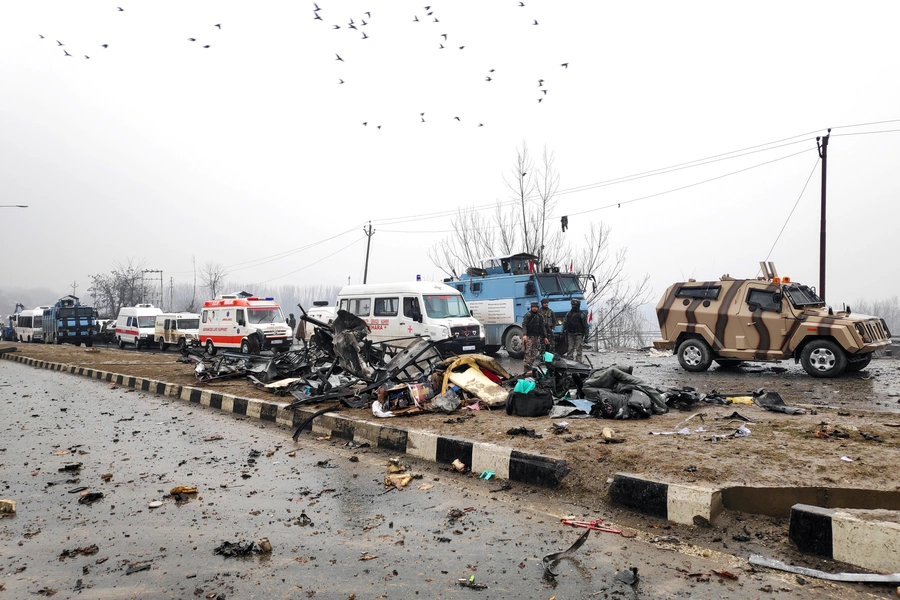
When bombs go off in Kashmir, waves ripple beyond the valley, sometimes all the way to the banks of the Indus. The recent Pahalgam attack became witness to this phenomenon when the Indian Cabinet Committee on Security (CCS), chaired by Prime Minister Narendra Modi, announced a suspension of the Indus Water Treaty (IWT). This, however, is not new; India similarly directed to divert water from rivers flowing downstream into Pakistan after the 2019 Pulwama attack. This recurring scheme of events leads to the conclusion that these terror attacks are being used as a tool to justify hydro-aggression against Pakistan.
India and Pakistan, since 1947, have been adversaries in a water conflict. They saw the expiration of the first agreement on 31st March 1948, followed by India suspending water flow to West Punjab canals of Pakistan on 1st April 1948, using water to dominate Pakistan and its affairs. In 1960, the IWT, mediated by the World Bank, was signed by both parties. The treaty became a pinnacle of hydro-diplomacy, surviving through wars. This, however, took away India’s edge over Pakistan. The treaty under its Article XII (4) posits mutual consent. It prohibits unilateral decision-making in terms of suspension; to surpass illegality, India uses partial noncompliance, dam construction, and the excuse of terrorist attacks.
The instrumentalisation of terror attacks started with the 2019 Pulwama attack; however, till then it was not apparent. Pahalgam attack 2025, the lack of evidence, and the swiftness with which Pakistan was blamed, proved that India has higher aims of diplomatically blackmailing Pakistan through such acts. The presence of Vice President JD Vance in India, and foreign tour of Prime Minister Narendra Modi to Saudi Arabia at the same time as this attack occurred is not a mere coincidence, rather a deliberately planned attempt to undermine Pakistan’s image to achieve broader hydro-political goals.
Pakistan is dependent on the rivers assigned to it for agriculture. Pakistan approaches absolute water scarcity below 1000 cubic meters per capita; thus, its agricultural productivity, which is 30% of its GDP, majorly impacts its economy, fulfilling geostrategic interests of India. Water is primarily also a human need, and if controlled brutally by India, it will be a major humanitarian issue, deteriorating the living standards of the Pakistani population. Therefore, if IWT is suspended, there is a high chance of armed conflict between the two countries.
Looking deep into the Indian hidden agenda against Pakistan, a 2022 US intel report predicted a large-scale or partial water-based war between India and Pakistan in 2025. A large-scale armed conflict might not be a possibility due to nuclear deterrence; however, limited armed attacks and a water-based war are entirely believable possibilities under the current circumstances. These possibilities will prove to be detrimental for people of both countries, while also disturbing peace in all of South Asia.
Moreover, India’s upstream infrastructural pursuits have further complicated the treaty’s stability. Pakistan has viewed the construction of controversial projects like the Kishanganga dam as a deliberate attempt to alter the flow and timing of water release, affecting sowing and harvesting cycles in the downstream plains. These violations, termed development projects, represent India’s tactic of shadow noncompliance.
At the heart of this strategy lies a shift in India’s water doctrine. In recent years, influential Indian strategists have increasingly framed water not as a shared resource but as leverage for dominance. For example, analysts like Brahma Chellaney said, “Water is the new strategic weapon,” which aligns with India’s increasing instrumentalisation of terror attacks to fulfill these interests. Terror incidents thus have allowed India to test tolerance for treaty violations without direct confrontation with Pakistan.
The international response, however, remains null and void. The World Bank, as the treaty’s guarantor, has failed to enforce timely mediation. Western powers, more concerned with regional stability in a nuclear environment, have avoided strong opposition to India’s actions. This silence has allowed India to escalate its hybrid approach to conflict, combining media narratives and selective treaty engagement.
For Pakistan, the diplomatic road ahead must be urgent and precise. First, Islamabad must re-engage the World Bank, demanding neutral expert review and updated mechanisms to address Indian violations. Second, a regional alliance on climate change and water justice must be made to build diplomatic pressure on India. Finally, Pakistan must treat water as a national security issue of the highest priority, integrating hydro policy within its strategic, environmental, and defense policies.
In conclusion it safe to assume that Pulwama and Pahalgam were not just terror attacks rather they became instruments of narrative warfare, justifying hydro-aggression. The world must open its eyes because the next war in South Asia may not begin with guns, but with the turning of a valve. And when that happens, treaties will not just suspend and collapse. It will be systems, communities, and the fragile peace of South Asia.
Author