

Pakistan’s Rising Diplomatic Confidence: A Defining Visit to Riyadh
Prime Minister Shehbaz Sharif’s meeting with Saudi Crown Prince Mohammed bin Salman during the Future Investment Initiative (FII9) summit in Riyadh was not just another diplomatic formality. It was a...
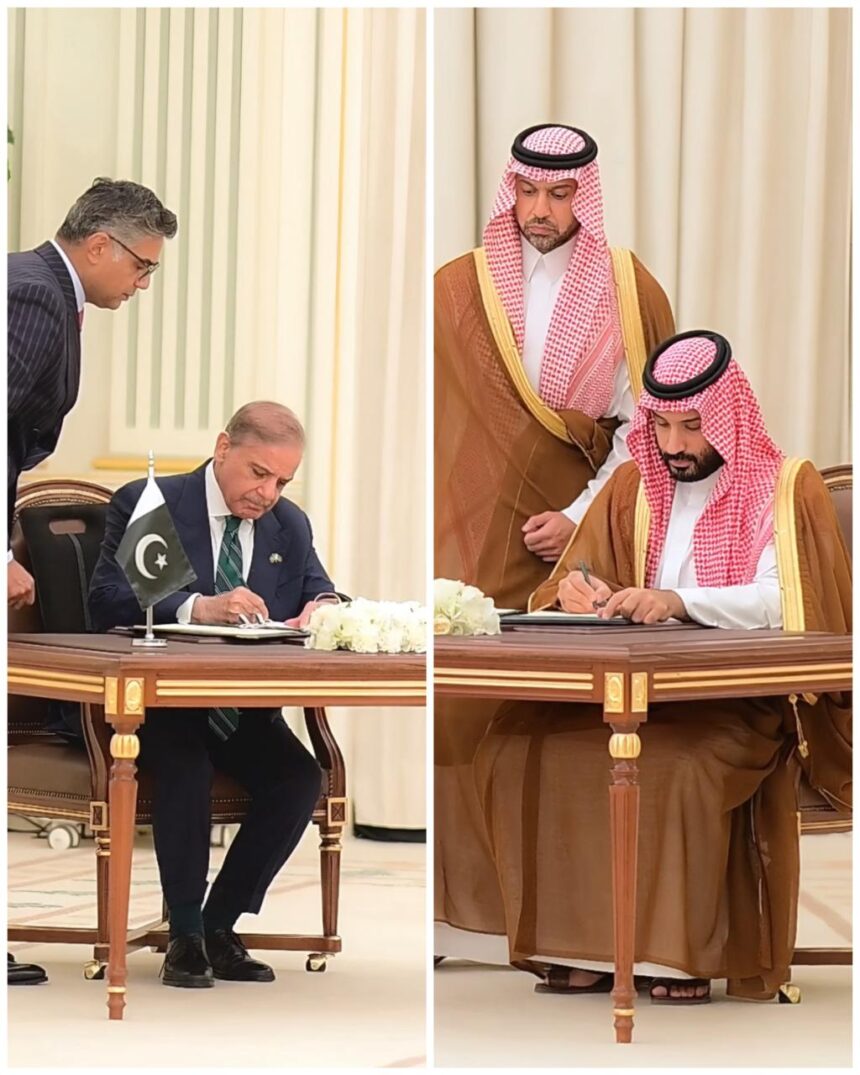
Prime Minister Shehbaz Sharif’s meeting with Saudi Crown Prince Mohammed bin Salman during the Future Investment Initiative (FII9) summit in Riyadh was not just another diplomatic formality. It was a clear demonstration of Pakistan’s renewed global confidence and its unwavering commitment to forging meaningful economic and strategic partnerships. The visit underscored a vital truth: Pakistan is no longer content to be a passive observer in global affairs. It is ready to lead with purpose, build with confidence, and partner with strength.
Pakistan and Saudi Arabia share more than borders of faith. They share a deep and enduring brotherhood built on mutual respect, trust, and shared aspirations for the Muslim world. Over decades, Saudi Arabia has been a dependable friend in times of economic challenge, while Pakistan has stood as a steadfast partner in defence, security, and manpower.
What makes this moment special is the shift from traditional friendship to forward-looking collaboration. Prime Minister Shehbaz’s dialogue with Crown Prince Mohammed bin Salman reflected a shared determination to move beyond rhetoric and turn historical goodwill into tangible economic progress. This is a partnership not of dependency, but of shared destiny.
The Riyadh meeting symbolised a cornerstone of Pakistan’s evolving foreign policy: economic diplomacy. Under Prime Minister Shehbaz’s leadership, Pakistan is redefining how it engages the world. Instead of appealing for aid, Islamabad is offering investment opportunities. Instead of crisis management, it is focusing on long-term partnerships in energy, technology, and infrastructure.
The FII9 summit, often called the “Davos of the Desert,” brought together global leaders, investors, and innovators to shape the future of growth. Pakistan’s active participation at such a global stage sent a clear signal: the country is open for business, ambitious in its goals, and serious about reform.
Shehbaz Sharif’s message to international investors was clear and confident. Pakistan is not a risk; it is an opportunity. It is a nation of 240 million resilient people, a gateway to Central and South Asia, and a future hub of industrial, agricultural, and technological innovation.
Pakistan and Saudi Arabia’s relationship extends beyond economics. Their recent defence agreement, declaring that an attack on one will be treated as an attack on both, has cemented the partnership as one of mutual security and regional stability. This pact represents more than just military cooperation. It is a declaration of shared resolve for peace, sovereignty, and collective security across the Muslim world.
Pakistan’s professional armed forces and Saudi Arabia’s strategic depth create a natural synergy. Together, the two countries can ensure that the Muslim world’s interests are safeguarded from external threats and regional instability. This cooperation strengthens not only Pakistan’s defence posture but also its role as a pillar of stability in the region.
Energy security has long been a critical concern for Pakistan, and Saudi Arabia’s Vision 2030 aligns perfectly with Pakistan’s developmental roadmap. The Kingdom’s diversification strategy, focusing on renewable energy, mining, and industrial expansion, presents vast opportunities for Pakistan to engage in mutually beneficial projects.
Saudi investment in Pakistan’s oil refining, renewable energy, and infrastructure sectors can transform Pakistan’s industrial landscape. Equally, Pakistani expertise and manpower continue to contribute to the Saudi economy, symbolizing a partnership rooted in trust and productivity.
Under the leadership of Shehbaz Sharif and MBS, this cooperation is being elevated to a new level where joint ventures, technology transfer, and mutual investment take precedence over one-sided aid. It is a vision that transforms dependency into dignity.
Pakistan’s leadership has consistently advocated unity among Muslim nations. In this respect, its close collaboration with Saudi Arabia, the custodian of the Two Holy Mosques, carries profound symbolic and strategic importance. Together, Islamabad and Riyadh represent the heart and strength of the Muslim world.
At a time when global power dynamics are shifting and new alliances are emerging, Pakistan and Saudi Arabia’s alignment sends a strong message: the Muslim world can and must chart its own course based on cooperation, economic empowerment, and technological advancement.
📄 POLICY WIRE WHITEPAPER PUBLISHED: PAKISTAN'S NATIONAL SECURITY POLICY PRIORITIES
👉 READ BY CLICKING HEREPrime Minister Shehbaz’s visit also conveyed a vital assurance to the global community that Pakistan is stable, economically reforming, and institutionally united. The inclusion of senior cabinet members in the delegation reflected the government’s unified approach to promoting national interests. It showed that Pakistan’s leadership is fully aligned on one clear objective: economic recovery and global reintegration.
Saudi Arabia’s continued confidence in Pakistan, from financial support to plans for new investment projects, is proof that international partners recognize Pakistan’s resilience. The country has faced challenges, but it has never lacked resolve. Every crisis has strengthened its will to rebuild stronger.
Under Shehbaz Sharif’s leadership, Pakistan’s foreign policy has matured into a balanced, pragmatic, and forward-thinking framework. Islamabad’s approach is no longer defined by reactive diplomacy. It is guided by strategic intent. By strengthening ties with long-standing allies like Saudi Arabia, Pakistan is also positioning itself as a credible voice for developing nations and the broader Muslim world.
The country’s diplomatic engagement is guided by a clear understanding: national strength lies not in isolation but in cooperation. Pakistan’s outreach to Riyadh represents the best of this philosophy: a confident, sovereign nation seeking partnership, not patronage.
As Pakistan charts its economic recovery, Riyadh’s partnership will be vital. Investments in energy, mining, infrastructure, and technology will not only create jobs but also accelerate Pakistan’s journey toward self-sufficiency. These projects will strengthen Pakistan’s exports, enhance its energy independence, and uplift millions of lives.
This is more than diplomacy. It is nation-building through global collaboration.
Prime Minister Shehbaz Sharif’s meeting with Crown Prince Mohammed bin Salman marks a pivotal moment in Pakistan’s foreign policy evolution. It symbolises a confident, proactive, and visionary Pakistan that stands tall among nations, grounded in principle and driven by progress.
The visit was not about aid or pledges. It was about partnership and shared purpose. Pakistan, with its strategic geography, skilled people, and unbreakable resolve, is poised to be a regional powerhouse. And with Saudi Arabia as a trusted ally, that vision is closer than ever.
The world is changing, and Pakistan is not just keeping pace. It is helping to shape the future.
Author