


Gloves Off in Boxing’s Cold War: Zuffa’s Gauntlet Challenges Old Guard’s Dominance
POLICY WIRE — London, UK — Forget the usual squabbles over purses or ring canvas; a deeper, nastier battle is brewing in professional boxing. It’s less about a knockout punch and more about a...

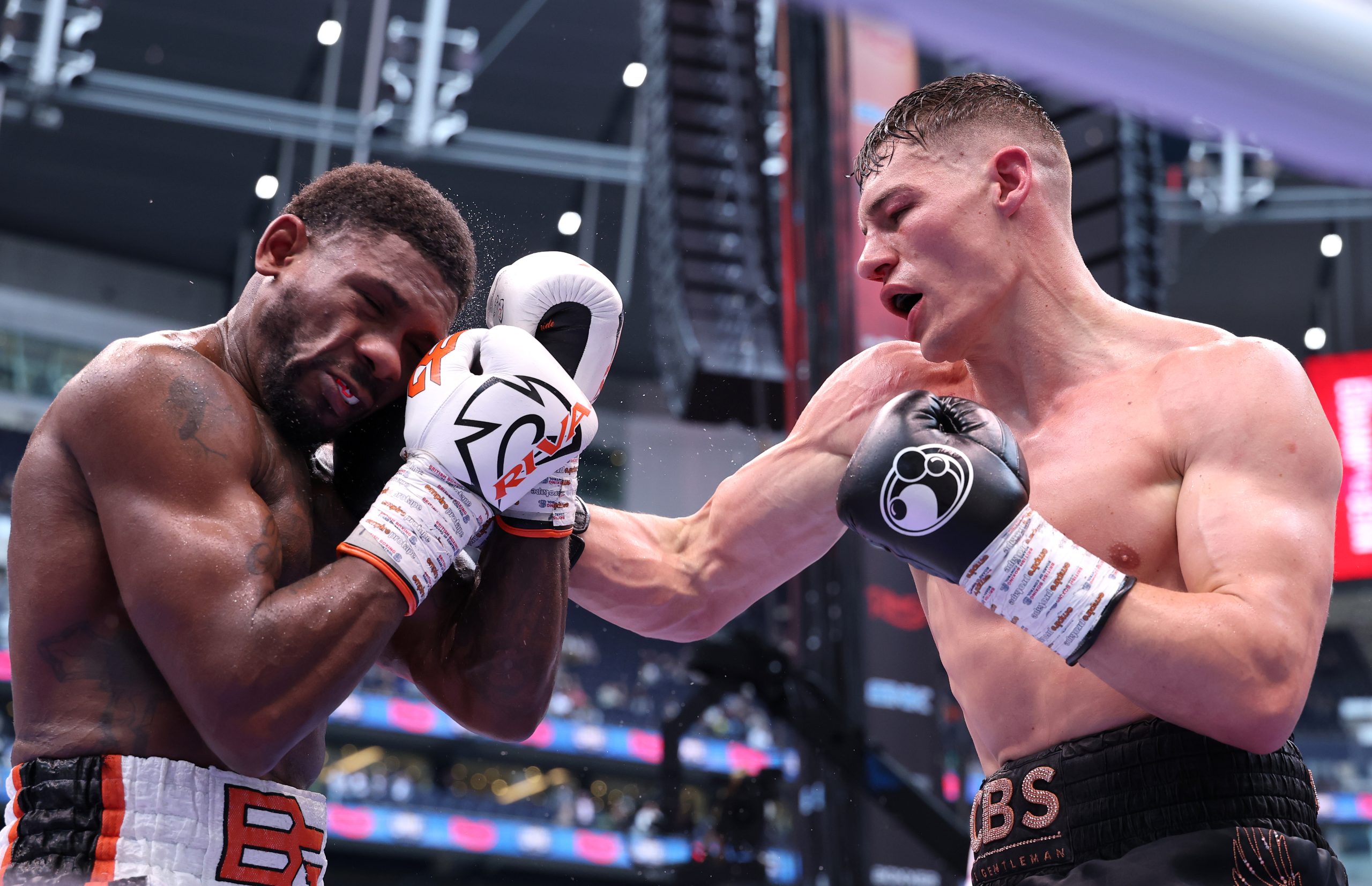
POLICY WIRE — London, UK — Forget the usual squabbles over purses or ring canvas; a deeper, nastier battle is brewing in professional boxing. It’s less about a knockout punch and more about a boardroom power play, mirroring global geopolitical tensions where established order gets smacked around by upstarts with deep pockets and a different playbook. This isn’t just about a couple of fighters slugging it out; it’s a proxy war, and guys like Chris Billam-Smith—a former world champion from England—are finding themselves, perhaps inadvertently, right on the front lines.
But make no mistake, for Billam-Smith, the stakes couldn’t be clearer, or more personal. His gaze isn’t fixed on the alphabet soup of championship belts; it’s locked onto one man, Jai Opetaia. See, Opetaia’s already cemented his status as cruiserweight’s top dog in the eyes of many, even if he’s done it under the nascent banner of Zuffa Boxing. And that’s the whole rub. Because it’s Opetaia’s gravitational pull that snatched Billam-Smith from the established cosmos and pulled him into Zuffa’s orbit.
“My focus is on proving I’m the No. 1 in the world, — and when I signed with Zuffa, that was Jai Opetaia,” Billam-Smith frankly admitted. “So that’s why we’re going this way.” His words slice through the usual PR fluff. He’s not chasing shiny baubles; he’s after legitimate dominance. But his personal quest has broader implications. This isn’t simply a fighter looking for the best fight. It’s a statement about where power resides, or where it’s migrating to, in a sport notoriously fractured.
And that’s where the friction kicks in. The traditional sanctioning bodies – the WBC, WBA, IBF, WBO – have held sway for decades. They’re the old guard, dictating rankings, collecting fees, — and essentially serving as gatekeepers. But Zuffa, with its well-funded, disruptor mindset, wants to blow up that model. Think of it like a new-economy tech giant muscling into a long-entrenched industry – disruptive, expensive, and a little bit ruthless.
Because of this burgeoning rivalry, fighters like Opetaia find themselves in a bind. Mauricio Sulaiman, the president of the World Boxing Council (WBC), isn’t taking this challenge lightly. “The integrity of our championship system, built over half a century, must be protected,” Sulaiman asserted in a recent statement, reflecting deep unease within the old guard. “Allowing any singular entity to dictate terms threatens the sport’s very legacy and democratic structure.” It’s classic protectionist rhetoric, dressed up in concern for the sport.
But for Zuffa, it’s about modernization. “We’re giving fighters a direct path to the biggest fights and giving fans what they actually want,” a Zuffa spokesperson, speaking on background, clarified. “No endless mandatories, no politics. Just the best fighting the best. The market wants efficiency, — and boxing is due for a shake-up.”
The geopolitical implications here are tangible. We’re talking about massive investments, particularly from regions looking to cement their place on the global sporting stage. Consider the influx of capital into events like Billam-Smith’s earlier bout in Riyadh, Saudi Arabia. It’s part of a larger trend. The global sports market, a behemoth projected to hit nearly $620 billion by 2030, is attracting major players beyond traditional strongholds, according to industry analysts like Grand View Research. Countries like Saudi Arabia and the UAE aren’t just hosting fights; they’re making a play for cultural influence, positioning themselves as new centers of gravity for global entertainment, directly challenging older Western-centric models. It’s a move not dissimilar to shifts seen in global trade — and diplomatic influence.
Back in the ring, before any dream-fight with Opetaia, Billam-Smith, now 35, first has to take care of Ryan Rozicki in Bournemouth. “If you look at our last opponents, there’s a massive gulf in class there,” he quipped about Rozicki (21-1-1, 20 KOs), clearly not impressed by his adversary’s résumé. “I’m just a better all-around boxer. I can do a lot of different things. I can box. I can fight. I’m very smart with what I do.”
And he has good reason to be confident. Back in 2019, Billam-Smith had only had eleven pro fights. Yet, he traveled to Riga, Latvia, to train with — and spar three-time cruiserweight world champion Mairis Briedis. Briedis was then a wrecking ball, having pushed Oleksandr Usyk to the brink. Billam-Smith might have been a greenhorn, but he gained invaluable experience. It’s how champions learn—by exposing themselves to the very best, regardless of their own current standing. That experience — those grueling sessions where he admitted Briedis “got the better” of him — proved crucial for his rise, culminating in big wins against Isaac Chamberlain, Lawrence Okolie, and Richard Riakporhe. It made him.
His only real stumble since Riga was a points loss to Gilberto “Zurdo” Ramirez. That loss stung, but its sting lessened when David Benavidez later dismantled Ramirez. Billam-Smith, always watching, took note. “A lot of people thought Benavidez would win, but I was sure ‘Zurdo,’ especially the size of seeing him, would have imposed himself. But he couldn’t,” he reflected. “Benavidez’s power translated all the way up to cruiserweight, which is rare because of the 25-pound gulf in weight from light heavy to cruiserweight.” It was a rare, shrewd observation for a fighter, highlighting the technical and physical challenges of navigating divisions, and indirectly, the fluid nature of top-tier talent in the sport.
What This Means
This entire saga—Billam-Smith’s Zuffa move, the ongoing tussle with traditional bodies, the big money flowing in from the Middle East—isn’t just inside baseball for fight fans. It’s an economic indicator, a microcosm of larger battles for influence — and market share happening worldwide. It hints at a potential reshaping of sports governance, where commercial muscle can eventually sideline centuries of tradition. For fighters, it could mean more lucrative opportunities, but also less predictable career paths as promotional houses clash with sanctioning bodies. Fans might get higher-quality, consolidated fights, or a bewildering landscape of competing ‘world titles’ from different ecosystems. This Cold War in boxing isn’t just a fleeting spat; it’s a strategic conflict for the soul of the sport, and how it plays out will set precedents for other athletic endeavors grappling with new money and insurgent enterprises.
“I know I can stop him, and I believe that’s what the outcome will be,” Billam-Smith stated about Rozicki, bringing things back to the immediate task. “It could happen at any point in the fight.” But his path, regardless of Saturday’s result, now undeniably weaves through a boxing landscape that’s shifting under everyone’s feet. And he, by aligning with Zuffa — and seeking out Opetaia, has made his allegiance clear. This isn’t just about winning a belt. It’s about winning in the new world order of fighting, whatever that ultimately looks like.