

Halal Diplomacy: How Trade Cooperation Between Bangladesh and Pakistan Can Reshape Regional Ties
The recently signed Memorandum of Understanding (MoU) between the Bangladesh Standards and Testing Institute (BSTI) and the Pakistan Halal Authority (PHA) represents more than just a technical...

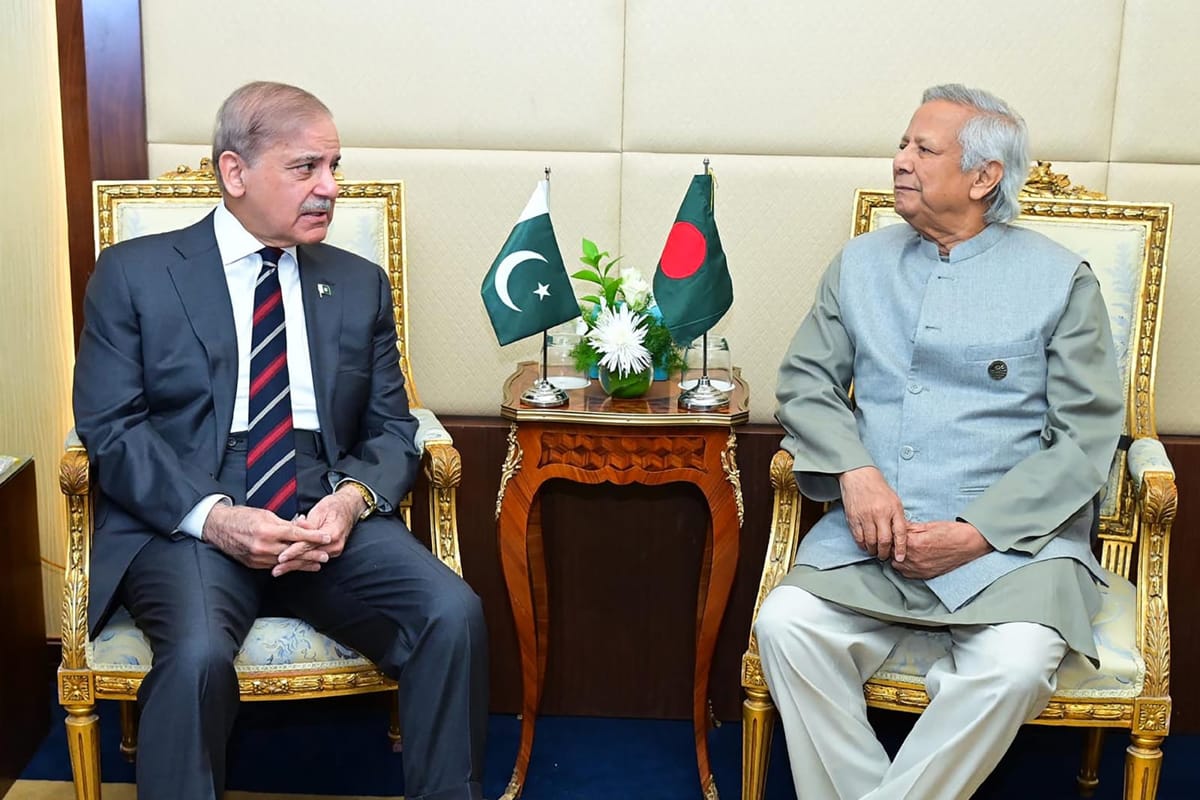
The recently signed Memorandum of Understanding (MoU) between the Bangladesh Standards and Testing Institute (BSTI) and the Pakistan Halal Authority (PHA) represents more than just a technical agreement on product certification. This agreement, signed on October 27, 2025, during the 9th Bangladesh-Pakistan Joint Economic Commission (JEC) meeting in Dhaka, represents a subtle but significant shift in South Asian economic diplomacy. At its root, this cooperation on halal trade has the potential to thaw political stiffness, improve economic integration, and reshape regional partnerships that have long been fractured by historical grievances.
From Dormant Trade to Pragmatic Engagement.
Despite their common historical, cultural, and religious origins, Bangladesh and Pakistan have had disappointing trading relations for decades. Bilateral commerce currently totals less than $1 billion, a small sum given both countries’ economic potential. Pakistan sells textiles, chemicals, and agricultural items to Bangladesh, whilst Bangladesh exports jute goods, pharmaceuticals, and ready-made garments.
The new MoU provides a novel framework for reviving this stagnating commerce. Halal products, which include everything from food and cosmetics to pharmaceuticals, make up a rapidly rising global sector worth more than $2 trillion. Both countries want to take advantage of this growing industry. The collaboration between BSTI and PHA has the potential to unify certification processes, make customs clearances more efficient, and lower technical trade obstacles. Such approaches not only increase economic trust, but also reinforce the institutional ties required for long-term trade viability.
Restoring Bilateral Trust
Beyond economics, this endeavor has symbolic significance. Since 1971, Pakistan and Bangladesh have often regarded each other through a mistrustful historical lens. However, in recent years, Dhaka’s foreign policy has become more pragmatic, whilst Islamabad has prioritized regional connectivity and trade diplomacy as part of its broader outreach through institutions such as the Special Investment Facilitation Council (SIFC).
Halal commerce collaboration thus serves as a low-politics entrance point, a non-controversial area that allows both sides to rebuild engagement without tackling political sensitivities directly. This soft economic engagement allows both countries to gradually build confidence, which may lead to more substantive cooperation in technology, education, and investment.
This is consistent with David Mitrany’s Functionalist Theory of international relations, which holds that limited economic and technical cooperation can eventually evolve to larger political integration. In this sense, the halal trade agreement can be viewed as a practical example of “functionalism,” in which economic cooperation opens the path for trust-based diplomacy.
Economic Diversification and Industrial Collaboration
Both countries’ export structures rely significantly on textiles, making them subject to global demand fluctuations. The halal sector provides a unique opportunity to diversify economically. Pakistan’s substantial cattle and meat processing businesses can complement Bangladesh’s rapidly rising food processing, pharmaceutical, and packaging sectors. This collaboration could lead to collaborative ventures, knowledge sharing, and the creation of halal-based industrial parks. It can also boost employment, attract investment, and improve competitiveness in the worldwide halal market, particularly in the Middle East and Africa, where demand is growing. For Dhaka and Islamabad, this is more than just commerce; it is a strategic industrial relationship that can anchor long-term progress.
Regional Implications: Towards a New Economic Geography
📄 POLICY WIRE WHITEPAPER PUBLISHED: PAKISTAN'S NATIONAL SECURITY POLICY PRIORITIES
👉 READ BY CLICKING HEREThis MoU has regional consequences that transcend beyond bilateral limits. South Asia, widely regarded as one of the world’s least integrated regions, stands to benefit from every measure that promotes intra-regional trade. With SAARC mostly moribund and the Bay of Bengal Initiative for Multi-Sectoral Technical and Economic Cooperation (BIMSTEC) still in development, pragmatic bilateral agreements like this one can help reshape the regional economic fabric. Bangladesh and Pakistan might position themselves as trustworthy suppliers to GCC markets by coordinating their halal certification criteria. This cooperation may also inspire other Muslim-majority nations in the region, such as Malaysia and Indonesia, to establish transnational halal trade corridors connecting South and Southeast Asia, a concept consistent with Regional Economic Integration Theory. This strategy emphasizes that shared economic interests, rather than political coalitions, can be the primary drivers of peace and prosperity in South Asia.
Soft Power and the Emergence of “Halal Diplomacy”
This partnership also strengthens both countries’ soft power by displaying a collaborative Islamic economic identity on a global scale. Pakistan’s acknowledged halal certification system and Bangladesh’s robust manufacturing base form a trustworthy alliance known as “halal diplomacy.” As members of the Organisation of Islamic Cooperation (OIC), both countries can use their cooperation to boost their economic stature and moral impact in international arenas. By promoting halal trading as an ethical and sustainable business model, they may change world opinions and gain the trust of more Muslim consumers. This soft power strategy, based on shared faith and trade, has the potential to redefine Muslim-world economic leadership emerging from South Asia.
The Way Forward
For this collaboration to evolve, both countries must turn the MoU into actionable results, such as establishing joint halal verification organizations, digital certification systems, and sector-specific trade fairs. Furthermore, the private sector and chambers of commerce in both nations should be encouraged to take an active role in ensuring that legislative pledges convert into concrete trade flows.
While small in appearance, the Bangladesh-Pakistan halal commerce agreement symbolizes a gradual shift in South Asian diplomacy, from political antagonism to pragmatic cooperation. It implies that when countries focus on common economic goals, even historical gaps can be healed through trade. If properly cultivated, this engagement has the potential to improve bilateral trade while also altering the regional economic order through an emergent type of halal diplomacy.
Author