


Sacred Dust, Shifting Sands: A Gold Star Mother’s Unyielding Pilgrimage
POLICY WIRE — Albuquerque, New Mexico — It isn’t often a few handfuls of dirt spark such an intricate blend of remembrance and modern geopolitical introspection. But then, the dirt in question...

POLICY WIRE — Albuquerque, New Mexico — It isn’t often a few handfuls of dirt spark such an intricate blend of remembrance and modern geopolitical introspection. But then, the dirt in question traveled thousands of miles—from the ancient battlegrounds of Western Europe, no less—a quiet, potent testament to sacrifice. It’s an unlikely, profoundly human story, even for those of us who’ve seen the grinding machinery of policy up close for decades.
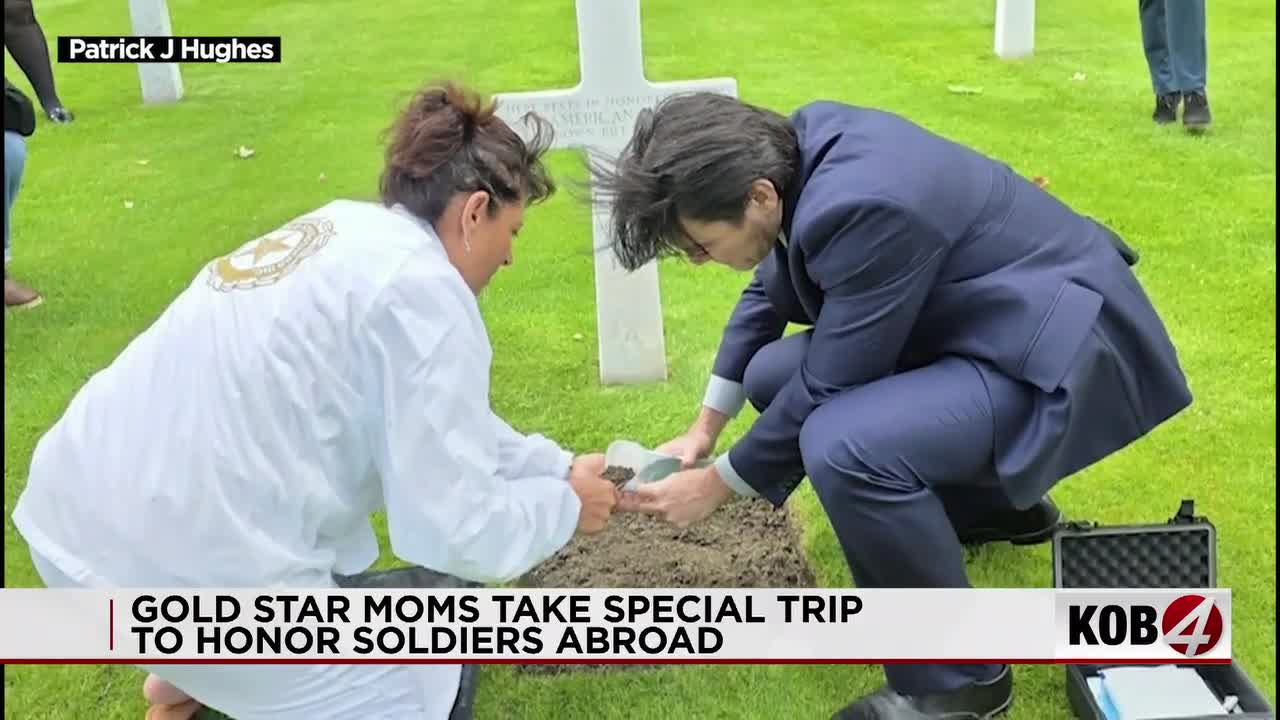
Joyce Paulsen, a Gold Star mother hailing from New Mexico, recently completed a unique pilgrimage. She wasn’t carrying a diplomatic brief or negotiating a trade deal. Her mission was far more personal, yet carried echoes of conflicts that stretch across centuries. She went to France, then came back. Not with souvenirs, but with hallowed soil, destined for a renewed World War I memorial right in Arlington National Cemetery. She shared her experience, not in hushed tones of private mourning, but as a broadcast to her community. It’s a brave move, putting raw, persistent grief into the public square, yet it makes perfect sense once you consider the sheer scale of what these families live with.
Paulsen’s own sorrow stems from the loss of her son, Matthew Q. McClintock, who died in Afghanistan in 2016 at just 30. A Green Beret. It’s a phrase that still carries weight, doesn’t it? Before his passing, Paulsen relayed his aspirations: [QUOTE_PLACEHOLDER] A life fulfilled, by his own measure, albeit tragically cut short. And there are thousands, millions really, of these stories etched into the globe’s scarred earth.
For Gold Star mothers like Paulsen, the bereavement doesn’t just fade away with time, not really. It transforms. The American Gold Star Mothers organization becomes more than just a support group; it’s a living, breathing testament to collective resilience. “I’m with a sisterhood that understands that loss that none of us ever wanted to join, but we understand it,” she reportedly said. This sisterhood, a silent army of its own, doesn’t just comfort its members. They’re a lobbying force, pushing legislation, campaigning tirelessly to keep their children’s memory burning bright. It’s a thankless job, but someone’s gotta do it.
Paulsen was one of five such mothers chosen for this so-called Sacred Soil Tour. They journeyed through American military cemeteries across France, collecting soil—fragments of foreign fields that now, somehow, belong to American history. This dirt now sits, symbolically, within the hallowed grounds of Arlington. It’s a proxy for gravesites too distant for many, a kind of accessible, earthly connection to what was lost overseas. Think about the implications of that: bridging continents with a scoop of earth. She noted, [QUOTE_PLACEHOLDER] Then, she made it stark: [QUOTE_PLACEHOLDER]
The numbers from World War I are staggering. A total of 116,516 Americans perished during that conflict, according to data from the U.S. Army Center of Military History. Each number a son, a brother, a father—a life. Each mother on the tour picked a spotlight soldier to honor, speaking at gravesides, giving voice to forgotten echoes. Paulsen championed Tomas Herrera from Wagon Mound, New Mexico, a figure whose brief life she pieced together from scraps of history. “One of his brothers wrote that he was always polite. His dad said he was a good son,” she said, conjuring a portrait from the thin air of archival records. And here’s where the past truly reached out: [QUOTE_PLACEHOLDER] A personal connection, a whisper across a century, adding a raw intimacy to an already poignant journey.
The trip only reinforced the mothers’ collective mission. What they’re doing isn’t just about closure. It’s about ensuring permanence. [QUOTE_PLACEHOLDER] It’s a straightforward truth that any parent, anywhere, can grasp.
What This Means
This pilgrimage, cloaked in personal sorrow, speaks volumes about national memory and the persistent cost of engagement abroad. For one, it shows how nations, particularly the United States, continuously grapple with the human consequences of past military ventures. These aren’t just names in dusty archives; they’re perpetually mourned individuals. The bringing of ‘sacred soil’ underscores a cultural insistence on physical connection to loss, a yearning for tangibility in grief. And that resonates far beyond Western traditions. Consider the deep reverence for ancestral lands and grave sites throughout South Asia and the Muslim world, from the mountains of Pakistan to the bustling cities of Indonesia. In many of these societies, a similar emphasis is placed on memorializing fallen heroes and preserving their physical link to their homeland—the ‘shaheed,’ or martyr, is afforded unparalleled honor, and their resting place becomes a sacred point of reference for generations. It’s not so different, is it? The notion of earth imbued with memory crosses all borders. Bollywood of Anguish: A Bride’s Death Grips India, Exposing Persistent Shadows highlights how cultural narratives often intersect with deep-seated sorrow and societal reflection, much like this journey does for American families.
But the ritual isn’t purely symbolic. It’s a subtle, ongoing public education, a quiet reminder that war—any war, anywhere, including recent entanglements from Iraq to Afghanistan that have disproportionately impacted Muslim-majority nations—isn’t just fought by machines or generals; it’s paid for by ordinary families, across generations. It’s a stark, simple equation often forgotten in the grand calculus of international policy. And it implies an ongoing commitment by the state to acknowledge that payment. Even when politicians speak of Pentagon’s Invisible Hand: Silent Strikes and Trump’s Hormuz Contradiction, the unseen cost in human lives is a shadow that perpetually lengthens. These rituals become the bedrock of national identity, shaping how future generations perceive conflict — and sacrifice. It’s an intricate, perhaps even ironic, feedback loop between individual suffering and the broader, often indifferent, arc of history.