


Cosmic Cannonball: Russia’s Mars Engine Rekindles Space Race, Stoking Global Anxieties
POLICY WIRE — Moscow, Russia — Forget the dusty probes of yesteryear, inching their way through the cosmic vacuum. Forget even the ambitious but still painfully long voyages dreamt up by Hollywood....

POLICY WIRE — Moscow, Russia — Forget the dusty probes of yesteryear, inching their way through the cosmic vacuum. Forget even the ambitious but still painfully long voyages dreamt up by Hollywood. Russia, it seems, has pulled a rabbit out of its technological hat, promising a transit to Mars in a mere 30 days. One month. That’s faster than most cargo ships cross the Atlantic, which—let’s be honest—feels almost too efficient for humanity’s usual bureaucratic slog into space. The announcement isn’t just a technical flex; it’s a geopolitical tremor, rumbling through a world already on edge, begging the question: who controls the heavens, and what does it mean for the ground beneath us?
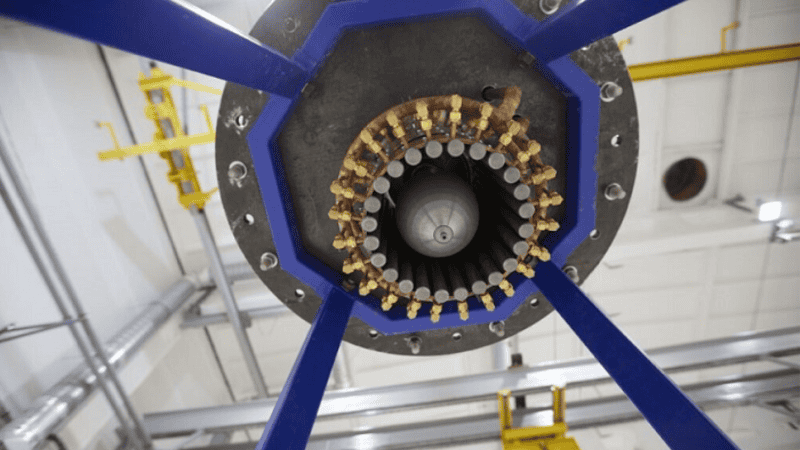
It’s a remarkable claim, certainly. Moscow’s Roscosmos, the state space corporation, recently revealed that their boffins have crafted an engine with a thrust capacity potent enough to ferry a spacecraft to the Red Planet in an unprecedented four weeks. Naturally, details are scarce, shrouded in the sort of deliberate opacity that’s become a hallmark of Russian strategic initiatives. But the implications are crystal clear: this isn’t just about science, or even colonization; it’s about power projection. It’s about being first, or at least being the one dictating the pace, on a frontier that increasingly defines global standing. For all the talk of international cooperation in space, make no mistake, the cosmic ballet has always been a competitive one.
And because the Russians don’t do anything without a clear strategic message, Roscosmos Director General Yury Borisov was quick to frame the development in grand terms. “This engine represents not just a leap in propulsion but a definitive declaration of our independent capabilities,” Borisov told state media. “We’re no longer merely participants; we’re leading, defining the next era of extraterrestrial exploration.” His words resonate with a palpable desire to reassert Russia’s space prowess, harken back to Sputnik’s triumph, and perhaps—just perhaps—sidestep reliance on Western components and partnerships.
But Washington isn’t exactly cowering in fear just yet. NASA, through an anonymous senior official, quietly poured some cold water on the fervor, albeit with characteristic diplomatic understatement. “Such claims are, shall we say, intriguing,” the official noted during an off-the-record briefing. “But true space exploration progress hinges on proven, repeatable systems, rigorous safety, and international collaboration, not just raw speed.” It’s a subtle dig, really—a gentle reminder that a working prototype in a lab is miles away from a manned mission and even further from sustainable Martian settlement.
This rapid transit capability, if real, certainly scrambles the current slow-burn strategies for Mars missions. Most proposals, even with cutting-edge tech, clock in at many months, sometimes years, for the journey alone. Less time in space means less radiation exposure for crews, fewer supplies needed, — and potentially cheaper missions. That’s a game-changer. Historically, the average success rate for Mars missions, from early probes to rovers, hovers around a rather sobering 40%, according to NASA statistics. Every day shaved off that travel time theoretically tilts the odds ever so slightly in humanity’s favor, reducing system failure probabilities and cosmic radiation dosage.
Yet, the bigger picture here isn’t solely about rocket science. It’s about what such an achievement could enable beyond simply getting there faster. Resource exploitation, anyone? Strategic positioning? The very concept sends chills down some spines. Because once you can routinely send things and people to Mars, the moon – which everyone’s suddenly rediscovering – becomes an even easier target, an undisputed territory just waiting for claims. Beijing’s current pursuit of lunar resources and the scramble among various powers to secure mineral access takes on an entirely new dimension. Think global supply chains, but stretching beyond Earth’s gravity well.
For nations like Pakistan, navigating their own nascent space ambitions and geopolitical realignments, Moscow’s announcement isn’t just news; it’s a strategic reverberation. The dream of independent satellite networks, secure communications, or even modest planetary science participation suddenly gets caught between superpowers jostling for interplanetary dominance. Because these shifts, these new frontiers, they never stay isolated. They create geopolitical ripples across the board, influencing everything from trade pacts to military doctrines—even affecting global football tournaments, as strange as that might sound, with all the international posturing involved in mega-events, remember the unseen geopolitical hand in sporting allegiances? The race to Mars isn’t just about rocks and robots; it’s a proxy for earthly contests, for national prestige and technological supremacy.
What This Means
This Russian announcement, whether fully realized or partially aspirational, dramatically reframes the calculus of global space efforts. Politically, it reasserts Russia as a formidable, independent actor on a critical strategic frontier, challenging the perceived dominance of the US and the rising power of China. It’s an aggressive play, aimed at boosting national morale, attracting scientific talent, and—frankly—annoying rivals. Economically, while the costs of such an endeavor are immense, successful deployment could open doors to new space-based industries, potentially altering the balance of power in resource extraction and space tourism. However, the real economic payoff is likely decades away, a huge investment with uncertain immediate returns. From a military standpoint, while explicit weaponization of Mars travel isn’t openly discussed, mastery of fast, long-range space transit technology inevitably raises questions about dual-use capabilities, enhancing a nation’s overall strategic reach and surveillance capacities.
The global community watches, many with skepticism, some with renewed excitement. Because if you can get to Mars in a month, what other seemingly impossible voyages suddenly become, well, just a bit more possible? It certainly doesn’t make international relations on our home planet any simpler, but it sure makes them a heck of a lot more interesting. And that, in itself, is something to ponder.