

Denver’s Calculated Risk: Broncos Eye Familiar Face for QB Depth, Or Just Echoes of an Empire?
POLICY WIRE — Denver, United States — For all the fanfare and chest-thumping about securing a ‘franchise quarterback,’ the NFL’s grittier truth often resides in the relentless pursuit of...

POLICY WIRE — Denver, United States — For all the fanfare and chest-thumping about securing a ‘franchise quarterback,’ the NFL’s grittier truth often resides in the relentless pursuit of contingency plans. It’s an economic reality as much as a sporting one, a brutal game of asset management where talent is always scarce, always in motion, and rarely truly settled. So, while Denver fans have anointed Bo Nix their future, the whispering winds out of the NFL’s analytics chambers suggest General Manager George Paton might still be scouting for further reinforcements—a fallback plan, perhaps, or merely an upgrade to the insurance policy. You see, even emperors need reliable second-in-commands.
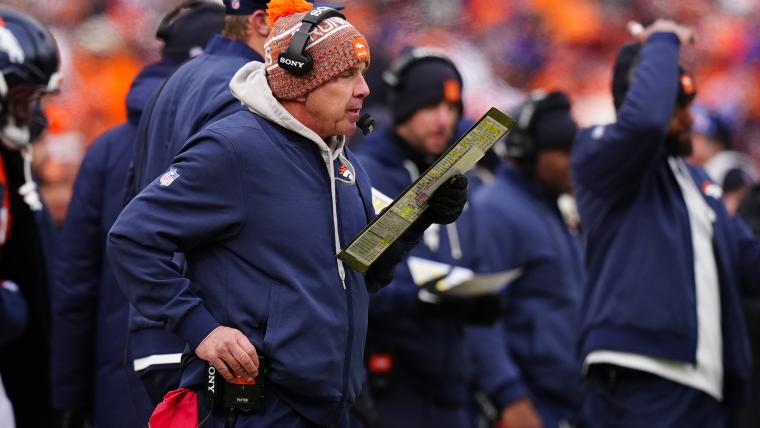
And that’s where the peculiar orbit of former New Orleans Saints quarterback Spencer Rattler comes into view. The 25-year-old signal-caller, presently under contract in the Big Easy, is reportedly drawing speculative glances from Paton and, more pertinently, from Broncos Head Coach Sean Payton. This isn’t just about Rattler’s arm, mind you; it’s about Payton’s history—his well-documented, sometimes almost gravitational, pull back to his old stomping grounds. The man spent 16 years running the Saints show, building an empire that briefly knew no bounds.
It’s precisely this residual influence that’s fueled the latest scuttlebutt. ESPN’s Dan Graziano didn’t just pull the name out of thin air. He pointed out Rattler’s unusual situation. “He could still have a career ahead of him as an NFL quarterback somewhere other than New Orleans,” Graziano penned recently, laying out the stark reality. “Broncos coach Sean Payton still has strong ties to the Saints, and that could be a team to watch if there’s any change to its backup QB plans.” And ‘change’ in New Orleans feels afoot. The Saints brought in former Jets first-round disappointment Zach Wilson this offseason. That’s a curious move for a team already loaded with young QBs — and in perpetual cap purgatory. Suddenly, Rattler isn’t just backup; he’s surplus, a potentially liquid asset for a cash-strapped organization.
Because that’s how this league works: talent churn. Always. Rattler, despite his youth, already boasts starting experience, albeit of the brutal kind. Elias Sports Bureau data reveals he’s started 14 NFL games, with the Saints losing 13 of those contests. Not a ringing endorsement, no, but it does mean he’s seen NFL action, handled a huddle, and tasted defeat repeatedly—qualities teams strangely prize for emergency situations. It means he’s got scar tissue. Payton, ever the strategist, reportedly keeps a close watch on personnel he knows. “In this league, you’re constantly evaluating assets—talent, experience, cap space,” Payton reportedly observed to a confidant last season, long before the current scuttlebutt. “Sometimes, the smartest move is ensuring you’ve got a known quantity waiting in the wings.” He’s a guy who always wants options.
It isn’t as if the Broncos are exactly flush with stellar options behind Nix. Jarrett Stidham and Sam Ehlinger are present, performing the thankless duty of holding clipboards and hoping not to get called. Rattler, in that light, suddenly shines a bit brighter. He’s young, cheap, — and has just enough a track record to be tantalizingly moldable. This isn’t a grab for a future Hall of Famer; it’s a bid for stability, a calculated investment in human capital for a volatile industry. Much like Pakistan’s ever-vigilant military intelligence continuously assessing the political capital of various factions—always preparing for the unforeseen transition—the NFL’s top brass are engaged in similar, albeit less geopolitically charged, strategic planning for their quarterback rooms. Every chess piece has its value, and sometimes, a piece deemed redundant by one power is exactly what another needs for its own tactical maneuvering. For all the bravado, the NFL, like any global institution, remains susceptible to the ebb and flow of strategic necessity, and talent mobility is often driven by perceived crisis or opportunity, however small the perceived stakes.
What This Means
This isn’t merely a backup quarterback shuffle; it’s a minor tremor in the deeper tectonics of NFL talent management. Economically, we’re looking at an undervalued asset. The Saints, having signed Wilson, implicitly devalued Rattler. For the Broncos, a team desperate for depth and consistency, especially given Nix’s rookie status, Rattler represents a potential bargain-bin acquisition—someone who knows Payton’s philosophy, possesses a specific skillset, and comes without the weighty price tag of a top-tier backup. Politically (within the sport’s ecosystem), this speaks to the ongoing influence of veteran coaches. Payton’s ties aren’t just personal; they represent institutional memory, a knowledge base that could be leveraged for competitive advantage. It’s also a stark reminder of the NFL’s unforgiving nature: a player can go from a coveted draft pick to an afterthought with just a few challenging seasons. But what’s an afterthought for one team can be a diamond in the rough for another, especially one where the right bench players can make all the difference. This isn’t just about winning games; it’s about insulating against catastrophe, managing risk, and maintaining the illusion of stability in a league built on glorious, unpredictable chaos. They’re buying insurance, folks, plain — and simple.