

In the classical theory of international relations, the Westphalian principle of sovereignty stands as a cornerstone: every state has an absolute duty to prevent its territory from serving as a base for aggression against its neighbours. When one regime systematically violates this sacred obligation, sheltering, arming and directing terrorists across the border, the targeted nation has not merely the right but the moral imperative to defend itself. The Kabul regime’s actions in March 2026 have shattered that principle beyond repair.
The night of 13 March 2026 will be remembered as the moment the Taliban regime finally crossed an unforgivable line. Rudimentary drones, launched from Afghan soil, targeted civilian areas and military installations across Pakistan, Quetta, Kohat and even Rawalpindi. Pakistan’s armed forces, ever vigilant, intercepted every single one using a combination of electronic warfare and precision firepower. Yet falling debris still wounded two children in Quetta and civilians in Kohat and Rawalpindi. These were not accidents. They were deliberate attempts to terrorize innocent Pakistanis.
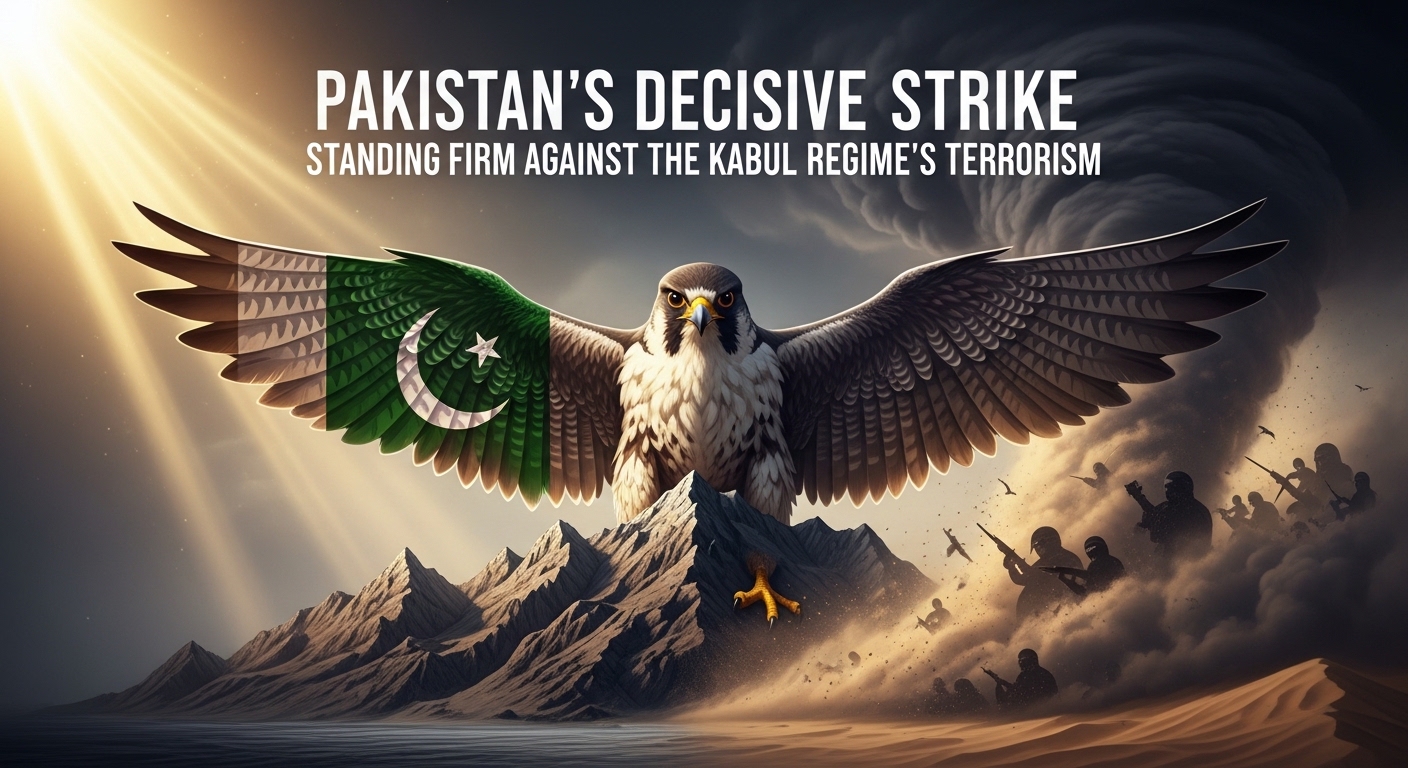
President Asif Ali Zardari spoke for the entire nation when he declared that the Kabul regime had “crossed a red line by attempting to target our civilians.” Within hours, as part of the ongoing Operation Ghazab Lil Haq, Pakistan carried out surgical strikes on a major military facility in Kandahar province. The operation destroyed technical support infrastructure, an equipment storage site and a tunnel network that intelligence had confirmed was being used both to launch these very drones and as a forward base for the Fitna al-Khawarij (FAK) terrorists.
This latest escalation is part of a sustained campaign that began in late February 2026. Since the launch of Operation Ghazab Lil Haq, Pakistan’s armed forces have eliminated over 650 FAK terrorists and destroyed more than 240 terrorist hideouts and infrastructure sites. Despite repeated diplomatic warnings, shared intelligence dossiers and sincere offers of cooperation, the so-called authorities in Kabul have chosen the path of denial and provocation. Their spokesmen now claim the Kandahar site was merely a “drug rehabilitation centre.” The facts tell a different story: it was a command-and-control hub for terrorists who have spilled Pakistani blood for years.
The Taliban regime’s behaviour exposes its true character. It lacks the legitimacy and capacity of genuine state authority. Instead of governing, it harbours, arms and now actively deploys terrorists against a neighbour that once helped bring it to power. The FAK, these Khawarij who twist Islam to justify murder and extortion, operate with impunity from Afghan soil precisely because the regime allows it. Their rudimentary drones may be crude technology, but the intent is crystal clear: to bleed Pakistan, destabilize its border regions and drag the region into chaos.
Pakistan has shown extraordinary restraint. It has faced suicide bombings, cross-border raids, and now aerial provocations, responding with measured military action while maintaining strategic control. Its strikes have always been precise, intelligence-driven and limited to terrorist infrastructure. Contrast that with the Afghan regime’s reckless drone campaign aimed at civilians and army headquarters. When debris from their own failed weapons injures Afghan-adjacent Pakistani children, the regime remains silent. When Pakistan responds by eliminating the launch pads, it cries foul.
The logic is simple and unassailable: no country can allow its civilians to be targeted from across the border while the host regime shrugs and denies responsibility. Pakistan will continue to defend its people, its sovereignty and its future. Operation Ghazab Lil Haq will persist until the FAK threat is eradicated and the Kabul regime stops providing safe havens to these terrorists.
Peace remains Pakistan’s preference, but peace without security is surrender. The ball is now in Kabul’s court. Until the regime ends its support for the FAK terrorists and stops exporting violence, Pakistan has both the right and the duty to protect itself. Its forces have proven once again that they are ready, capable and resolute. The message to the Kabul regime is unequivocal: Pakistan will defend its territory against any threats originating from Afghan soil. Attacks on Pakistani civilians will not be tolerated. Islamabad demands written assurances that all cross-border militant activities will be eliminated, and until such commitments are secured, Pakistan will respond decisively to protect its people and sovereignty.”
Author