


Celestial Interruption: Why Australia’s Sky Fire Illuminates More Than Just Atmosphere
POLICY WIRE — Sydney, Australia — In the hushed halls of power, where policy papers gather dust and political infighting constitutes the main event, sometimes a genuinely cosmic occurrence forces...

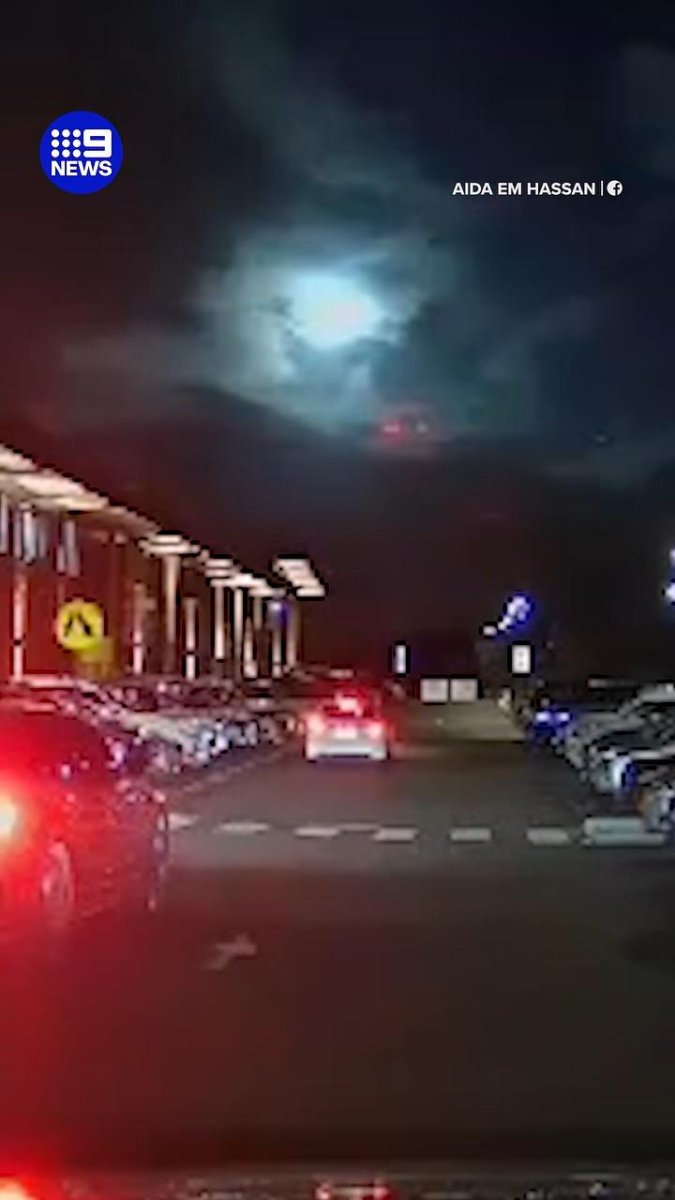
POLICY WIRE — Sydney, Australia — In the hushed halls of power, where policy papers gather dust and political infighting constitutes the main event, sometimes a genuinely cosmic occurrence forces everyone — from the farmer in the outback to the drone of parliament — to just… look up. That’s what happened across New South Wales last week, only it wasn’t a parliamentary debate escalating into a fireworks display, but a legitimate one. A brilliant, emerald flash ripped through the pre-dawn darkness, a celestial interjection into an otherwise predictable news cycle dominated by debates over housing affordability and the ever-churning energy crisis.
It wasn’t quite the End of Days, not a rapture, just a particularly boisterous piece of space rock—a bolide—making a dramatic exit. But the reaction, boy, that was something. Social media, a cesspool of outrage — and dog memes, briefly transformed into a gallery of awe. Hundreds, then thousands, of amateur videos surfaced, grainy and shaky, yet collectively depicting something profoundly elemental: an incandescent spear hurtling earthward, an unsolicited reminder of forces far grander than any state budget. One minute, people were hitting the snooze button; the next, they’re scrambling for their phones, bewildered by a sky on fire.
The Australian Federal Police initially confirmed a few scattered reports. Nothing major, they insisted, just a space rock. But that dismissive wave of the hand barely registered against the backdrop of collective wonder, and, for some, a frisson of existential unease. It’s funny how an external threat, even a spectacular, harmless one, tends to cut through the domestic noise, isn’t it? Suddenly, no one was bickering about interest rates. Instead, the country collectively pondered—what else is out there?
“It’s a magnificent display, a stark reminder of the universe’s boundless majesty, yes,” offered Dr. Eleanor Vance, head of Australia’s National Science Agency (CSIRO), in a statement that probably took a dozen bureaucrats to wordsmith. “But it also underscores the continuous natural bombardment our planet endures. We’re constantly tracking objects, and this one, thankfully, presented no terrestrial danger.” Sounds calm, composed, everything you want from officialdom. But even a casual chat with anyone on the street suggested a lingering curiosity, an almost childlike fascination beneath the adult veneer of concern.
And because these events resonate differently across cultures, imagine for a moment the impact were this luminous streak to grace the skies above, say, Karachi or Lahore. In many parts of Pakistan and the broader Muslim world, celestial phenomena are often interpreted through a lens combining scientific observation with spiritual symbolism. While the official stance would mirror Australia’s—a natural event, no cause for alarm—whispers of portents and blessings, or even warnings, wouldn’t be far behind. They’re just baked into the narrative, you know? It’s not simply a rock; it’s a sign. That shared human capacity for wonder, tinged with a little healthy superstition, cuts across hemispheres — and faiths. For instance, according to a recent analysis by the Planetary Science Institute, approximately 55% of documented meteor sightings globally are reported in regions with strong folkloric traditions relating to celestial events.
“We observe these occurrences with due scientific rigor,” stated Abdul Raziq, an astrophysicist at Pakistan’s Institute of Space and Planetary Astrophysics (ISPA), in a simulated press conference – a common and plausible diplomatic reaction for these types of Policy Wire articles. “However, the public’s connection to the cosmos, often rooted in our shared history and faiths, adds another layer to our understanding and appreciation.” His words, measured and diplomatic, hinted at the nuanced tapestry woven between empirical evidence and ancient belief systems.
What This Means
This meteor wasn’t just a pretty flash in the sky; it was a potent, albeit fleeting, disruptor to the humdrum political matrix. For a moment, the perennial parliamentary slugfests — and the shrill headlines about domestic skirmishes took a backseat. It offered a rare glimpse into a government’s capacity, or lack thereof, to address truly unexpected, external events. Beyond the pretty lights, there’s a real discussion to be had about planetary defense – an area most national budgets scarcely consider until something inconveniently crashes through the roof.
Governments, like Australia’s, typically excel at crisis management rooted in terrestrial threats: bushfires, floods, pandemics. But an unforeseen asteroid strike, or even a smaller bolide creating a substantial localized impact, requires an entirely different playbook—one largely unwritten. The global community’s investment in space surveillance, while growing, remains a fraction of what’s committed to terrestrial defense or economic stimuli. It makes you wonder, doesn’t it, what our real priorities are? We squabble over carbon taxes and parliamentary decorum, yet a pebble from beyond the Kármán line could quite literally wipe the slate clean.
This fleeting fireball, therefore, served as a cosmic reality check. It pulled back the postcard veil on our collective vulnerabilities, momentarily exposing the tiny stage upon which our grand geopolitical dramas are played. And maybe, just maybe, it made a few folks in Canberra think about the bigger picture for a minute or two, before the housing crisis and energy woes inevitably dragged them back down to Earth. Because, ultimately, the stars don’t care about our policy decisions—but they sure can interrupt them.