


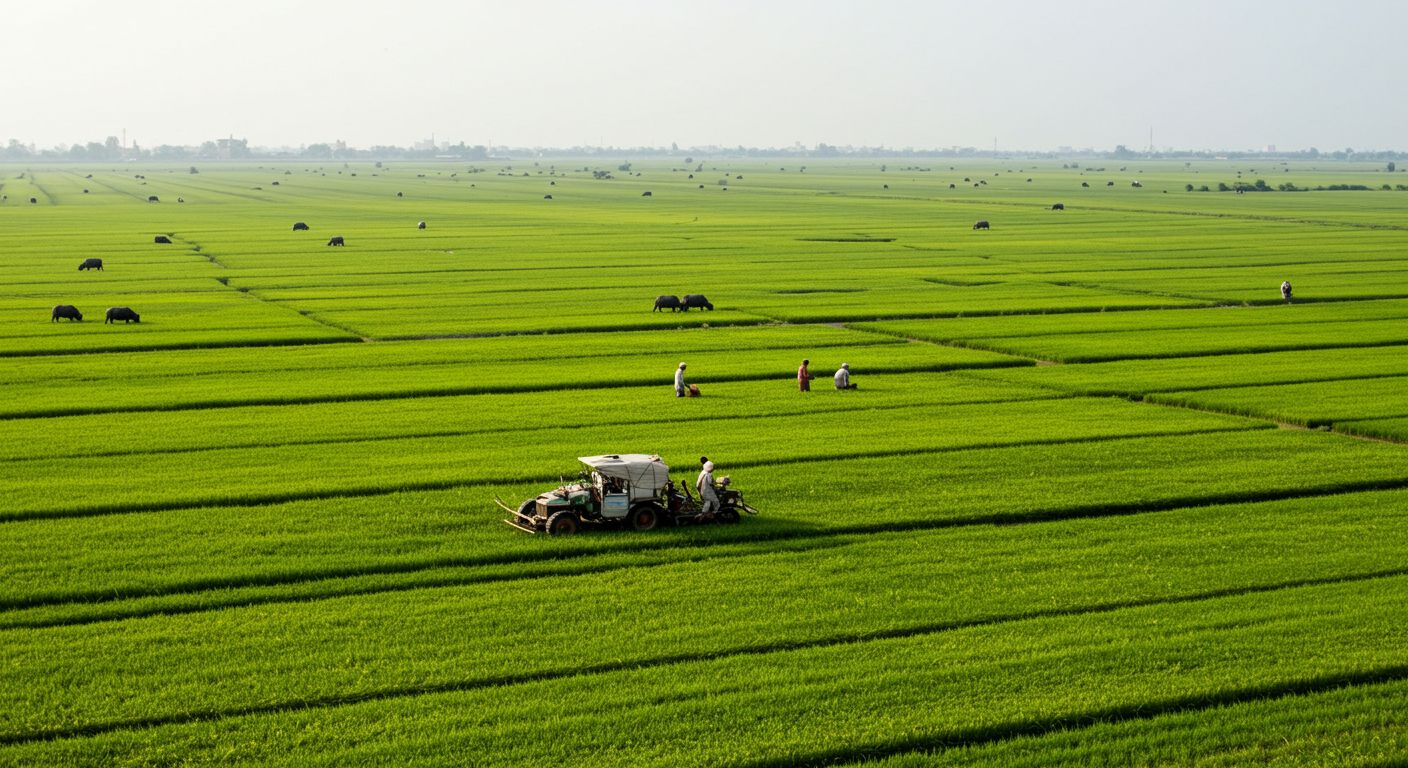
Pakistan’s Agriculture at a Turning Point: Facts, Figures, and the Path Ahead
Agriculture plays a pivotal role in Pakistan’s economy, contributing nearly 25% to the national gross domestic product and providing employment to approximately 40% of the country’s labor...

Agriculture plays a pivotal role in Pakistan’s economy, contributing nearly 25% to the national gross domestic product and providing employment to approximately 40% of the country’s labor force. Despite its significance, the sector is currently facing multiple challenges that threaten its long-term stability and productivity. Experts have raised concerns that climate-related risks, combined with changing land use and structural issues within the agricultural system, could reduce overall productivity by 8–10% by the year 2040.
Recent figures released in Economic Survey of Pakistan indicated that the output of major crops dipped by a margin of 13.5 percent in the previous fiscal year. As an example, the production of wheat in southern Sindh declined by 1 million metric tons (to 3.1 million metric tons). However, when we look at another important cash crop, cotton, it is possible to note that existing 5 years ago the level of cotton production was 15.5 million bales, and now it remains at 5.2 million bales, thus, the decline is estimated at thousands of bales. This decline in agricultural production is affecting not only supply of food in the local country, but also the lives of millions of humans, whose main source of income is agriculture.
The problem of food insecurity is also gaining edge. It is projected that about 58 percent of the population experiences food insecurity to certain degree. The declining production and short supply of domestic production has resulted in an increased reliance on imported products. Nowadays, the country Pakistan is forced to spend around 11 billion dollars every year, to import agricultural products, and among these products there are essential nutrients like wheat, pulse, and all types of edible oils.
The agricultural scene is also being impacted by environmental change. The increase in temperature, change in rainfall pattern and recurring instances of climatic extremes are affecting crop patterns and soil health. There was widespread damage to crops and infrastructure due to the devastating floods of 2022, that had covered approximately a third of the nationwide agricultural fields. It has been found that by 2050, the country will lose at least up to 19.5 a year in wheat and rice alone due to climate-related losses, compared to a loss of 2.0 billion annually at the present moment. Wheat yields are also expected to be reduced by up to half by the middle of the century in case no mitigation action is taken.
The effects of the climate variability are also felt in the livestock. The result is that changing weather conditions are already influencing animal health, lower milk production and is beginning to challenge traditional patterns of grazing. Such advances are a threat to approximately 30 million individuals whose professions are directly or indirectly dependent on livestock and its related activities.
Besides the climate influences, arable lands are becoming limited. Between 20 percent and 30 percent arable land has been converted to industrial use and houses construction in Punjab, which has played the historical role as the most fertile and agriculturally-productive region. It has led to raised eyebrows on future sustainability of farmlands to be used in farming activities in the country and food security in general.
Access to modern farming tools, quality seeds, fertilizers and good irrigation systems among others has been a problem to farmers especially with small landholdings. Small-scale farmers find it difficult to earn profits as only a few of them have access to markets and financing. A large number of agricultural experts suppose that to solve these problems, it will be possible to revive the cooperatives and give farmers the power of collective bargaining and improved access to resources.
Solutions are however being debated to solve these problems practically. Other specialists point to such concepts as sustainable farming, diversification of crops, and regenerative agricultural practices. These can boost soil fertility, lessen addiction to a limited number of high-risk crops as well as increase climate change resilience to farming. Policies that would encourage innovation and adoption of technology in agriculture are also getting a boost allowing improved crop management and effective use of water.
With targeted support and consistent, agriculture-focused policies, the sector has the potential not only to recover but to thrive. Investments in research, education, infrastructure, and farmer training could lead to significant long-term benefits for both the economy and food security. Many believe that if these measures are implemented in a timely and coordinated manner, agriculture can once again become a source of strength and sustainability for Pakistan’s future.
Author