


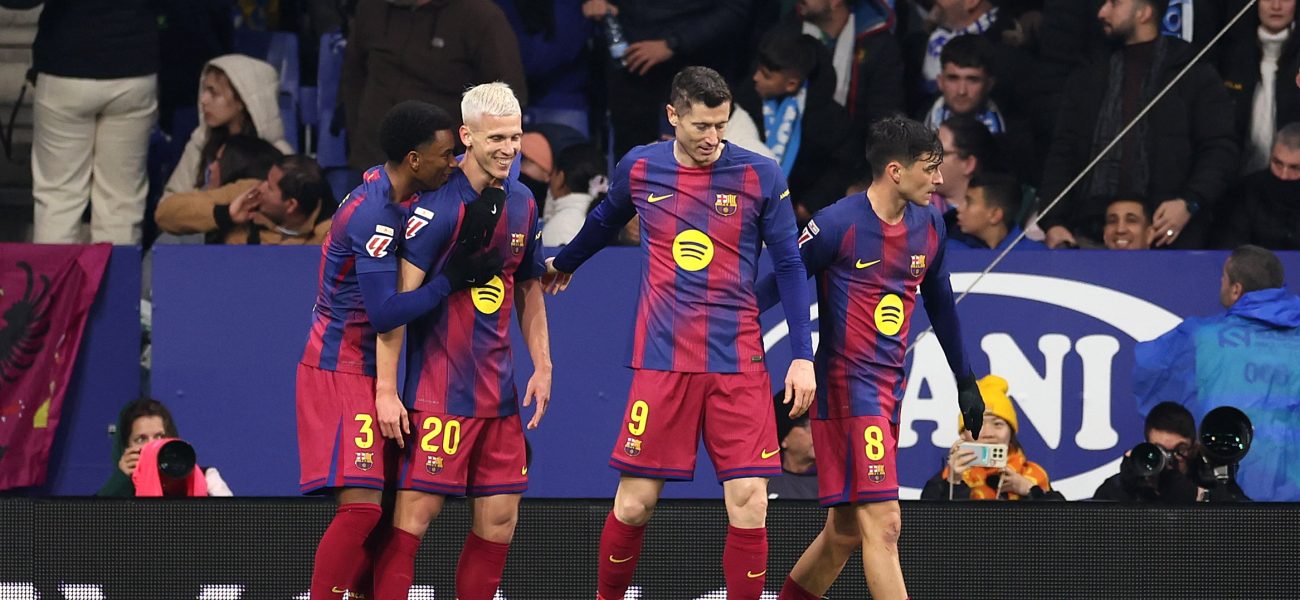
Europe’s Fading Fire: Lewandowski’s Unscripted Exit and MLS’s Ambitious Embrace
POLICY WIRE — Barcelona, Spain — The cold truth about global football’s upper echelons? Time, eventually, catches even the greatest strikers. It isn’t just about declining speed or a...

POLICY WIRE — Barcelona, Spain — The cold truth about global football’s upper echelons? Time, eventually, catches even the greatest strikers. It isn’t just about declining speed or a missed touch; it’s about the bottom line, the squad hierarchy, the ruthless churn of mega-clubs. Robert Lewandowski, the Polish goal machine, isn’t immune. Once untouchable at Bayern Munich, then a revered, if temporary, savior at Barcelona, he now stares down a proposition most legends dread: a reduced role, a thinner paycheck. And a transatlantic move that’d feel more like an epilogue than another epic chapter.
It’s an unspoken arrangement, this transition, for aging giants: either accept a gilded cage on the bench or seek greener, perhaps less scrutinizing, pastures. For Lewandowski, fresh off a season where even his formidable scoring wasn’t enough to appease the Catalonian faithful (nor, apparently, the accountants), the exit ramp at Camp Nou became inevitable. He’s reportedly got offers — from Italy, from Saudi Arabia’s free-spending coffers—but it’s a surprising contender, Chicago Fire of Major League Soccer, that’s really, genuinely pushing.
MLS, long derided as a retirement league, now stands as a viable, profitable destination for players like Lewandowski. It’s not just about football; it’s also about market expansion, about the global pull of a name, no matter its European vintage. The Fire’s manager, Gregg Berhalter, wasn’t mincing words. He pretty much confirmed what everyone already suspected.
“First of all, I don’t believe there aren’t other offers. I find it hard to believe it, and I’m sure a player of his calibre should have offers,” Berhalter was quoted as saying, his pragmatism evident. “As for our communication, we’ve had a lot — both with him and with his entourage. He’s someone we want to sign.” There’s a certain charm to that bluntness, isn’t there? It cuts right through the usual transfer window theatrics. The Chicago club isn’t just chasing a footballer; they’re chasing a brand, a demographic.
Because let’s face it: securing a marquee name like Lewandowski isn’t solely about winning on the pitch, particularly for MLS. It’s a calculated gamble to boost visibility, merchandise sales, — and TV ratings – especially internationally. Imagine the eyes in places like Poland, naturally. But also across Europe and even the burgeoning football fan bases in the subcontinent and the Muslim world, regions increasingly plugged into the global sports spectacle. These aren’t just fans of a club, they’re often fans of individual stars, following their journeys, no matter the league. Indeed, global sports, like cricket’s Indian Premier League, demonstrate how significant this transnational following can be, driving immense economic activity far beyond local stadiums.
Meanwhile, in Barcelona, the official narrative tends towards the sanguine. "Robert has been an incredible professional during his time here, a true competitor," remarked Barcelona Sporting Director, Deco, in a statement provided to Policy Wire, his tone diplomatic, perhaps even a little weary. "But football evolves. Player and club priorities shift. We wish him nothing but the best for his next chapter." That’s code for: we can’t afford that salary for that level of declining utility anymore. It’s a clean break, financially necessary for the perennial spenders of La Liga, who are forever balancing immense debt with astronomical expectations.
The Fire, of course, isn’t blind. They acknowledge other bidders, but their confidence borders on bullishness. Berhalter believes “the entire Chicago community support this transfer,” banking on a romantic, community-based argument alongside the obvious sporting benefits. It’s a sentiment aimed squarely at Lewandowski’s ego, perhaps. He’s still got the touch, still scored over 20 goals last season. But at 36, how much longer can that last? Major League Soccer saw an average attendance of 22,043 per game in 2023, according to Sportico, indicating a league with a solid, but not European-elite, following still looking to grow its global profile.
Lewandowski, surprisingly, isn’t in any rush. Poland didn’t qualify for this summer’s big dance—the World Cup, that’s—so he’s got time to chew things over. But a choice needs making. He’s still got some fire left, but the top-tier European heat? That furnace is cooling down.
What This Means
Lewandowski’s probable move isn’t just another transfer; it’s a policy statement—both from Barcelona and MLS. For the Catalan giant, it underscores the harsh economics of aging football talent in an era of stringent financial fair play rules and ever-ballooning wage bills. Elite European clubs simply can’t carry players, regardless of their past accomplishments, if their present output doesn’t match their eye-watering salaries. This becomes particularly stark for Spanish clubs, perennially deep in debt, making a financially pragmatic decision for the future of their squad. Such calculated decisions, often perceived as harsh, are ultimately about long-term institutional survival and competitive viability.
For MLS, this signifies a continued, calculated investment in acquiring not just players, but global marketing assets. It’s an evolving strategy from a league often seen as secondary, aiming to elevate its international profile, attract new sponsors, and broaden its audience demographics. Bringing in players like Lewandowski — or Messi before him — isn’t about immediate championship guarantees. It’s about leveraging superstar appeal to draw in casual fans, younger generations, and international viewers from lucrative emerging markets, such as Pakistan and other parts of the Muslim world, where sports viewership is growing rapidly. It positions the league as a dynamic, credible alternative, albeit one with a more relaxed pace. It’s an ambition that plays out not just on the pitch, but in boardrooms from New York to Riyadh, all chasing a slice of the global sporting pie. The question isn’t whether MLS can become the Premier League. It’s whether it can carve out its own distinct, highly profitable, and internationally recognized niche, powered by Europe’s distinguished departees. They’re making a strong case for it.