

Pakistan to Witness a Stunning Blood Moon on September 7
On the night of September 7, 2025, people in Pakistan will get a rare chance to look up at the sky and see one of nature’s most dramatic shows, a total lunar eclipse, also known as a blood moon....
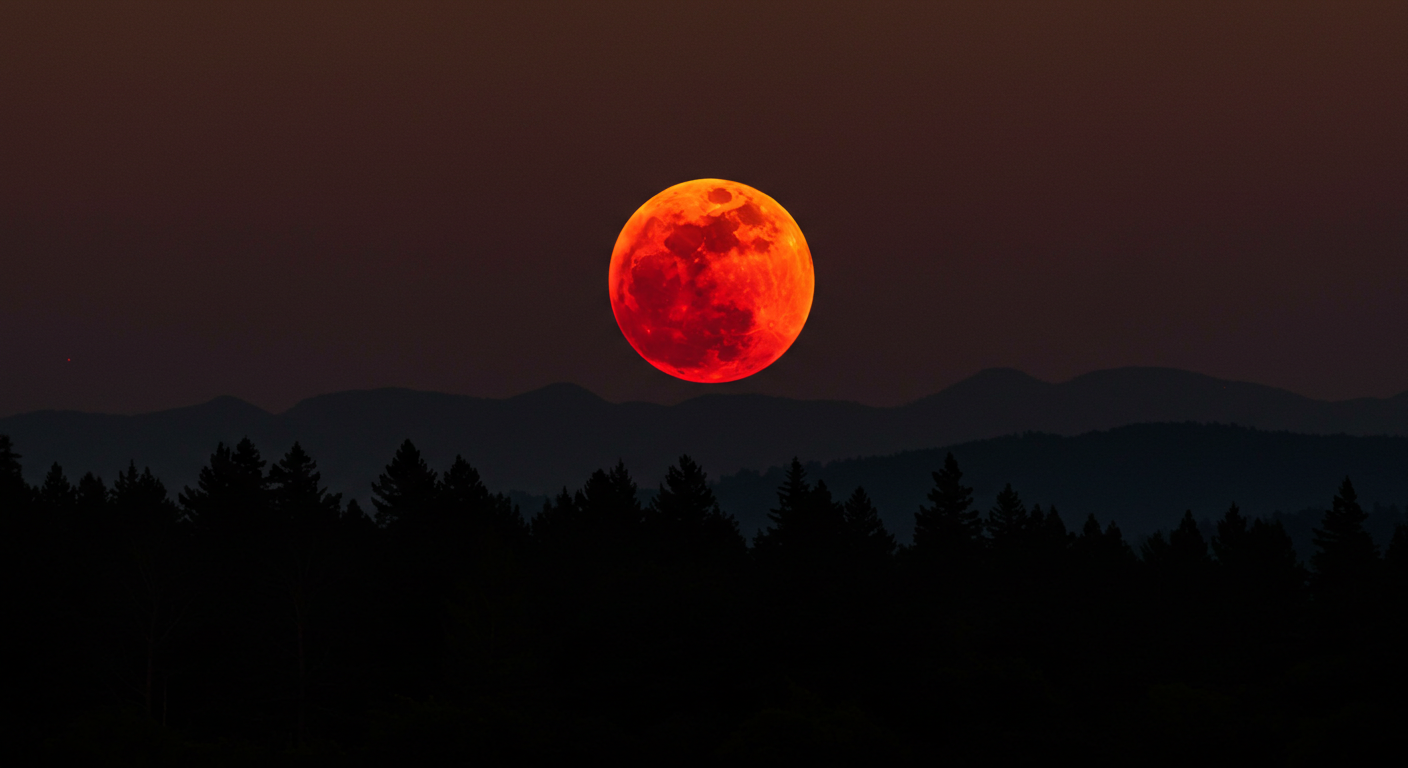
On the night of September 7, 2025, people in Pakistan will get a rare chance to look up at the sky and see one of nature’s most dramatic shows, a total lunar eclipse, also known as a blood moon. According to the Space and Upper Atmosphere Research Commission (Suparco), the event will be visible across most of Pakistan, as well as in parts of Asia, Africa, and Europe, if the skies remain clear. The eclipse will begin at 8:30 pm, reach its maximum at 11:57 pm, and end at 1:55 am. This means Pakistanis will have hours to enjoy the spectacle, unlike solar eclipses that last only a few minutes.
A lunar eclipse takes place when the Earth comes directly between the Sun and the Moon. The Earth blocks the sunlight, and its shadow falls on the Moon’s surface. Unlike a solar eclipse, which can be harmful to the eyes, a lunar eclipse is completely safe to watch. You don’t need any special glasses or equipment. You can see it with the naked eye, though binoculars and telescopes can make the view even better.
During this eclipse, the Moon will not disappear completely. Instead, it will turn into a deep red or copper color, which is why it is called a blood moon. When the Earth blocks sunlight, some rays still manage to reach the Moon. These rays pass through the Earth’s atmosphere, where shorter wavelengths like blue and green are scattered away. The longer red and orange wavelengths bend and light up the Moon, making it look red. As Ryan Milligan, an astrophysicist at Queen’s University Belfast, explained: the red glow is sunlight “reflected and scattered through the Earth’s atmosphere.” This simple play of light and shadow has fascinated humans for thousands of years.
This rare cosmic event is not only for scientists. It is a moment for everyone—families, students, and sky lovers. According to Suparco, “This is a great chance for people, especially students and astronomy enthusiasts, to connect with science and explore the wonders of our universe.” For children, it can be an unforgettable memory. Imagine standing on a rooftop with your family, watching the Moon slowly turn red. For students, it is a living classroom, where science moves beyond books and unfolds in the sky. For photographers, it is a golden opportunity to capture a glowing red Moon against the night sky.
Since the eclipse will last for more than five hours, people will have enough time to enjoy it. The best way to watch is to choose an open space such as rooftops, parks, or fields away from bright city lights. Binoculars or a telescope can add detail, though they are not necessary. A clear sky is essential, so checking the weather beforehand is useful. Those interested in photography can try capturing it with a camera on a tripod for steady shots. And, of course, watching with friends and family makes the experience even more memorable.
Throughout history, eclipses have been wrapped in mystery and myths. In many cultures, people believed that a blood moon was a sign of change, a warning, or even a message from the heavens. But today, science has explained the reality: it is simply the Earth’s shadow on the Moon, painted red by the atmosphere. Still, this scientific explanation does not reduce its beauty. In fact, it makes the sight even more meaningful. We now know that every eclipse is a reminder of how perfectly the Sun, Earth, and Moon are aligned in the grand system of space.
📄 POLICY WIRE WHITEPAPER PUBLISHED: PAKISTAN'S NATIONAL SECURITY POLICY PRIORITIES
👉 READ BY CLICKING HEREThis is not the only lunar eclipse of the year. The last one occurred in March 2025, and now September brings the second. Looking further ahead, a rare total solar eclipse will occur on August 12, 2026, visible across parts of Europe. Unlike the lunar eclipse, that event will require special safety measures. For now, Pakistanis can prepare to enjoy the blood moon without worry. All they need is a clear sky and a little curiosity.
Events like these remind us how small we are in the vastness of the universe, yet how connected we are to its rhythm. The Moon we see daily is the same Moon seen by ancient civilizations, poets, scientists, and dreamers. When it turns red during an eclipse, it brings together science and wonder, knowledge and beauty. In today’s fast-paced life, pausing for a few minutes to look at the sky can be refreshing. It connects us with nature and the larger universe. It sparks questions, inspires imaginations, and often leaves us with a sense of awe.
On September 7, when the clock strikes 8:30 pm, step outside and look up. Watch as the Moon slowly slips into Earth’s shadow and turns into a glowing red ball in the night sky. For a few hours, Pakistan will share a cosmic event with people across Asia, Africa, and Europe. Whether you are a student, a parent, or simply someone who loves the stars, this blood moon is an invitation to witness the beauty of science in action. So, don’t miss it. Gather your family, prepare your cameras, and let the sky remind you of the wonders beyond our world.
Author