


Raiders’ Defensive Gambit: A High-Stakes Bet on System Over Stars
POLICY WIRE — Las Vegas, Nevada — Another season looms, and with it, the perennial, almost Sisyphean, ritual of prognostication. In the brutal economic reality of professional sport, predicting a...

POLICY WIRE — Las Vegas, Nevada — Another season looms, and with it, the perennial, almost Sisyphean, ritual of prognostication. In the brutal economic reality of professional sport, predicting a defensive alignment isn’t merely about naming faces; it’s about dissecting a strategic gambit, a high-stakes wager on human capital and systemic efficacy. For the Las Vegas Raiders, this off-season wasn’t a gentle retooling. It was a surgical, sometimes aggressive, amputation of the old to make way for a distinctly new philosophy.
Because frankly, what we’re witnessing here is a coaching staff—led by the pragmatic, no-nonsense Rob Leonard—attempting to forge cohesion from what many outsiders see as a somewhat disparate collection of pieces. The defense, long a beleaguered unit, is getting a full ideological reboot. Key departures like defensive backs Lonnie Johnson and Kyu Blu Kelly, along with an entire corps of linebackers, haven’t just created vacancies; they’ve opened up a conceptual chasm Leonard seems intent on filling with adaptable, hard-nosed talent.
It’s a familiar story in the modern NFL: when the old guard crumbles, new architects step in, often with a disciple’s zeal. Leonard, having served under the respected Patrick Graham and Seattle’s celebrated Mike MacDonald, is bringing a blitz-heavy, aggressive ethos. But does a theoretical blueprint translate into stopping opposing offenses? The jury, naturally, remains out. You’ve got to wonder if the corporate suits above truly grasp the nuances of shifting a 265-pound defensive end from a 5-technique to a 7. This isn’t just about brawn, you know; it’s positional geopolitics.
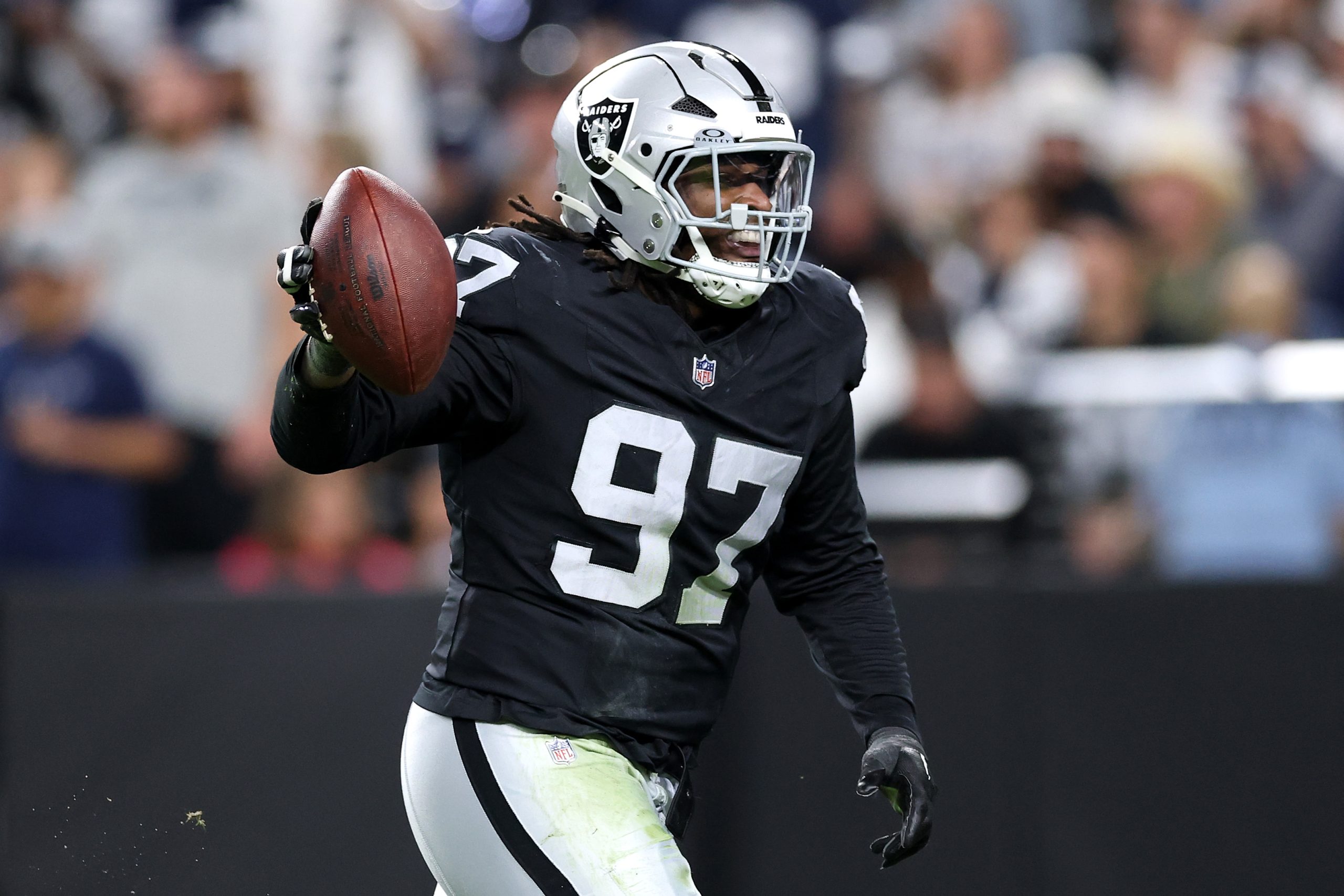
Leading the charge from the edge is the relentless Maxx Crosby. His intensity is infectious, his motor famously ceaseless. Yet, even Crosby, the heart — and soul of that defense, can’t shoulder everything. Word is he’ll see a slightly reduced workload. Not because he’s declining—far from it—but because the team recognizes his value extends beyond every single snap. And in a league where injuries can derail seasons with a single twist, managing your elite assets becomes a national security concern. It’s an economic strategy you see played out in industries far removed from football, protecting your top-tier resources. Complementing Crosby is Kwity Paye, a man whose career has seen more peaks and valleys than a Himalayan expedition, but whose blend of speed and power offers potential. Don’t underestimate the role of someone like Malcolm Koonce either; after an ACL tear in 2024, his 16% pass rush win rate in 2025 (per league analytics departments) hints at a resurgent presence capable of disrupting backfields when fresh.
The interior line? A fascinating blend of established — and audacious choices. Adam Butler, a veteran coming off what many considered an ‘off’ year, is still seen as having significant rebound potential. But the intriguing selection is Tonka Hemingway, a 2025 fourth-rounder. He’s what they call a ‘tweener’—able to play multiple spots, an increasingly valuable trait in Leonard’s versatile scheme. Hemingway posted 4 sacks — and 11 pressures in limited snaps last season. That’s an encouraging start, no matter how you slice it. At Nose Tackle, a position that’s all about holding the line and commanding space, Brandon Cleveland looks to be the man. It’s a foundational role, requiring a certain immovable steadfastness, like the unyielding borders of a geopolitically complex region.
Linebacker presents its own set of dilemmas. Nakobe Dean — and Quay Walker are tabbed as starters. Dean, despite a checkered injury history, has demonstrated he can be an elite, blitz-happy force, provided he can stay on the field. Walker, previously pigeonholed into a role that stifled his dynamism, now has a chance to play more in space, leveraging his athleticism. Their combined abilities to blitz and cover could prove disruptive, assuming they manage to stay healthier than they’ve. Because, let’s be honest, wishing for health in professional football is like praying for peace in a perpetual conflict zone; it’s always the hope, rarely the outcome.
The secondary is a mix of established grit — and burgeoning potential. Taron Johnson, the nickel corner, is holding out for more guaranteed cash – a familiar sight in the brutal economics of athlete contracts. It’s an unspoken declaration: talent demands its price. At boundary corner, Eric Stokes looks solid after a career-high 1037 snaps in 2025. Then there’s Jermod McCoy, a high-potential talent whose path to stardom was interrupted by a torn ACL. If healthy, he’s a game-changer. Finally, at safety, rookie Treydan Stukes looks set for a clear path to the free safety role, with Jeremy Chinn adopting a more versatile, ‘rover’ position—allowing him to impact both run defense and coverage.
What This Means
The Raiders’ defensive overhaul under Rob Leonard isn’t just a personnel shuffle; it’s a macroeconomic policy shift. By emphasizing versatility, aggressive pressure, and leveraging player strengths in new roles, the organization is making a clear bet against a ‘star system’ in favor of a cohesive, adaptable unit. This mirrors complex global strategies where nimble, multi-purpose units often outperform static, expensive entities, especially in volatile environments. It’s a calculated risk, moving away from past, failed investments. The significant roster turnover means relying heavily on schematic intelligence and the developmental upside of younger players, something reminiscent of a futures market. If Leonard’s philosophy takes root, the Raiders could well disrupt expectations, becoming more than the sum of their individual parts. But should this complex interplay of youth and scheme falter, the franchise won’t just be counting losses on the field; it’ll be facing the very real financial and cultural ramifications of misjudged human asset allocation. It’s about more than just tackles and sacks; it’s about establishing a sustainable operational model in a brutal league. For the fan bases who tune in from distant lands—from Jakarta to Islamabad, where American football captures surprising, devout followings—the outcome is a proxy battle, an echo of competitive struggles they understand all too well.