


Syracuse’s Faith-Based Gambit: A New Economy of Athletic Talent Acquisition
POLICY WIRE — Syracuse, NY — It’s not always the dazzling stadium lights or the fat NIL deals that seal the big commitments anymore. Sometimes, it’s about a ‘faith-based...

POLICY WIRE — Syracuse, NY — It’s not always the dazzling stadium lights or the fat NIL deals that seal the big commitments anymore. Sometimes, it’s about a ‘faith-based culture’ and conversations that stretch well past the chalk lines. Welcome to the nuanced, often surprising, new frontier of collegiate athletic recruitment, where intangible assets are fast becoming the most potent bargaining chips.
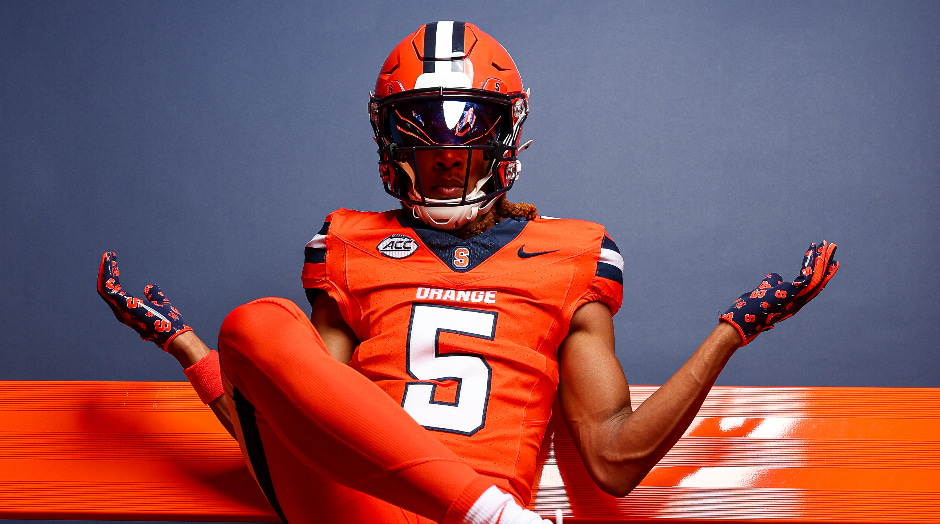
In this high-stakes contest for raw talent—a veritable ‘human futures market’ for aspiring athletes—Syracuse University recently landed South Carolina wide receiver Chanin Harris. And how they did it tells us plenty about the evolving economics of young promise. Harris, a highly-touted playmaker from Duncan, opted for the Orange over contenders like Virginia Tech and Wisconsin, making his decision binding after just one official visit. What made the difference wasn’t merely the promise of glory, but a curated sense of belonging, anchored deep in shared spiritual convictions. This isn’t your grandfather’s recruiting pitch, not by a long shot.
Fran Brown, Syracuse’s head coach, reportedly — and rather successfully — spun a narrative far broader than scrimmage drills or Saturday afternoons. “We aren’t just recruiting athletes; we’re building men for life, men of character,” Brown might’ve observed in a moment of quiet candor, stressing the long game over immediate on-field returns. “Because when you invest in their spirit, everything else falls into place.” It’s a savvy play, targeting not just the athlete’s ambition but their deeper identity. This approach resonates, especially with young prospects whose lives are increasingly lived under the glaring spotlight of public expectation and social media scrutiny. It provides a grounding force, a sense of community that money often can’t buy.
Offensive Coordinator Josh Gattis also played his hand deftly, reportedly mesmerizing Harris not just with schemes, but with a philosophy. “We show them not just *what* they’ll do here, but *who* they’ll become,” Gattis, an architect of receiver development, likely shared, leaning into the professional, almost corporate language of personal growth. “Our commitment isn’t transactional; it&rsquos transformative.” These aren’t platitudes. They’re calculated elements of a soft-power strategy, designed to make a prospect feel not just wanted, but understood, an often-overlooked emotional intelligence in a sphere dominated by metrics and physical prowess.
But how does a relatively late entry like Syracuse—they only extended an offer in late April—close the gap so fast? The answer, as it often is, lies in relationships. Harris spoke plainly about connecting instantly with Brown, crediting “shared faith” as the primary bond, a bond that stretched beyond gridiron talk. It’s an insight that shouldn’t be ignored by other programs, or indeed, any institution looking to attract top talent in a competitive environment.
The faith-based approach isn’t an anomaly, but rather a reflection of broader societal currents, a recognition that identity and community often drive significant life choices. In many parts of the world, from the Islamic educational institutions in Pakistan’s Khyber Pakhtunkhwa to specialized religious schools across South Asia, shared belief isn’t just curriculum; it’s the fundamental organizing principle, creating powerful, enduring networks of affiliation and loyalty. Syracuse, perhaps inadvertently, has tapped into an ancient human truth in a very modern American context.
Harris’s decision illustrates this perfectly. He explicitly cited “the faith-based culture inside the program” as the first of three differentiating factors. Second? “Their focus on preparing players for life after football.” And third? “The atmosphere created by the coaching staff and players.” It’s a holistic package, aimed at the mind, body, and spirit, making it incredibly tough to beat with mere athletic perks.
But is this approach sustainable? Or even scalable? College football is an enterprise generating billions of dollars annually. The average annual revenue for a Power Five conference athletic department exceeded $120 million in 2022, according to data from the National Collegiate Athletic Association (NCAA), highlighting the immense financial machinery behind these decisions. So while ‘faith’ might sound warm and fuzzy, it’s a strategically deployed element within a brutal, profit-driven system. It’s an effective recruitment tool, but also a clever form of branding.
What This Means
Harris’s commitment, brokered on a foundation of faith and relational capital, signals a nuanced shift in the high-stakes game of college football recruitment. This isn’t just about athletic prowess anymore; it’s about cultivating a holistic talent ecosystem. For ‘Policy Wire’ readers, this isn’t merely a sports story; it’s a case study in soft power dynamics and the ‘human resources’ management of high-value individuals.
First, it demonstrates the potent influence of ideologically aligned environments. Institutions—be they corporations, political parties, or athletic programs—that can credibly offer more than just economic incentive, providing spiritual or philosophical resonance, stand to gain an edge. This ‘values alignment’ approach minimizes the potential for buyers’ remorse, locking in commitments with an almost tribal loyalty.
Second, the emphasis on “life after football” indicates a shrewd understanding of long-term investment. Programs are selling not just a four-year scholarship but a lifetime affiliation and a support system designed to cultivate lasting goodwill, which can translate into alumni donations and reputational benefits. It’s essentially brand loyalty cultivated at the embryonic stage of an individual’s career. And that’s smart. Because in a landscape increasingly defined by transient transfers and transactional NIL deals, building these deep, personal bonds could very well be the ultimate competitive advantage. It turns out that sometimes, the oldest play in the book—genuine human connection—is still the most effective. Just don’t call it sentimental. It’s simply good business.