

Mirage of Respite: New Mexico’s Fleeting ‘Cool Front’ Masks Deeper Climate Woes
POLICY WIRE — Albuquerque, USA — Another Mother’s Day, another ephemeral promise from the skies. That celebrated “cool front” many across New Mexico hoped would settle the...

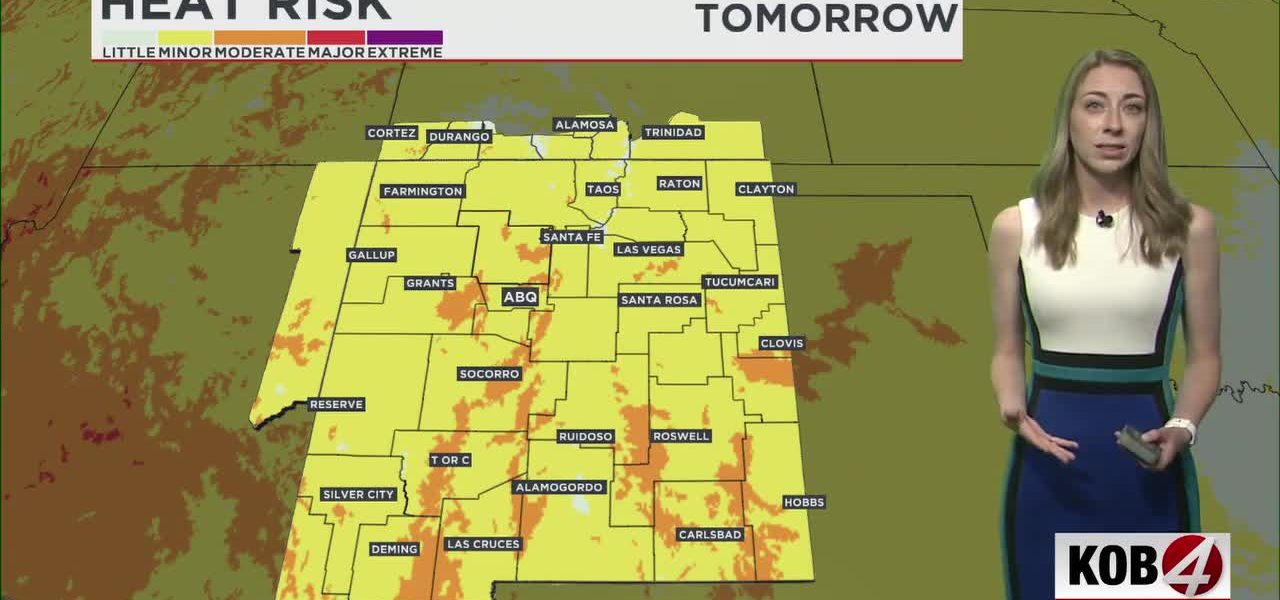
POLICY WIRE — Albuquerque, USA — Another Mother’s Day, another ephemeral promise from the skies. That celebrated “cool front” many across New Mexico hoped would settle the nerves—and temperatures—has come and gone, leaving behind not a refreshing breeze but a stark reminder: reality’s a stubborn beast, often warmer than forecast. Meteorologist Amanda Goluszka noted calmer conditions, sure, but a glance at the mercury shows it’s largely an optical illusion, a fleeting distraction before the heat truly cranks up.
It’s a peculiar thing, this collective sigh of relief over a transient dip, when the long-term charts tell a far more sobering story. We’re not talking about a rogue weather system anymore; we’re talking about an entrenched pattern. Because while New Mexicans briefly enjoyed lighter winds—a small mercy, granted—the temperature trajectory points unequivocally upward, especially across the state’s northeastern expanses. Most of the Land of Enchantment will be baking in the 80s today, and they’re calling for it to get even hotter come Tuesday and Wednesday. It’s hardly the post-front relief local bulletins sometimes suggest.
And that, folks, is where the forecast bleeds into policy, into economics, into the very fabric of how a desert state functions. When the “cool” front means you’re still heading for mid-80s in the Albuquerque Metro area during peak afternoon hours, you’ve got to ask: What exactly are we adapting to? Or rather, what aren’t we doing? Governor Michelle Lujan Grisham, facing sustained questions on water management and environmental safeguards, put a brave face on it recently: “We’re making strides, absolutely, but New Mexico lives with climate change every single day. It’s not a future problem; it’s here. Our strategies must reflect that immediacy, not just for heat, but for the persistent drought gripping our farmers and ranchers.” She’s not wrong; the immediacy is palpable.
This isn’t just about cranking the AC a few degrees higher. It’s about agriculture, an already strained industry in a state where economic survival hinges on increasingly scarce water. It’s about public health, particularly for the elderly — and outdoor workers. It’s about energy infrastructure straining under increased demand. Think about it: a surface high-pressure system comes, quiets the winds, yet doesn’t really lower the temperature. It’s almost a metaphor for political stasis in the face of escalating environmental pressure, isn’t it? A semblance of calm, but the underlying conditions just keep warming up.
But the mirage extends beyond the local meteorological quirks. Take, for instance, Pakistan. An agricultural behemoth often plagued by extreme weather, it’s regularly battered by heatwaves that redefine what “hot” even means. Their challenges with water resources, exacerbated by glacial melt fluctuations and monsoon variability, aren’t so different in their existential threat, even if the scale dwarfs New Mexico’s. Policy debates around climate adaptation in the Indus River Basin — an area experiencing record heat in recent years — often echo the very same arguments you hear here about the Rio Grande. It’s a global symptom, a shared, sweating brow. Professor Anaya Khan, an environmental policy specialist at Quaid-i-Azam University in Islamabad, often observes that “the localized ‘cool fronts’ in one part of the world, like a brief reprieve in New Mexico’s desert, are often counterbalanced by disproportionately devastating heat events elsewhere, creating a net deficit in global climate stability. Our planetary ‘thermostat’ isn’t just creeping up; it’s losing its capacity to self-regulate.” It’s a sentiment that rings true, from the scorching plains of Sindh to the dusty arroyos of Albuquerque.
📄 POLICY WIRE WHITEPAPER PUBLISHED: PAKISTAN'S NATIONAL SECURITY POLICY PRIORITIES
👉 READ BY CLICKING HEREIn fact, New Mexico’s average annual temperature has climbed by roughly 2 degrees Fahrenheit since the 1970s, a figure provided by the National Oceanic and Atmospheric Administration (NOAA), illustrating a trend far beyond any single ‘cool front.’ This isn’t just bad luck. It’s a systemic shift.
What This Means
The subtle linguistic gymnastics of a weather report— “calmer conditions” juxtaposed against “above average temperatures”—is telling. Politically, this signals an ongoing struggle for officials to frame climate reality in a way that doesn’t trigger panic, yet still encourages necessary behavioral and structural change. Economically, this relentless warming implies increased burdens on state budgets for heat relief, disaster preparedness, and agricultural subsidies. It also poses long-term risks to sectors like tourism and real estate, traditionally reliant on the perception of New Mexico’s unique high-desert climate, which is increasingly becoming just “high-desert heat.” The incremental nature of these changes, masked by short-term meteorological blips, fosters a dangerous complacency. Without a bold, coherent strategy to address water scarcity, energy demands, and agricultural shifts, what begins as a weather update easily morphs into a forecast for sustained socio-economic strain.