


New Mexico’s Arid Reckoning: A Whisper of Rain, A Deluge of Policy Challenges
POLICY WIRE — ALBUQUERQUE, N.M. — In the vast, sun-baked expanses of New Mexico, the sky isn’t merely a backdrop; it’s an arbiter of destiny, a capricious deity whose slight shrug can mean the...

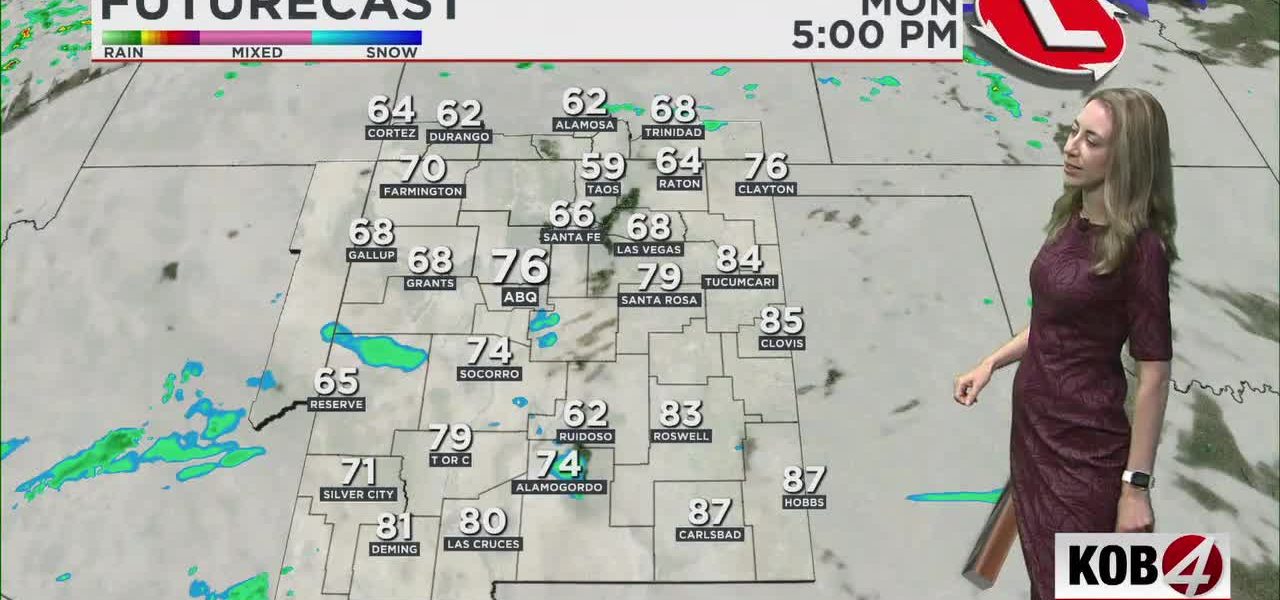
POLICY WIRE — ALBUQUERQUE, N.M. — In the vast, sun-baked expanses of New Mexico, the sky isn’t merely a backdrop; it’s an arbiter of destiny, a capricious deity whose slight shrug can mean the difference between a season’s yield and a parched, desolate landscape. So, when meteorologists whisper of a paltry prospect for rain—a mere 10% chance for Albuquerque’s sprawling metro on an otherwise placid Monday—it registers not as a trivial forecast, but as another faint pulse in the ongoing saga of the state’s precarious relationship with water.
It’s not just about a few drops to settle the dust, don’t misunderstand. This ephemeral sprinkle, anticipated largely after 8 p.m., with slightly better odds for the rugged Sandia Mountains and areas eastward, embodies a far greater narrative: the relentless climatic tightrope walk that defines life in the American Southwest. Any precipitation, however meager, is scrutinized, celebrated, and instantly forgotten as the thirsty land absorbs it, leaving behind only the memory of a fleeting promise. And still, the prevailing conditions underscore the fragility. Breezy gusts, shifting from southerly to westerly at a brisk 30-40 mph, particularly off the eastern slopes of the Sangre de Cristo, don’t exactly portend a gentle soaking. They hint at the continued evaporative stress that defines so much of this arid topography.
This delicate meteorological dance isn’t an isolated anomaly; it’s a micro-drama mirroring macro-crises unfolding across the globe, from the parched landscapes of the Horn of Africa to the glacier-fed lifelines of Pakistan, where erratic monsoon patterns and melting Himalayan ice sheets present an equally formidable, if distinctly different, set of water policy quandaries for millions.
For New Mexico, it’s a perennial anxiety, a gnawing uncertainty that fuels policy debates and defines the very future of its communities. Patricia Chavez, the State Water Resource Director, didn’t mince words when pressed on the long-term outlook. “We’re past the point of merely hoping for rain; we’re in an era of strategic resource management,” Chavez asserted, her voice carrying the weariness of decades grappling with an increasingly temperamental climate. “Every drop counts, and our policies must reflect that existential truth, safeguarding against the inevitable droughts that punctuate our existence.”
Indeed, the urgency isn’t abstract. Even as last week’s salutary rains largely quelled the immediate fire danger across 99% of the state, a low, elevated risk still looms over Clovis and its immediate environs—a stark reminder that reprieve is often temporary. Mayor Tim Keller of Albuquerque, a city perpetually balancing growth with ecological constraints, echoed the sentiment. “These low-probability forecasts aren’t just meteorological curiosities; they’re daily reminders of our city’s climatic tightrope walk,” Keller lamented, outlining the municipal strategies underway. “We must safeguard our urban core, fostering resilience against an increasingly capricious environment, or risk seeing our progress evaporate.”
Behind the headlines of a modest rain chance lies the hard data, a sobering testament to the enduring challenge. According to the U.S. Drought Monitor, as of late 2023, over 70% of New Mexico was experiencing some level of drought, a figure that has fluctuated wildly but trended upwards over the last two decades. That’s a stark, undeniable reality that informs every legislative session, every water board meeting, and every farmer’s decision.
📄 POLICY WIRE WHITEPAPER PUBLISHED: PAKISTAN'S NATIONAL SECURITY POLICY PRIORITIES
👉 READ BY CLICKING HEREBut there’s always tomorrow, isn’t there? The Desert Southwest bracingly anticipates a more substantial pacific storm system bearing down within 24 hours, promising increased chances of both rain and snow for Tuesday into Wednesday. Crucially, though, the forecast caveat remains: “for many but not for all.” It’s a phrase pregnant with meaning here, where water equity and availability are not just hydrological concerns, but political battlegrounds.
What This Means
The seemingly innocuous Monday forecast for New Mexico unfurls a canvas depicting profound political and economic implications. Politically, the persistent threat of aridity exacerbates interstate water compact disputes, particularly concerning the dwindling Colorado River allocations, igniting legislative battles over water rights and future infrastructure investments. State leadership faces the perennial tightrope walk of appeasing agricultural interests (like the state’s lucrative pecan and chile industries) while ensuring urban centers have sufficient supply, often against a backdrop of escalating climate change skepticism. And it’s a stark reminder of the state’s forested policy dilemma, where wildfires are an ever-present specter, their intensity directly proportional to the lack of moisture.
Economically, the stakes couldn’t be higher. Real estate development in sprawling metropolitan areas like Albuquerque and Santa Fe becomes a precarious venture without assurances of sustainable water. Tourism, a pivotal economic driver (especially ski resorts reliant on snowpack), suffers directly from erratic precipitation patterns. Beyond direct economic hits, there are insidious, long-term costs: increased insurance premiums for properties in high-risk fire zones, decreased agricultural yields impacting local economies, and the diversion of state funds to emergency drought relief or water infrastructure projects that could otherwise bolster education or healthcare. So, while Monday’s rain chance may be low, its implications are anything but.