

Blade Runners: As Giant Turbines Climb, Germany’s Far-Right Digs In
POLICY WIRE — Wilhelmshaven, Germany — They say progress never comes quietly, don’t they? Certainly not here in Germany, where the whirring hum of a new, colossal wind turbine – stretching an...

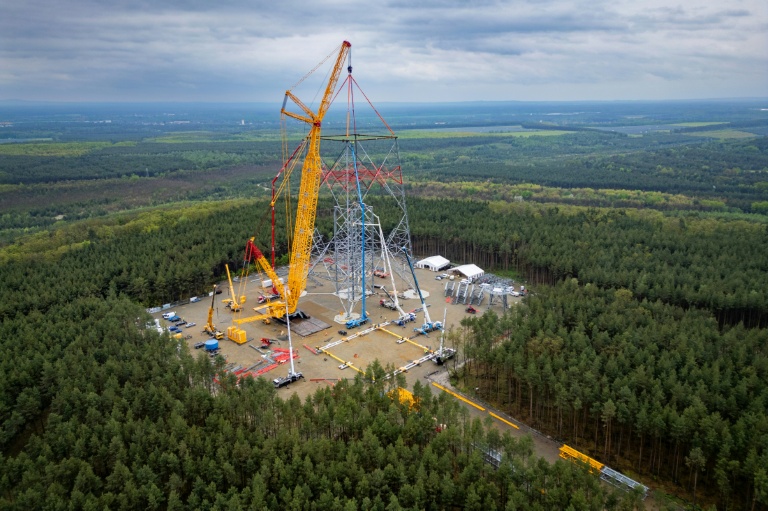
POLICY WIRE — Wilhelmshaven, Germany — They say progress never comes quietly, don’t they? Certainly not here in Germany, where the whirring hum of a new, colossal wind turbine – stretching an almost obscene 280 meters into the crisp North Sea air – seems less a whisper of a green future and more a jarring claxon. It’s the tallest, beefiest onshore turbine the nation’s ever built. But beneath its colossal shadow, the political landscape is less serene, buzzing with the shrill cries of a resurgent far-right determined to slow, if not halt, this industrial metamorphosis.
Just the other day, a crew in a hard hat pointed towards the massive blades, rotating with a languid, almost dismissive grace. They looked ready to churn out megawatts. Meanwhile, down on solid ground, Germany’s political bedrock feels anything but stable. The nation’s been aggressively weaning itself off fossil fuels, aiming for 80% of its electricity from renewables by 2030 – a genuinely ambitious target. But it’s not just engineering they’re wrestling with; it’s a bitter cultural fight.
And you see it, in the polls, in the protests. The AfD, or Alternative for Germany, they’re not just gaining traction; they’re an uncomfortable fact of life now, particularly in regions chafing under what they perceive as Berlin’s distant, sometimes sanctimonious, green mandates. They decry these turbines as expensive monstrosities. As energy minister Robert Habeck, a Green Party stalwart, put it to us recently, his face tired but resolute, “We aren’t just building turbines; we’re shoring up our future, a future less beholden to autocrats and volatile markets. It’s an investment, pure — and simple, even when it feels like we’re climbing uphill against noisy resistance.”
He’s not wrong about the noise. Because the AfD sees things differently. “These monumental projects drain our budgets, disfigure our landscapes, and all for an energy source that simply can’t guarantee our nation’s industrial backbone,” fumed Alice Weidel, co-leader of the AfD, during a press briefing that quickly veered into a lecture on energy sovereignty. “We’re trading reliability for virtue signaling, and the German taxpayer is footing the bill.” She’s tapped into a genuine vein of economic anxiety, especially among voters who worry about energy prices and supply consistency. It’s a savvy political move, really, packaging nationalism with fiscal conservatism.
This isn’t merely about local aesthetics; it’s a national mood ring. These green initiatives, expensive — and visually disruptive as they can be, rub many folks the wrong way. Germany’s federal government is betting big, funneling billions into the transition, with companies like Siemens Gamesa — a Spanish-German powerhouse— at the forefront of the technological charge. The particular turbine, part of a sprawling network envisioned across the northern plains, is a flagship. It’s meant to symbolize commitment, industrial might, — and a clean future. To its detractors, it symbolizes bureaucracy run amok, unchecked environmental dogma, and an economy on life support.
Pakistan, thousands of miles away, watches Germany’s struggles with more than passing interest. It’s a country itself grappling with energy shortages and an urgent need to transition towards more sustainable sources, battling extreme climate impacts with less robust infrastructure. Karachi alone has seen deadly heatwaves. Nations like Pakistan know the rhetoric of self-reliance, the clamor for cheap energy, the difficulty of balancing environmental imperatives with immediate economic needs. And they’re keenly aware that German-led European investments, while perhaps slowing domestically, are still crucial for their own green ambitions. After all, the market for these mammoth turbines stretches far beyond the Rhine.
But the real battle is ideological. It’s the grand, expensive experiment of a developed nation attempting a wholesale energy reorientation, pitted against a populist wave that preys on economic insecurity and a longing for perceived nationalistic simplicity. As of early 2024, public polling routinely pegs the AfD as Germany’s second strongest party, holding around 18-20% support nationwide. That’s a significant headwind, indeed.
What This Means
This situation isn’t just a squabble over windmills; it’s a litmus test for Europe’s entire green agenda and its resilience against a hardening populist right. Politically, the Greens, currently a key government partner, face an uphill battle selling their core platform when economic strains persist and anti-immigrant sentiment—often intertwined with the AfD’s climate skepticism—grows. The ongoing conflict creates an environment ripe for domestic discord, and we’ve seen how that can snowball, distracting from international challenges and weakening political resolve.
Economically, hesitation or reversal on renewable energy investment could put Germany behind its ambitious targets, making it harder to attract international capital to green projects. The Siemens Gamesas of the world might find fewer domestic buyers, forcing them to look elsewhere or, worse, scale back their operations. And for external partners like Pakistan, where climate resilience and energy access are critical, German political wavering on renewables could mean slower technology transfer or less investment aid for their own burgeoning clean energy sectors. It’s a cautionary tale, mirroring similar challenges across other industrialized nations and suggesting that even with overwhelming scientific consensus, the politics of energy transition remains a bruising, localized fight with global consequences. It simply isn’t an easy ride. But then, is anything?