


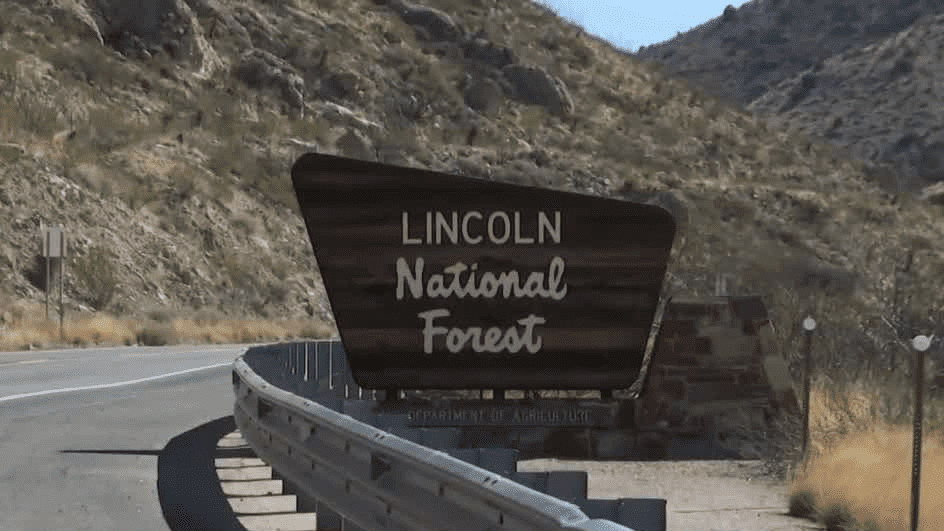
Smoke on the Horizon: New Mexico’s Forested Policy Dilemma Ignites
POLICY WIRE — Cloudcroft, New Mexico — It isn’t just the scent of pine and crisp mountain air that’s returning to New Mexico’s Sacramento Mountains this week. No, it’s a far more pungent,...

POLICY WIRE — Cloudcroft, New Mexico — It isn’t just the scent of pine and crisp mountain air that’s returning to New Mexico’s Sacramento Mountains this week. No, it’s a far more pungent, politically charged aroma: the acrid tang of controlled fire. What begins on Monday as a series of meticulously planned burns in the Lincoln National Forest is less a simple forestry operation and more a stark, visible manifestation of an ongoing policy war waged against a warming climate — a battle where the immediate discomfort of smoke trails a long shadow of future catastrophe.
For residents of picturesque towns like Cloudcroft and Ruidoso, the imminent haze will be an unwelcome, albeit familiar, intrusion. But behind the transient plume lies a desperate, calculated gamble by federal land managers. They’re orchestrating these prescribed fires to thin out decades of accumulated hazardous fuels — grasses, dead leaves, and an unnerving carpet of fallen pine needles. At its core, this isn’t merely about tidying up a forest; it’s about preemptively blunting the devastating, unchecked power of the mega-fires that have increasingly scarred the American West.
The Forest Service confirms that crews will target areas near Latham Canyon, necessitating temporary closures. And yes, locals will see the smoke. It’s an unavoidable side effect, a visual reminder that policy decisions, however well-intentioned, often come with immediate, tangible costs. “It’s a tough sell, isn’t it?” quipped State Representative Elena Rodriguez, whose district encompasses parts of the Lincoln National Forest. “Asking folks to endure smoke today so they don’t lose their homes tomorrow. They’re right to be concerned about air quality, about tourism. But frankly, we’re out of easy options.”
Behind the headlines of local inconvenience lurks a much larger narrative: the escalating crisis of wildfire management across the globe. Decades of aggressive fire suppression policies, coupled with a relentlessly hotter, drier climate, have transformed many of America’s forests into tinderboxes. The numbers don’t lie: in 2023, wildfires burned over 2.6 million acres across the United States, according to the National Interagency Fire Center (NIFC), a figure that, while below the 10-year average, still underscores the immense and persistent threat. It’s a testament to the fact that we’re no longer just dealing with natural cycles; we’re contending with an amplified, human-accelerated danger.
“We don’t ignite these fires lightly,” shot back Mark Jensen, District Ranger for the Sacramento Ranger District. His voice, usually measured, carried a hint of exasperation. “These are strategic interventions, rooted in science. We’re working to restore ecological health, create defensible spaces, — and ultimately, protect lives and property. The alternative — unchecked, catastrophic wildfires — is simply unthinkable.” He points to the ecological imperative, the historical role of fire in these very ecosystems, and the urgent need to address the fuel load before it’s too late.
And this isn’t a uniquely American predicament. Far from it. Across the globe, nations grapple with similar, if geographically distinct, environmental pressures. Just as Pakistan and other parts of the Muslim world face profound policy challenges — managing shifting monsoon patterns, mitigating devastating floods, or battling the viral abyss of climate-induced displacement — so too does the American Southwest confront the specter of fire. Each region, in its own way, is wrestling with the brutal realities of land management in an era of climatic volatility, forcing difficult choices that often pit short-term discomfort against long-term resilience. We’re all, it seems, paying the piper for past omissions.
So, as the smoke rises above Lincoln National Forest, it carries with it not just the smell of burning pine, but the weight of policy choices, public health concerns, and the stark, undeniable evidence of a planet in flux. It’s a small, localized event, yes, but one that echoes the larger, more consequential decisions being made — or avoided — in capitals worldwide.
📄 POLICY WIRE WHITEPAPER PUBLISHED: PAKISTAN'S NATIONAL SECURITY POLICY PRIORITIES
👉 READ BY CLICKING HEREWhat This Means
The impending prescribed burns in Lincoln National Forest, while routine in theory, underscore several critical political and economic implications.
Politically, these actions highlight the enduring tension between federal land management mandates and local community concerns. Forest Service officials are tasked with ecosystem health — and wildfire mitigation, often requiring disruptive measures. Yet, local politicians like Representative Rodriguez must balance these ecological necessities with the immediate economic impacts on tourism-dependent towns and the public’s understandable anxieties about air quality. This creates a perpetual political tightrope walk, demanding robust communication strategies and, frequently, a thick skin from federal agencies. the funding for such preventative measures often competes with other environmental priorities, leading to difficult budgetary allocations at both state and federal levels — a constant negotiation in Washington, where environmental policy sometimes feels like a silent shadow.
Economically, the calculation is even starker. While the burns cause short-term disruption — reduced tourism, potential health impacts leading to missed workdays — they’re a significant investment against potentially catastrophic long-term losses. Uncontrolled wildfires can decimate property values, obliterate infrastructure, and incur billions in suppression costs, not to mention the irreparable environmental damage. So, the smoke today represents a calculated economic choice: a smaller, controlled expenditure to avert a far larger, uncontrollable one. It’s a pragmatic, if unglamorous, form of fiscal responsibility in the face of environmental peril. The question, however, remains whether communities are adequately compensated for their immediate sacrifice.
Finally, these local actions serve as a microcosm for broader global environmental policy. They reflect a growing consensus among scientists and policymakers that proactive, sometimes uncomfortable, interventions are no longer optional but imperative. Nations everywhere are facing similar dilemmas regarding natural resource management — and climate adaptation. The challenge lies in translating scientific urgency into public acceptance and sustained political will, a feat often complicated by short electoral cycles and immediate public grievances.