


Ferrari’s Quiet Architect: How a Veteran Engineer Stilled the Prancing Horse’s Storm
POLICY WIRE — Maranello, Italy — There’s always an invisible hand guiding the grand narratives of Formula 1. Beyond the flashing lights and million-dollar contracts, a different sort of power play...

POLICY WIRE — Maranello, Italy — There’s always an invisible hand guiding the grand narratives of Formula 1. Beyond the flashing lights and million-dollar contracts, a different sort of power play unfolds, one rooted in trust and the quiet calibration of mechanical genius. So, when Lewis Hamilton — arguably the sport’s most decorated driver — looked utterly lost just a season ago in his new Ferrari crimson, the finger-pointing often bypassed the one constant in his storied career: the calm voice on the other end of the radio.
His much-vaunted switch to Scuderia Ferrari in 2025 had begun, quite frankly, as a high-speed car crash. The celebrated engineer, Peter ‘Bono’ Bonnington, had stayed behind at Mercedes, leaving Hamilton adrift. The pit wall radio crackled not with reassuring analysis, but with something far less effective, and often, frankly, grating. What’s often overlooked amidst the splashy headlines is that even a seven-time world champion needs a specific wavelength to truly hum. That wavelength, for 2025, seemed to have been scrambled.
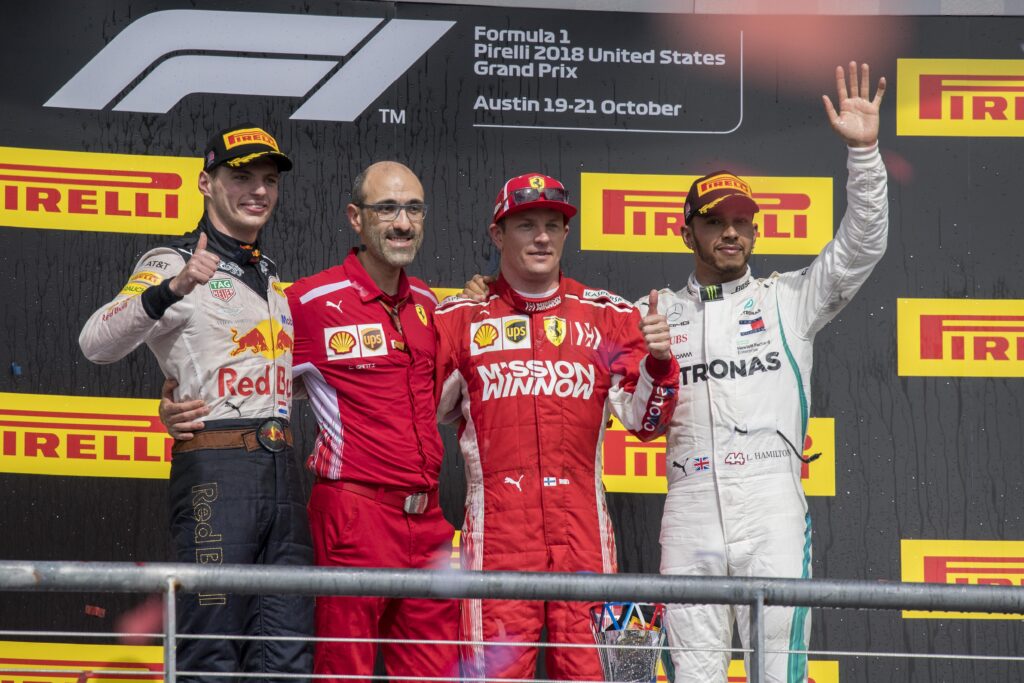
But the whispers of disquiet grew into a frustrated roar after a podium-less debut campaign. Nobody in Maranello, least of all the fans who treat the team like a religion, wants a living legend languishing. The pressure on Team Principal Fred Vasseur was immense, not just to deliver results but to understand the psychological tether between driver and machine. So, over the quiet Italian winter, an almost clandestine move took place. Riccardo Adami was moved on. In came Carlo Santi, a 52-year-old Ferrari veteran whose calm demeanor once soothed Kimi Räikkönen’s notoriously icy nerves.
The paddock, naturally, eyed the reshuffle with skepticism. Ferrari and temporary fixes? That’s an old tune. Yet, almost immediately, something clicked. The air, previously thick with unspoken tension during Hamilton’s on-track battles, began to clear. And Santi, a man described by Hamilton as a “true OG,” an industry veteran who has “seen a lot, has huge experience and is always extremely calm,” has somehow — through quiet authority — become what everyone thought was irreplaceable. Hamilton even bestowed upon him the ultimate compliment: the “Italian Bono.” It’s quite the title, isn’t it?
“We can’t simply rotate engineers like spare tires and expect peak performance,” Vasseur is reported to have stated internally, a point he likely iterated repeatedly during last year’s doldrums. “The relationship is a living thing, it needs cultivation, consistency. And trust, always trust. What Lewis needs is a rock, not a shifting sand dune. We moved decisively because the future of this brand, of this dream, demands it.” And this quiet veteran is that rock.
The numbers, for anyone bothering to glance beyond the gossip, back this up entirely. According to Formula 1 statistics, Hamilton has already bagged two podium finishes in the opening five races of 2026. This includes a truly vintage performance in Montreal, where he hunted down a reigning world champion, taking a commanding second place. Suddenly, the narrative isn’t about struggles, but a comeback; he’s now just three points behind teammate Charles Leclerc in the standings. It demonstrates the almost ethereal importance of a nuanced, unshakeable engineering partnership in an era where split seconds define legacies.
Consider the broader canvas, too. Ferrari isn’t just an Italian car manufacturer; it’s a global institution, a potent symbol of luxury, speed, and engineering prowess. In rapidly expanding markets across South Asia and the broader Muslim world, from the glittering circuits of Saudi Arabia to the bustling cities of Pakistan, the Ferrari brand resonates deeply. These regions, increasingly important both economically and as avid consumers of high-octane entertainment, demand to see their heroes, like Hamilton, perform at the apex. A struggling Ferrari dents more than just Maranello’s pride; it chips away at aspirational narratives worldwide. This renewed surge of performance, steered by the invisible hand of Santi, sends a potent message of resilience and operational excellence, enhancing the brand’s pull where new audiences and investments lie waiting.
What This Means
The subtle changing of the guard on Ferrari’s pit wall has consequences far beyond the immediate thrill of a podium finish. For Ferrari, it’s about validating a staggering investment – not just in Hamilton’s stratospheric contract, but in the entire F1 enterprise. A winning Ferrari means heightened brand appeal, potentially driving supercar sales and boosting its stock valuation (though money often dictates larger shifts). For Formula 1 itself, a competitive Hamilton at Ferrari injects a much-needed jolt of rivalry, vital for broadcasting rights and sponsor engagement, especially in burgeoning Asian markets where viewing figures are closely scrutinized. But more existentially, it’s a testament to leadership — or lack thereof — and the recognition that sometimes, fixing the most visible problems requires identifying the most obscure, yet influential, component. A race engineer, it turns out, is rarely just about data. It’s about psychology. And Santi, it seems, is a master psychologist operating at 300 kilometres per hour. It’s an interesting pivot, to say the least.