

Munich’s Latest Monolith: Bayern Continues Bundesligization, Snatching Germany’s Brightest
POLICY WIRE — Frankfurt, Germany — Another titan has fallen, swallowed whole by the insatiable maw of Bavarian ambition. It’s a familiar story in the Bundesliga, a cycle as predictable as the...

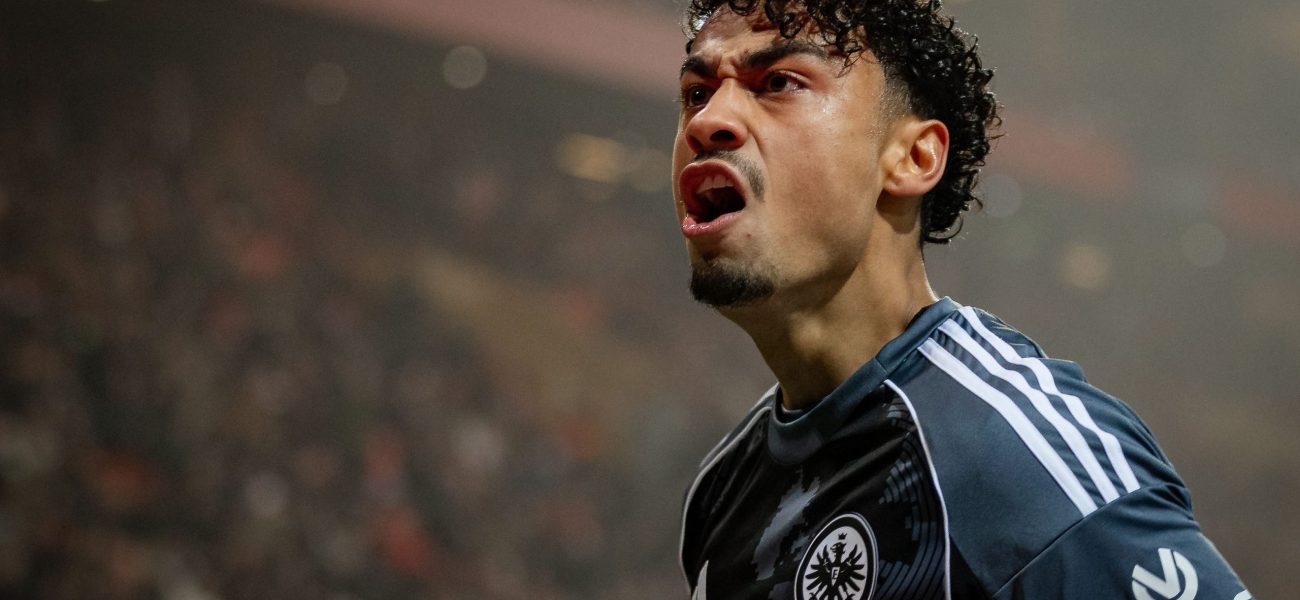
POLICY WIRE — Frankfurt, Germany — Another titan has fallen, swallowed whole by the insatiable maw of Bavarian ambition. It’s a familiar story in the Bundesliga, a cycle as predictable as the changing seasons: Eintracht Frankfurt develops a star, the star shines brightly on the national stage, and then, inevitably, Bayern Munich arrives with a checkbook, a contract, and the promise of perpetual silverware. The latest act in this drama sees 22-year-old defender Nathaniel Brown, fresh off impressing for Germany in the recent World Cup qualifiers, swapping the black and red of Frankfurt for Bayern’s storied scarlet.
It’s a transaction that’s less about a shocking coup and more about the simple, cold economics of modern European football. Bayern, the undisputed German champions, announced Brown’s arrival today for a reported sum of €55 million, securing his services for five years. He’ll be tying his boots at the Allianz Arena until at least June 2031, effectively becoming another jewel in a crown that rarely tarnishes.
Brown, a left-back with a knack for getting forward, became a Frankfurt mainstay, chalking up 75 appearances across all competitions. He even chipped in with seven goals — and 13 assists, including eight direct goal contributions just last season. He’s raw, yes. But he’s quick. He’s powerful. And he’s already tasted the intensity of international football, featuring in three of Germany’s four 2026 World Cup games—no small feat for someone just breaking into the national setup.
For Eintracht, it’s a bittersweet moment. They unearthed Brown from 2. Bundesliga side Nürnberg in 2024. They polished him. They watched him flourish. Now they watch him depart for greener—and much richer—pastures. But they’ve also pocketed a considerable sum, money they’ll need to reinvest to compete against the very leviathan that just plucked their talent. It’s a zero-sum game, often. Or maybe it’s just the cost of doing business at the sharp end of German football. You develop, they buy. It’s almost elegant in its brutality.
Bayern’s Sporting Director, Christoph Freund, was, unsurprisingly, ebullient. “Nathaniel represents the caliber of talent we relentlessly pursue—a blend of raw athletic power and astute tactical understanding. He’s exactly what we need to maintain our competitive edge, domestically and on the European stage.” That’s the party line, anyway. Because Bayern doesn’t just sign good players; they sign players who could make *other* teams good. And they leave no stone unturned in doing it.
Markus Krösche, Eintracht Frankfurt’s Sporting Director, didn’t sound quite so thrilled, though he chose his words carefully for the press scrum. “Losing a player of Nathaniel’s quality is, of course, a blow. But in modern football, especially for clubs like ours, sometimes the numbers speak a language you simply can’t argue with. We wish him well, even as we plot how to use these funds wisely.” You can almost hear the resigned sigh in the subtext there. His club, like so many others, remains in an unenviable position, often acting as a high-end feeder system for the biggest fish.
This transfer isn’t just about Brown’s individual ambition, either. It’s part of Bayern’s wider strategy, hot on the heels of signing Morocco’s Ismael Saibari from PSV Eindhoven. They’re not just buying; they’re hoarding. They’re buying competition for their existing stars, too, like Canadian sensation Alphonso Davies, ensuring no one gets too comfortable. And in a league where the reigning champions, year after year, often seem to buy their closest rivals’ best players, one does wonder what it does for the general competitive spirit. It can’t be great for optics, even if it’s simply sound business. According to Deloitte’s Football Money League, Bayern Munich’s revenue for the 2022/23 season was €751.4 million, dwarfing many of its Bundesliga counterparts and highlighting the stark financial chasm that makes such transfers almost inevitable.
What This Means
The acquisition of Nathaniel Brown by Bayern Munich isn’t just another transfer; it’s a symptom of a larger geopolitical and economic reality within European football. On the surface, it’s a German club strengthening its squad. But peel back the layers, — and you see the inexorable pull of financial gravity at play. The Bundesligization of Germany’s top flight—the tendency for all roads, and all top players, to eventually lead to Munich—erodes the competitive parity that smaller leagues around the world desperately cling to. This centralizing of talent doesn’t just affect fan engagement in cities like Frankfurt; it has broader economic implications, siphoning advertising revenue and media interest away from potential competitors.
And because European football is a truly globalized phenomenon, the ripples extend far beyond the Continent’s borders. For instance, the fervent football fan bases across the Muslim world—from Morocco, represented by new Bayern signing Ismael Saibari, to the teeming streets of Pakistan—follow these transfers with intense interest. These regions contribute significantly to the sport’s global viewership figures — and merchandise sales. When top clubs like Bayern concentrate talent, they further cement their global brand, potentially drawing more investment and sponsorships from burgeoning markets in places like the Gulf states and parts of South Asia. It’s a dynamic that underscores how the financial muscle of a few clubs dictates talent flows, affecting the sporting landscape from Cologne to Karachi. But it also means fans in Karachi, like those in Copenhagen, are watching the same handful of clubs dominate, leading to discussions about the ‘fairness’ of it all. You can’t just wish this away, though, can you? Not when there’s so much money involved. Maybe a better title for it would be the raw spectacle of market forces at work.
The policy implications are also clear: while regulators talk about financial fair play, the reality is that the financial disparities continue to widen. The gap between clubs with generational wealth and those reliant on shrewd player development and subsequent sales creates a system that’s, well, a little unfair. It’s an engine of aspiration for players like Brown, certainly, but a wellspring of frustration for countless others. And, sometimes, you can’t help but wonder if the ghost of loyalty even registers in this brutal, bottom-line reckoning.