


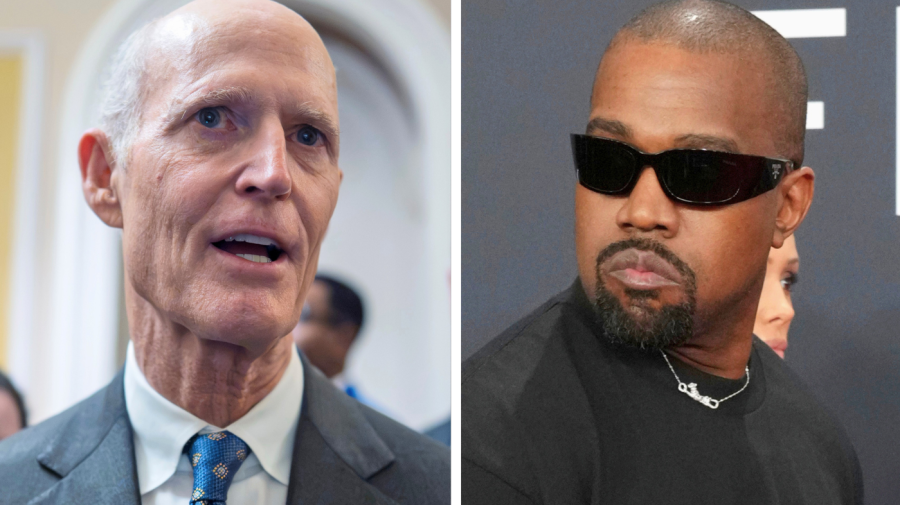
Florida’s Latest Culture Clash: Senator Scott Targets Ye Shows, Stirring Unseen Waters
POLICY WIRE — Tallahassee, FL — You’d think, wouldn’t you, that in Florida, of all places, the daily news cycle would struggle to shock? Not so fast. When Senator Rick Scott decided to...

POLICY WIRE — Tallahassee, FL — You’d think, wouldn’t you, that in Florida, of all places, the daily news cycle would struggle to shock? Not so fast. When Senator Rick Scott decided to train his political binoculars on the itinerary of the artist formerly known as Kanye West—now simply Ye—for potential shows across the Sunshine State, it wasn’t just another Friday morning kerfuffle. It’s an exercise, plain and simple, in optics, control, and maybe, just maybe, an unintended spotlight on uncomfortable truths.
It began not with a fiery rally cry, but with the quiet hum of a lawmaker, flexing—or trying to flex—political muscle. The gist? [QUOTE_PLACEHOLDER] an official relayed to us off the record. This isn’t about ticket sales; it’s about setting boundaries. Because let’s be real, Ye’s recent public statements haven’t exactly been winning him hearts and minds outside a very particular, very online, corner of the universe. His diatribes against Jewish people have drawn broad condemnation, turning a sometimes-polarizing artist into a genuine lightning rod for antisemitism.
And yet, free speech is a messy business, isn’t it? Especially in America. Even if the content is noxious, abhorrent, or just plain stupid. So when a senator publicly tries to nix an artist’s potential gigs, no matter how unpopular that artist may be, it pokes at something fundamental. It begs the question: who gets to decide what performance is acceptable, — and under what pretense?
Because politicians, even those with significant power, don’t usually act as cultural czars, pulling concerts based on content or persona—not in a direct, official capacity, anyway. Sure, there’s always the pressure of public outcry, the quiet phone calls to venue owners. But a senator actively [QUOTE_PLACEHOLDER]? That’s got a different flavor. It smells less of principled stand, more of calculated political maneuvering in a year already rife with culture wars.
Consider the international ripple effect of such domestic skirmishes. In places like Pakistan, for instance, debates around artistic freedom versus public sentiment—especially religious or social sensitivities—are almost a daily bread. They grapple with the power of speech, both hateful and celebratory, in ways that often seem foreign to Western democracies. But the underlying tension, the fight over whose voice gets heard — and whose gets silenced, that’s a universal chord. Last year, Human Rights Watch reported at least six instances of blasphemy accusations in Pakistan leading to violence or judicial persecution, highlighting a stark context where the stakes of public expression are considerably higher than in Florida. But the principle of scrutiny remains relevant: is state power, even subtle influence, the right tool to police creative output?
And Scott, a man who knows a thing or two about navigating public opinion—he’s won statewide elections, after all—he knows the potential backlash. Or perhaps he’s betting on the praise. He’s probably thinking it’s a net positive, drawing a line in the sand against hate speech, aligning himself with a segment of the electorate deeply troubled by Ye’s public remarks. This isn’t some off-the-cuff decision. It’s too neat, too direct.
📄 POLICY WIRE WHITEPAPER PUBLISHED: PAKISTAN'S NATIONAL SECURITY POLICY PRIORITIES
👉 READ BY CLICKING HEREIt’s also about a politician not just reacting, but proactively shaping the cultural landscape, which can be a slippery slope. Today it’s a controversial rapper; tomorrow, who knows? The music industry’s history is peppered with artists whose shock value eventually morphed into mainstream acceptance—or at least toleration. Does public outcry, especially politically motivated outcry, get to decide what we see — and hear? Sometimes, yes. But it’s usually the marketplace, the venue owners, the ticket-buying public, making those calls. Not so overtly from a lawmaker.
What This Means
Senator Scott’s intervention isn’t just about Ye; it’s a telling signal of the evolving tactics in America’s culture wars. On the one hand, it speaks to a political climate where condemning antisemitism—or at least being seen to condemn it—is a strong, almost mandatory, stance. For Scott, this move could bolster his standing with mainstream Jewish communities and suburban voters who prioritize combating hate speech. It’s an easily defensible position on paper. On the other, it represents a blurring of lines between legislative action — and cultural censorship. When elected officials use their platform to pressure private entities to cancel performances, it raises uncomfortable questions about free expression and government overreach, even if the target is widely unpopular. Economically, venues might think twice about booking artists with any whiff of controversy, fearing political pressure, or worse, outright legislative interference. It essentially ‘de-risks’ a part of the entertainment economy for venues, but it ‘chills’ artistic expression across the board, setting a precedent that public disapprobation, amplified by political power, can lead to professional exile.
This whole situation hints at the delicate balance American democracy tries to strike between individual liberties and social responsibility. And it forces us, the public, to consider: where do we draw the line? Whose values are paramount? The answers aren’t simple, — and they’re rarely as black and white as a senator trying to stop a show.