

Messi’s Kolkata Melee: How VIP Greed Gutted a Global PR Coup
POLICY WIRE — Kolkata, India — The quest for global prestige often brings with it an awkward confrontation with local realities. So it was when Lionel Messi, arguably the most celebrated athlete on...

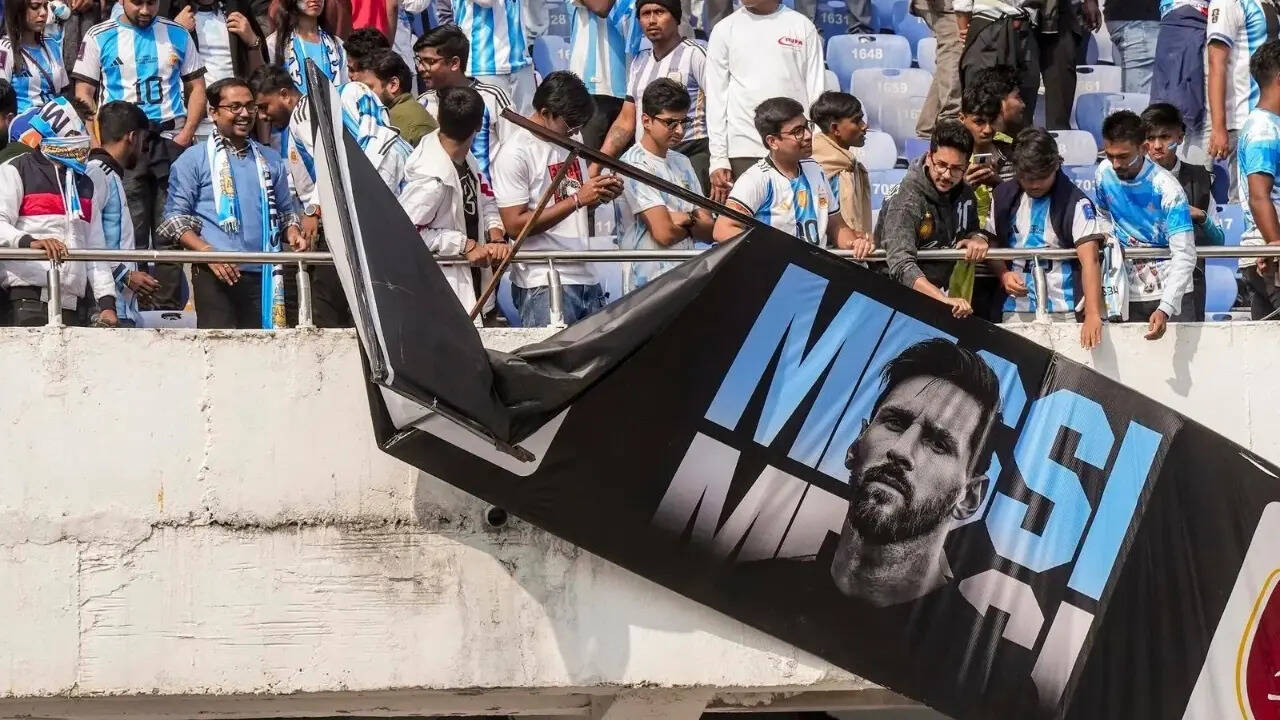
POLICY WIRE — Kolkata, India — The quest for global prestige often brings with it an awkward confrontation with local realities. So it was when Lionel Messi, arguably the most celebrated athlete on earth, descended upon Kolkata. The plan? A gleaming spectacle, a moment for India’s eastern metropolis to flex its cultural muscles on an international stage. What unfolded instead was a masterclass in bureaucratic overreach and unvarnished VIP entitlement, leaving a trail of security breaches that had organizers pulling their hair out—and Messi, one can only imagine, quietly plotting his escape route.
It wasn’t a stampede by adoring fans that brought the whole security apparatus to its knees. No, that would almost be understandable. This was something far more insidious: a free-for-all orchestrated by the very people entrusted to ensure the football legend’s safety. Consider it less a security detail, more a glorified meet-and-greet gone horribly wrong. An event organizer, who spoke to Policy Wire on condition of anonymity, painted a rather vivid picture of the chaos. He described a state minister — a very high-profile one — not just ignoring security cordons, but actively penetrating Messi’s immediate personal space. “He reached out,” the organizer recounted, voice thick with lingering frustration. “Touched Messi’s shoulder, then his waist. It was utterly astounding. We’d briefed them a hundred times, but the instructions? They just didn’t apply to the local big shots.”
And that’s the rub, isn’t it? When the red carpet rolls out, particularly in nations like India with a deeply ingrained reverence for celebrity and a concomitant belief among some politicians that rules are merely suggestions, such breakdowns become depressingly common. The organizer didn’t hold back. “They just pushed through. Everyone wanted a photo, an handshake. They didn’t care about the international security protocols, they didn’t care about Messi’s privacy. They only cared about that Instagram moment.” His frustration is a telling proxy for how the best-laid plans often unravel when confronted with unchecked local power.
Because beyond the minister’s brazen advance, there were scores of ‘connected’ individuals – families, friends, aides – who materialized inside the inner perimeter. They appeared out of nowhere, it seemed, wielding their invisible badges of influence. This wasn’t an anomaly; it’s a symptom of a larger syndrome, one where officialdom often trumps operational common sense. It compromises everything, doesn’t it? The athlete’s safety, the event’s reputation, — and ultimately, a nation’s ability to credibly host world-class events.
Such episodes resonate beyond India’s borders, particularly within South Asia and the broader Muslim world, where a burgeoning enthusiasm for global sporting icons clashes with varying standards of public security management. Neighboring Pakistan, for instance, also grappling with the allure of international star power, constantly recalibrates its security doctrines. Remember the Sri Lankan cricket team attack in Lahore years back? The repercussions for global tours through the region were devastating — and prolonged. But that was terrorism; this, conversely, is simply institutional myopia.
Ms. Fatima Zahra, a senior analyst on South Asian political economy, wasn’t surprised by the Kolkata report. “It’s a tale as old as time, particularly here. The desire for photo opportunities and the flexing of political muscle can — and often does — supersede strict security protocols, especially for non-security threats,” Zahra observed dryly. “It’s not just a breach; it’s a political performance. And often, it signals that security is more about optics for the populace than it’s about genuinely protecting the asset.”
A recent report by Deloitte estimated that global spending on event security could climb by over 15% in the next five years, driven precisely by these growing complexities and VIP demands. This includes costs for planning, personnel, — and advanced technologies. Yet, even with budgets bulging, if the human element – the self-importance of the politically connected – consistently bypasses security measures, then no amount of spending makes a shred of difference.
What This Means
The Kolkata fiasco, while seemingly minor in the grand scheme of geopolitical crises, delivers a stinging indictment of how official privilege can sabotage public relations efforts on a global scale. It isn’t just an embarrassment; it’s a practical liability. International talent management agencies — and sporting bodies pay attention to these things. A security guarantee isn’t merely a piece of paper; it’s a solemn promise. When that promise is openly flouted by the host’s own VIPs, it complicates future negotiations for bringing in top-tier talent. This translates directly into lost economic opportunities—missed tourism revenue, diminished media exposure, and a tarnished reputation for efficiency and order.
And then there’s the messaging it sends domestically. When political figures demonstrate such disregard for rules and safety around an international icon, it suggests an even greater contempt for regulations impacting ordinary citizens. It fosters an environment where connections, not competence, are perceived as the primary currency. For regional events and political landscapes, this perpetuates a perception of state authority as capricious and self-serving. Nobody’s really fooled. But what are you gonna do?
This incident also spotlights the continuing challenge for India – a nation aspiring to be a global player in everything from technology to sports hosting – to consistently uphold international best practices, especially when those practices conflict with entrenched local power dynamics. You want to host a World Cup? Or an Olympics? These seemingly trivial interactions pile up, don’t they? And they add up to an image that’s hard to shake off.