


Shaw’s Price Tag Ignites a Deeper Battle for Sporting Hegemony
POLICY WIRE — London, England — They say fortune favors the bold, but in modern sports, it truly favors the meticulously valued. Khadija ‘Bunny’ Shaw didn’t just score goals in the Women’s FA...

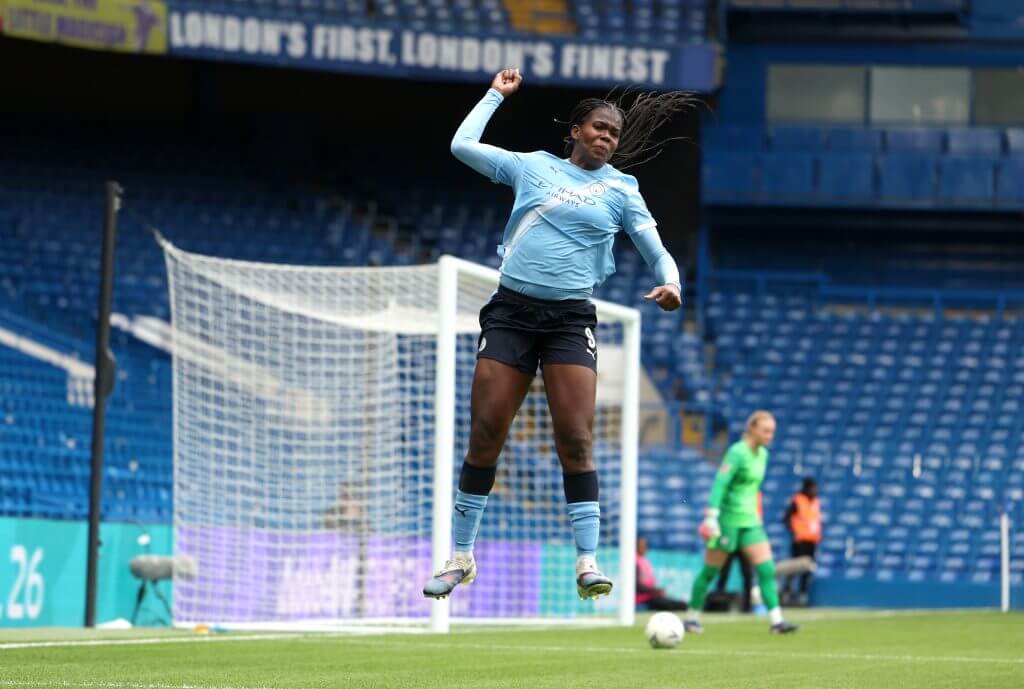
POLICY WIRE — London, England — They say fortune favors the bold, but in modern sports, it truly favors the meticulously valued. Khadija ‘Bunny’ Shaw didn’t just score goals in the Women’s FA Cup semi-final against Chelsea; she lodged a cold, hard invoice for her talents, stamped and delivered with every swivel and every defiant header. Her performance wasn’t merely a sporting spectacle. It was a corporate maneuver, a strategic play in the high-stakes game of player acquisition, illustrating just how profoundly market dynamics now shape the pitch.
It’s no longer about simple passion. We’re talking millions here, in a sport once largely defined by its amateur roots. Shaw, the Manchester City talisman, put on a masterclass, securing her team’s FA Cup final berth with two decisive goals in a 3-2 extra-time victory. But the real story wasn’t simply the scoreline. It was the dollar signs—or rather, the sterling—flashing like an LED advertisement around her boots. Sources briefed on the matter, speaking anonymously to protect ongoing, delicate negotiations, indicate Chelsea has dangled a contract offer of at least £1 million (that’s about $1.36 million) per year for her services, according to reporting by The Athletic. And wouldn’t you know it, talks with her current club, Manchester City, seem to have hit a snag over contract length.
You can’t blame them, either team. Shaw is that rare commodity: a proven, consistent, goal-producing machine. She doesn’t just sniff out chances; she manufactures them. City manager Andree Jeglertz, no stranger to the realities of managing elite talent, summed it up perfectly: “That’s what we need the forward to do. To be the one that’s creating chances, miss one, then move on and continue.” A dispassionate assessment, perhaps, but brutally honest about the forward’s core mandate in the modern game. Because frankly, what else could you expect?
Her stats back it up, too. Since she arrived in the Women’s Super League in 2021, no player has posted a higher expected goals (xG) value per 90 minutes (a precise metric tracking shot quality) than Shaw’s 0.83, according to Opta data compiled from various football analytics sites. She’s not just scoring; she’s taking high-percentage shots, consistently. But it’s not just her clinical finish. Her hold-up play, the aggressive press she leads, her willingness to track back – it’s a complete package that screams return on investment.
Even Chelsea’s Sonia Bompastor, likely smarting from being knocked out of the Cup by a player she openly covets, didn’t hold back. “Who wouldn’t have her on a personal wish list?” Bompastor asked recently, laying bare the competitive landscape. It’s a transparent, almost cynical, admission of desire, a nod to the sheer pragmatism that underpins major transfers. They need goals. She delivers them. It’s that simple, yet simultaneously complex.
The murmurs emanating from Stamford Bridge suggest that Sam Kerr, another titan of the women’s game, might be on her way out, setting the stage for an explosive potential summer swap. And that’s where the intrigue really thickens. This isn’t just about player contracts; it’s about setting precedents. It’s about clubs like Chelsea, traditionally dominant, attempting to buy back their competitive edge. When titans totter, as they occasionally do, the chequebook becomes their primary tool for stabilization. This competitive expenditure, you know, extends far beyond Europe, mirroring the investments and growing fan bases for women’s football in regions like the Middle East and South Asia, where new revenue streams and talent pools are eyed with increasing strategic interest by global clubs.
What This Means
Shaw’s contract saga isn’t an isolated incident; it’s a symptom of the professionalization—and monetization—of women’s football reaching a fever pitch. Clubs are no longer just building teams; they’re building assets. The escalating transfer fees and salaries signal a maturation of the market, one where a player’s perceived value directly translates into significant corporate investment. It also underscores a potential arms race. Bigger clubs, backed by formidable financial entities, can now weaponize their budgets, making it harder for mid-tier teams, however well-run, to retain their star talent. This economic pressure could, ironically, lead to more competitive leagues at the very top, while potentially exacerbating disparities elsewhere. it creates a new layer of athlete empowerment. Players like Shaw, keenly aware of their market worth and global appeal—an appeal increasingly visible from Riyadh to Lahore, as broadcasting reach expands—can now genuinely dictate their terms, moving beyond mere sporting loyalty to become savvy business entities themselves. The era of the grateful, quiet athlete is largely over. It’s a calculated gamble on both sides, with long-term financial implications that extend beyond the mere 90 minutes of a game. But then, isn’t everything these days?