

Melody and Statecraft: How a Pop Anthem Became a Diplomatic Tune for Israel
POLICY WIRE — Jerusalem, Israel — You wouldn’t think a glitzy, sometimes outlandish, pop music competition could stir the deep, often turbulent waters of geopolitics. But here we’re. Because...

POLICY WIRE — Jerusalem, Israel — You wouldn’t think a glitzy, sometimes outlandish, pop music competition could stir the deep, often turbulent waters of geopolitics. But here we’re. Because for Israel, every international platform—even one adorned with glitter cannons and dramatic key changes—doubles as a stage for soft diplomacy. And Noam Bettan, the crooner who got himself into a remarkable second place at this year’s Eurovision Song Contest, didn’t just sing; he conducted a fleeting symphony of statecraft.
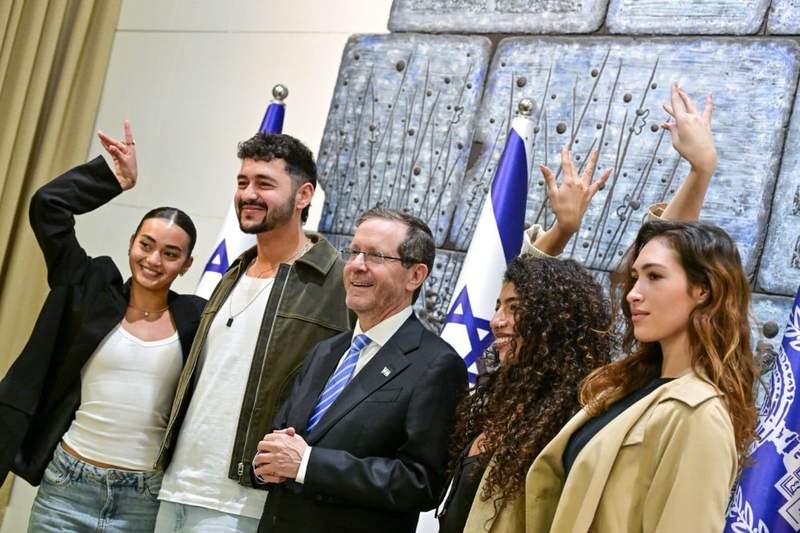
His recent meeting with President Isaac Herzog wasn’t just a polite photo opportunity for a grateful nation. It was a calculated embrace. A warm hug that projected an image of a vibrant, culturally integrated state, even as headlines elsewhere tell a different story. It’s a trick leaders employ time — and again, you know? They pull attention from the hard realities, pushing a softer, more palatable narrative through art, through sport, through any means necessary.
Bettan, fresh off the European stage, found himself suddenly an unlikely emissary. His performance, while undeniably catchy (millions downloaded it, by the way), transcended mere musical accomplishment. For many, it felt like a collective exhale. Herzog understood this. “Noam isn’t just a singer,” the President’s office quoted him saying, his tone resonating with profound national pride, “He’s a bridge-builder, reminding the world of our creativity and resilience even in the toughest times. We couldn’t be prouder of the unity he’s brought to our people.” That’s a politician’s soundbite, of course, but it lands because it rings with genuine popular sentiment.
The sheer reach of Eurovision isn’t to be underestimated. Over 160 million viewers tune in annually across Europe and beyond, according to figures from the European Broadcasting Union. That’s an audience far larger than many traditional diplomatic initiatives could ever hope to capture. It’s prime real estate for showcasing a national identity. But the irony isn’t lost on many — an event built on transnational camaraderie frequently becomes a battleground for political allegiances and ideological friction, Israel’s participation often drawing both fervent support and sharp criticism. This year was no exception.
Critics, particularly from certain corners of the Muslim world and parts of South Asia, often view Israel’s cultural presence on global stages with suspicion, seeing it as an attempt to normalize or divert attention from ongoing political disputes. In countries like Pakistan, for instance, where official relations with Israel are non-existent and public sentiment generally hostile due to the Palestinian issue, such a triumph is often interpreted through a deeply political lens, stripped of its artistic merit. But this is exactly the point for Jerusalem. It’s about navigating these perceptions.
Bettan, for his part, tried to keep it about the music, didn’t he? Or at least, that’s how he spun it. “I poured my heart into that performance,” he reportedly told a close confidante, probably a bit shell-shocked by the sudden glare of the political spotlight. “My goal was to share our music, our spirit. If it connected people, that’s the real win for me. The noise? You just try to tune it out.” But you can’t, not really. Especially when your head of state is leaning into it so deliberately. Art — and politics are forever entwined; a brutal truth many artists discover only after they hit it big. This incident isn’t exactly internet fame gone wrong, but it shows how public actions acquire unexpected meaning.
And so, Bettan’s achievement becomes more than just a musical victory; it’s an unexpected chapter in Israel’s public relations saga. It’s a moment when the often-dry world of foreign policy gets a sudden, glittering injection of popular culture, reminding everyone that statecraft often wears surprising costumes.
What This Means
Noam Bettan’s silver-medal finish at Eurovision and his subsequent high-profile meeting with President Herzog isn’t just about celebrating a cultural achievement. It’s a calculated move within Israel’s broader cultural diplomacy strategy. For a nation frequently facing intense international scrutiny and diplomatic isolation on specific issues, any opportunity to project normalcy, creativity, and a positive global image is seized. This victory provides an unquantifiable but powerful surge of national pride internally, acting as a unifier during complex times.
Economically, such a performance can translate into increased cultural tourism and an enhanced perception of Israel’s creative industries, potentially attracting foreign investment or partnerships in entertainment and technology sectors. Politically, it allows leaders to momentarily pivot narratives, presenting a more relatable face to the global audience. It reminds allies of shared cultural values and challenges adversaries’ attempts to define Israel solely by its conflicts.
these kinds of successes complicate blanket criticisms from detractors in the Muslim world — and beyond. While deeply entrenched geopolitical positions remain, seeing an Israeli artist celebrated on a global stage can subtly shift conversations, if only marginally. It’s a demonstration that despite—or perhaps because of—its challenges, the nation maintains a vibrant artistic and cultural identity capable of engaging with the world on a common, human level. This delicate balancing act, between promoting a modern cultural image and navigating severe political complexities, will continue to define Israel’s international engagement for the foreseeable future. Like a president pausing a policy push, leaders know when to leverage an opportune moment.