


Judge Rebuffs Freedom Bid: Albuquerque Woman Held in Fatal Restaurant Ambush
POLICY WIRE — ALBUQUERQUE, N.M. — The Frontier Restaurant, a local institution famed for its sweet rolls and bustling late-night crowd, found itself stained by something far less palatable last...

POLICY WIRE — ALBUQUERQUE, N.M. — The Frontier Restaurant, a local institution famed for its sweet rolls and bustling late-night crowd, found itself stained by something far less palatable last month. It became the backdrop for a brutal ambush, a moment where ordinary urban life dissolved into fatal violence. And now, a local judge has ruled that one figure at the center of this grim drama won’t be walking free anytime soon.
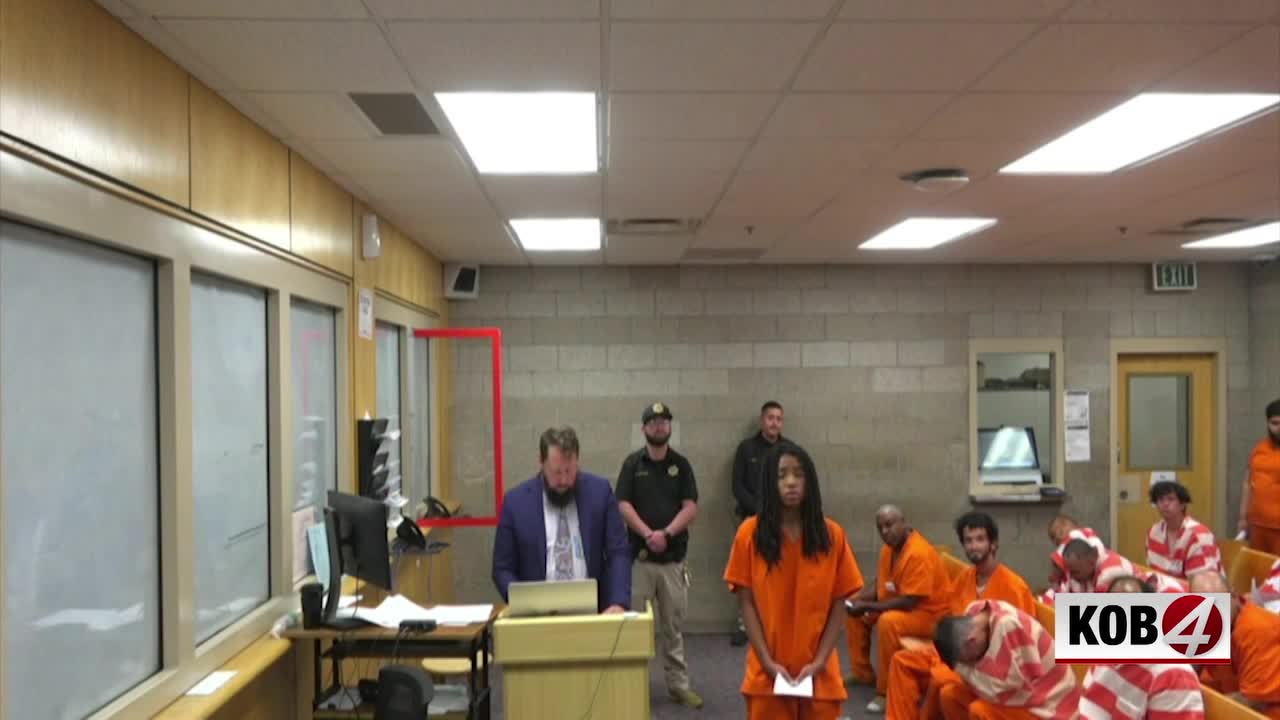
It wasn’t a sudden outburst of passion, prosecutors allege; rather, a cold, calculated setup. Zakiya Umstead, according to authorities, played the central role. They say she lured 23-year-old Eden Rock to the establishment, drawing him into the orbit of an unfolding tragedy that would soon claim his life. For Umstead, though, the legal fight has just begun. She’d sought release, arguing the very notion of conspiracy was flimsy at best. But District Court Judge Michelle R. Castillo, after considering the arguments, remained unconvinced.
The stakes are high. Her lawyer pushed hard to have the case against her thrown out completely, insisting Umstead wasn’t clued into the grim scenario about to play out. Police, however, paint a different picture. Their narrative suggests Umstead first met Rock at the familiar restaurant. Then, as investigators tell it, she engineered his departure from the presumed safety of the brightly lit diner, leading him directly into an ambush where four other suspects awaited. That’s where, they allege, the brutal attack unfolded, ending in Rock’s death by gunshot.
The defense countered forcefully. “Miss Umstead left the group and moved away from the four individuals and did not rejoin their group so this seems to be contrary to any allegation of conspiracy,” her lawyer articulated. It’s a key point, isn’t it? The physical separation. The alleged disassociation. Doesn’t that poke holes in the idea she was part of some master plan? A legitimate question hanging heavy in the Albuquerque air, even as the judge considered surveillance footage. That video, publicly available from KOB 4, reportedly captures key moments leading up to the violence. Because in a case like this, every single frame can spell freedom or a prison sentence. And the judge? Well, she sided with caution, keeping Umstead behind bars, right alongside the four men also charged in Rock’s death, until their collective day in court. They’re all staying put.
But the raw details of this one case ripple much further than New Mexico’s sun-baked streets. For years, urban centers globally—from Karachi to Cairo, Delhi to Detroit—grapple with similar brutal manifestations of premeditated violence. Often, the legal battles hinge not just on physical acts, but on the murky waters of intent — and conspiracy. Could she have known? Should she have known? It’s these subjective assessments that keep lawyers up at night, crafting defenses and prosecutions, particularly in societies where justice systems themselves are constantly under scrutiny.
These arguments—about premeditation, about direct involvement versus unwitting participation—are themes replayed in courtrooms worldwide. In parts of South Asia, for instance, a judge’s decision can hinge just as much on social standing or local power dynamics as on explicit evidentiary trails. The nuances of conspiracy are particularly challenging there, often tangled with family honor, tribal feuds, or entrenched political rivalries. A judge in Lahore or Dhaka wrestling with a similar scenario might find themselves considering not just the letter of the law, but the weight of community expectations and the potential for retribution, adding layers of complexity rarely discussed in Western dockets.
It’s easy to dismiss these incidents as isolated American misfortunes, but the systemic questions they raise—about public safety, about the interpretation of guilt, about who bears responsibility—transcend borders. And America’s own judicial outcomes? They’re hardly a shining light every time. The Bureau of Justice Statistics (BJS) noted that nationally, the clearance rate for homicides has been on a downward trend, reaching a rather dismal 54.4% in 2021. That means nearly half of all murder cases go unsolved, their perpetrators walking free. Pretty sobering, eh?
These are not just statistics; they’re human stories of families yearning for answers, for closure. And the judge’s decision in Albuquerque ensures this particular story remains wide open, unfolding, perhaps hinting at deeper currents beneath the surface of what seemed, at first, to be an open-and-shut case of a crime witnessed, documented, and presumably understood.
What This Means
Judge Castillo’s ruling to hold Umstead in jail until trial isn’t just a procedural note; it signals a judicial skepticism towards claims of ignorance in grave criminal matters. For the state of New Mexico, and broader American jurisprudence, it reinforces the principle that mere proximity to crime—or, in this case, alleged active facilitation—carries significant legal risk, irrespective of direct involvement in the fatal blow. It’s a statement about accountability, about the potential for complicity even without a weapon in hand. The decision also speaks volumes about judicial discretion in high-stakes cases, opting for societal safety and prosecutorial opportunity over an early presumption of innocence and personal liberty, which can trigger debates about economic disparities in accessing justice. How many people can really afford a drawn-out, high-profile defense?
Economically, this tragic event, like all violent crime, carries an invisible price tag. Local businesses like the Frontier Restaurant face reputational damage, even if undeserved, and a chilling effect on customer traffic, especially at night. For the city of Albuquerque, every homicide extracts a toll in emergency services, investigative resources, and long-term societal trust. these cases often highlight socio-economic stratification; where marginalized communities often bear the brunt of such violence, perpetuating cycles of poverty and hopelessness. Politically, decisions like Castillo’s contribute to the ongoing national conversation about bail reform, victims’ rights, and the delicate balance between pre-trial detention and the presumption of innocence. Is preventive detention a necessary evil to ensure justice, or does it prematurely punish individuals who haven’t yet been convicted? It’s a question without easy answers, debated fiercely from local courthouses to federal legislative chambers.