

Edgewood’s Ember: Bureaucratic Brinkmanship Threatens Basic Lifeblood in New Mexico Town
POLICY WIRE — Edgewood, N.M. — It wasn’t a meteor strike. No, nor an earthquake, not even the dreaded zombie apocalypse. What’s actually got this high-desert town on the edge...

POLICY WIRE — Edgewood, N.M. — It wasn’t a meteor strike. No, nor an earthquake, not even the dreaded zombie apocalypse. What’s actually got this high-desert town on the edge of its collective seat—teetering on the precipice of losing basic emergency services—is something far more mundane, yet somehow more infuriating: a political power play gone awry, sparked by the well-intentioned (or perhaps, misguided) fiddling of one Commissioner Stephen Murillo.
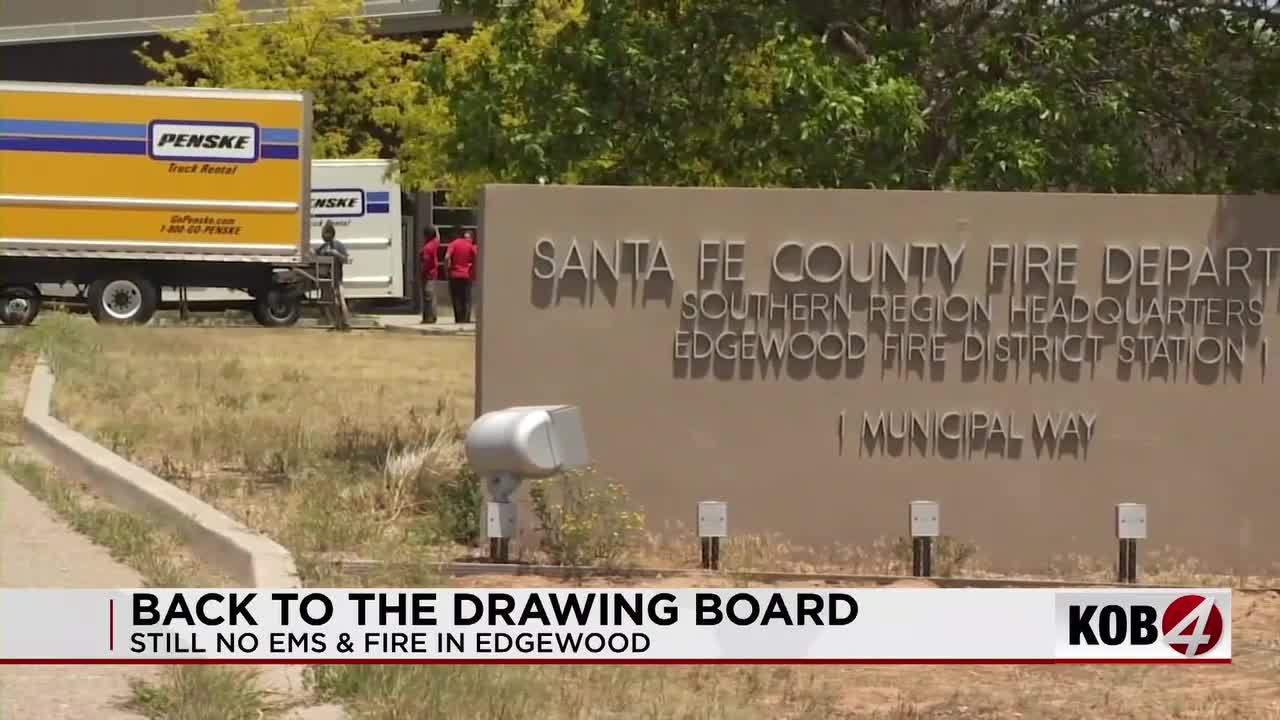
Just weeks before July 1, that red-letter deadline for critical fire and EMS contract approvals, Edgewood finds itself grappling with the real prospect of silence from the siren and a sudden spike in property insurance. Santa Fe County, which was poised to extend a helping hand, withdrew its proposed agreement faster than you can say ‘mutual aid.’ Why? Because Murillo, operating apparently off-script, decided to insert his own edits into a meticulously negotiated contract. And let’s be real, you don’t just unilaterally rewrite agreements with a larger, more established county without consequences.
Residents are—understandably—furious. A community meeting, initially called to calm nerves, quickly devolved into a heated session, as locals learned of the behind-the-scenes machinations that jeopardized their literal lifelines. Liz Pinkerton, a resident of nearly two decades, didn’t mince words. “There’s a lot of old people in this town, elderly people,” she told KOB, a sentiment echoed by many in a locale where aging populations are common. “They can’t be without emergency services.” Pinkerton added, chillingly, about her own 93-year-old family member, “We can’t not have fire and emergency services.” It’s not a luxury, folks; it’s the bare minimum.
The concerns don’t stop with life-and-death scenarios, though those certainly top the list. There’s a pragmatic, deeply American fear also simmering: the almighty mortgage. Colleen Haskell, another longtime Edgewoodian (that’s my informal term for a resident, by the way), articulated what many feel: “I’ll lose the insurance for my property, and the mortgage company will call, and I’ll have to pay off the loan or lose my property… so I’m very concerned about this.” Picture it: your house, your equity, your slice of the American dream, all threatened because of an unseen bureaucratic squabble. That’s a punch to the gut, isn’t it? Property insurance rates in communities lacking dedicated fire services can indeed surge dramatically; some industry analysts indicate that homeowners could face premiums that spike by an average of 250% or more when an ISO rating drops due to lack of fire coverage.
Commissioner Murillo, perhaps sensing the shifting sands of public opinion—and perhaps feeling a bit defensive—released a statement, telling Policy Wire, “My role is to ensure due diligence. We simply can’t rubber-stamp agreements without scrutinizing every line for the best fiscal outcome for Edgewood taxpayers. It’s not about being obstructive; it’s about being responsible stewards of public funds.” Sounds reasonable, right? On paper. But then you hear the outcry, — and you’ve got to wonder where the line between ‘stewardship’ and ‘self-sabotage’ blurs. But the rest of the county leadership appears to be ready to put an end to this game of political chicken. Commission Chairwoman Janice Thompson, visibly exasperated during a private meeting we got wind of, made it clear. “This isn’t about pride or amendments now,” she stated unequivocally. “It’s about human lives — and contractual integrity. We’re putting the original, negotiated agreement up for a vote on June 16, and frankly, I expect consensus.” Good luck with that, Chairperson Thompson.
The commissioners are now scrambling, promising a vote on June 16 on the *original* agreement, the one that wasn’t touched by Murillo’s red pen. Let’s hope for Edgewood’s sake they can put aside the political gamesmanship before someone gets seriously hurt—or financially ruined. Because that’s usually how these things go, isn’t it?
What This Means
This whole debacle, a minor tremor in the vast landscape of U.S. local politics, nonetheless offers a sharp lens into the fragility of essential public services, particularly in rural or semi-rural areas. It highlights how quickly bureaucratic friction—a misplaced amendment here, a perceived slight there—can unravel agreements that directly impact citizen safety and economic well-being. Economically, a disruption in fire and EMS services doesn’t just mean longer response times; it’s an immediate financial hit. Insurance companies don’t mess around. If your property isn’t adequately protected by professional emergency services, your rates soar, or coverage simply vanishes. This, in turn, can tank property values, erode resident trust, — and scare off potential investment. For homeowners on fixed incomes or those barely making ends meet, it could literally be the difference between staying in their home and being forced out.
Politically, it exposes the raw tension between individual commissioner autonomy and collective community responsibility. Murillo’s actions, whether well-intentioned or strategically manipulative, placed his personal prerogative above an established agreement designed to serve thousands. This kind of localized governance failure isn’t unique to New Mexico, of course. You see similar, if more severe, dynamics play out in places like Pakistan or various parts of the Muslim world—regions where basic infrastructure, emergency services, and public health initiatives often become political footballs, vulnerable to personal vendettas, local strongmen, or simply systemic corruption. When public trusts are repeatedly breached over petty disputes, citizens start losing faith not just in local leaders, but in the entire democratic apparatus. This Edgewood situation, while small scale, reminds us that even in affluent nations, the social contract underpinning safe, stable communities remains surprisingly delicate. And once that trust is gone, well, it’s really hard to get it back.